
Sharing with a reporter from Lao Dong Newspaper, a representative of Cushman & Wakefield said that the Hanoi office market is continuing to expand, in which the western region is increasingly showing a prominent role thanks to increased new supply.
In the first quarter of 2026, about 29,900 m2 of new net leased area was brought into the market from 2 LEED certified projects in the western region. This development strengthens the position of the western region as an important growth corridor of the modern office market in Hanoi.
According to Cushman & Wakefield, in the period 2026-2028, the Hanoi office market is expected to welcome an additional 370,000 m2 of new area. Notably, the western region accounts for 76% of the total future supply.
Mr. Nguyen Phuoc Thuan - Director of Leasing Consulting and Renter Representation, Cushman & Wakefield Vietnam - said that the Hanoi office market is entering a more competitive phase, with the western region emerging as the focus of future supply.
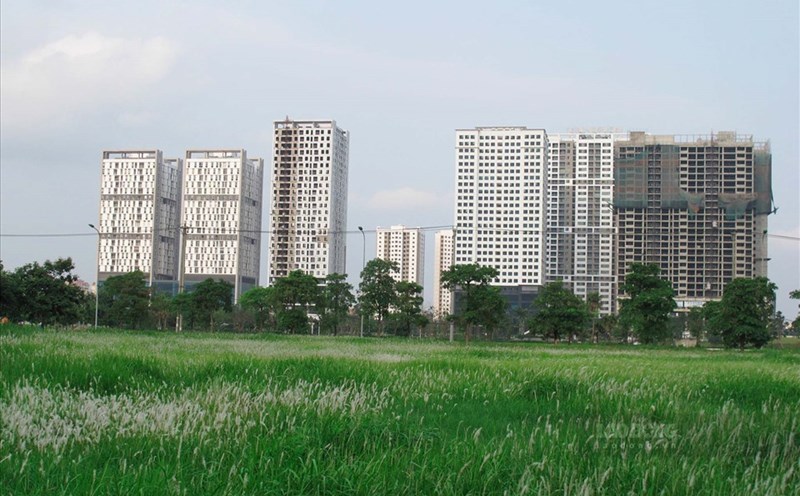
According to Mr. Thuan, the upcoming supply shows a clear trend of market development, towards higher quality, more sustainable and more professionally managed buildings. In that context, existing buildings will need to adapt to an increasingly competitive rental environment.
Investors who focus on investing in asset quality and tenants' experiences will have a better position to grasp needs, as tenants' expectations continue to change" - Mr. Nguyen Phuoc Thuan said.
Regarding supply, Cushman & Wakefield said that 2 new projects were added in Q1/2026 in the Western region, including a Grade A building and a Grade B building. Both have achieved LEED certification, reflecting the trend that investors are increasingly interested in green standards and ESG elements in the office segment.
This trend is also suitable for the needs of many office leasing businesses, especially units with sustainable development goals, long-term operating costs saving and brand image improvement.
In terms of demand, the market recorded differentiation between Grade A and Grade B offices. The occupancy rate of Grade A offices increased by about 78%, an increase of 0.7 percentage points compared to the previous quarter and an increase of 3.4 percentage points compared to the same period. Rent demand mainly comes from businesses that prioritize buildings with high technical standards and professional operations, in which the banking - finance and technology groups continue to play a leading role.
Conversely, the Grade B segment recorded a slight adjustment when the occupancy rate decreased to about 83%. The main reason comes from the fact that some new Grade B projects were handed over at the end of 2025 and the beginning of 2026, causing supply to increase in the short term.
However, the demand for Grade B buildings with reasonable rental prices and convenient locations is still assessed as stable, especially in areas benefiting from infrastructure improvement.
Regarding rental prices, in the first quarter of 2026, the average asking rent for Grade A offices reached about 32.1 USD/m2/month, slightly increasing compared to the previous quarter and the same period. Meanwhile, the Grade B segment has a slight adjustment, reflecting competitive pressure when new supply enters the market.
According to experts, as the supply of high-quality offices continues to increase, especially in the western region, long-standing buildings will face greater pressure in renovating, upgrading or adjusting exploitation strategies.
This may cause competition in the Hanoi office market not only in rental prices, but also in technical standards, green certification, management quality and the experience of tenants.


