
The 0-1 defeat to Spain in the 2026 World Cup final may not only mark the end of a journey to conquer the title, but also the end of the most successful era of Argentine football under Lionel Messi and coach Lionel Scaloni.
After the final whistle, Scaloni could not hide his disappointment. The 48-year-old coach burst into tears at the press conference and admitted that he needed time to think about the future. He revealed that he would complete his current contract before making a final decision, and expressed doubts whether Argentina can recreate recent successes.
I feel very heartbroken. I apologize to everyone. I need time to think because I don't know if we can do something as great as this again or not" - Scaloni shared.
Since taking office, Scaloni has brought Argentina into a glorious period with the first Copa America championship after 28 years and the first World Cup after 36 years. More importantly, he successfully built a team around Messi, helping this superstar complete his unfinished collection of titles in the national team jersey.
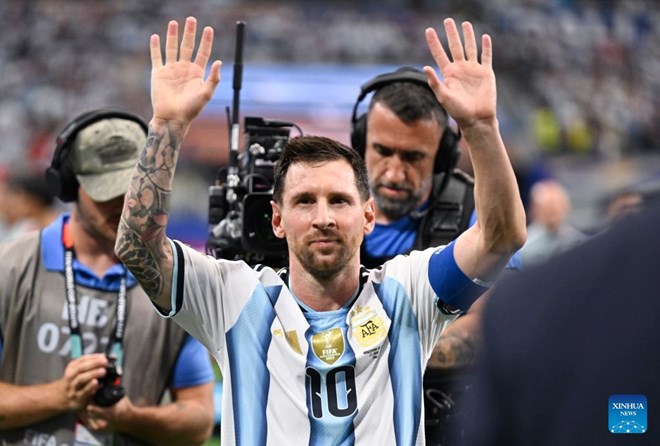
However, after the 2026 World Cup, Messi's future becomes a big question mark. Although he has not officially announced his retirement from the national team, the fact that he is about to turn 40 makes his ability to continue playing at the international level increasingly fragile.
Even Scaloni cannot confirm anything. He said Messi will continue as long as he wants, but also understands that the final decision completely depends on the owner of the eight Golden Balls.
The 2026 World Cup also shows that Argentina depends on Messi more than ever. In the final match against Spain, when the captain was blocked, the defending champion almost did not create significant pressure and had to wait nearly 120 minutes to have the first shot on target.
If this is really Messi's farewell, he will close his two-decade World Cup career with massive numbers. Since his first appearance in 2006, Messi has played in six World Cups, played 34 matches, scored 21 goals and had 12 assists. He helped Argentina win a championship, reached the final twice and set a series of tournament records, although the top scorer title ultimately belonged to Kylian Mbappe.
Even the prospect of the 2030 World Cup being partially held in Argentina is unlikely to change Messi's decision. At that time, he will turn 43 and it will be very difficult to maintain his fitness to continue fighting in the world's biggest arena.
Messi's departure will lead to a comprehensive reform. For many years, all of Scaloni's tactics have been built around number 10. Messi is not only the biggest star, he is also the center in the way he operates his playing style and is the spiritual support of the whole team.
The problem for Argentina becomes even more complex as the current force is also entering a period of aging. Nicolas Otamendi, Nicolas Tagliafico, Rodrigo De Paul and Leandro Paredes are likely to no longer participate in the 2030 World Cup. Meanwhile, Emiliano Martinez will be 37 years old, while Cristian Romero, Alexis Mac Allister, Lisandro Martinez and Lautaro Martinez are all over 30 years old.
Argentina still possesses talents like Julian Alvarez, but the question is whether they can create an effective attack without Messi. This team also lacks breakthrough wingers like Lamine Yamal or Nico Williams of Spain, and has not yet found a worthy successor to Angel Di Maria's role.
Further, they also have to rebuild many important positions, from full-backs, defensive midfielders to center-backs - roles previously held by legends such as Javier Zanetti, Juan Pablo Sorin, Javier Mascherano and Daniel Passarella.
In history, Argentine football has always been associated with symbols wearing the number 10 shirt such as Diego Maradona and Messi. The successor to that legendary shirt will certainly face enormous pressure when being compared with the two greatest monuments in the country's football history.


