
Didier Deschamps is one of the most successful coaches in French football history. However, the 2026 World Cup closed incompletely when Les Bleus were overwhelmed by Spain and defeated in the semi-finals.
After exactly 14 years of coaching, Deschamps' journey only has the third-place match left. The black suit and familiar white shirt, which he wore even in the heat of over 37 degrees Celsius in the US, are now just images of an era about to end. If he won the championship in New York, Deschamps could have become the greatest World Cup coach in history. However, that dream stopped in the semi-finals.
Personally, whether I stop in the semi-finals or the final does not make a difference" - Deschamps shared after the match.
Those are not polite words. Throughout his career, Deschamps rarely put himself above the team. He always built the team around the players instead of turning himself into the center of every story. However, when closing his reign lasting more than a decade, Deschamps left his mark with a very unique philosophy, style and identity.
International football has always been an environment that requires team cohesion rather than complex tactical ideas. Deschamps is almost the ideal model of a national team coach. Under his leadership, France possesses the world's most fearsome attack with Kylian Mbappe, Ousmane Dembele and Michael Olise. However, against Spain, all three were neutralized when the opponent completely controlled the game with excellent passing ability and playing organization.
For most of his term, Deschamps was often judged as a pragmatic and uncreative coach. That assessment is not entirely accurate when France scored 4 goals in the 2018 World Cup final and 3 goals in the 2022 World Cup final. However, in the final match, he failed because he chose a too risky approach.
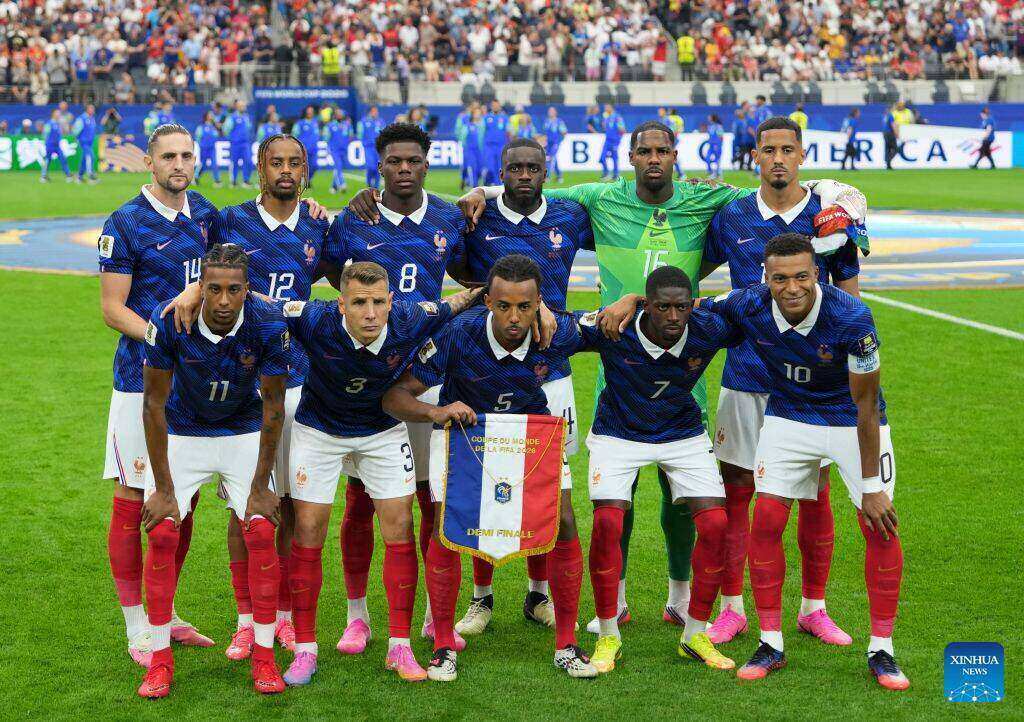
Right from the beginning of the tournament, many opinions appeared that Deschamps should arrange an additional central midfielder, instead of using attacking players like Desire Doue or Bradley Barcola at the same time. Against the opponent who owns the strongest midfield in the league like Spain, this is considered the most suitable time for France to strengthen its ability to control the midfield. However, Deschamps still maintained the 4-2-3-1 formation and paid the price when Spain continuously penetrated the midfield area.
Loyalty also became a double-edged sword for Deschamps. He decided to bring Aurelien Tchouameni back to the main squad to replace Manu Kone. Another controversial option was to use Lucas Digne in the left-back position. Digne himself committed a foul leading to the opening penalty and repeatedly encountered difficulties against Lamine Yamal's speed.
However, looking back at the journey of more than 14 years, Deschamps still makes more decisions right than wrong. He helps many players like Rabiot or Mbappe play more sublimely in the national team jersey compared to the club level, while effectively taking advantage of the abundant talent of French football.
Deschamps' legacy is undeniable. However, he will still leave a question mark about exploiting the full potential of the generation of the most talented players in French football history.
I am extremely happy and proud of everything we have done with the French team. We won the 2018 World Cup, reached the final in Qatar and always keep the team maintaining its top position in the world" - Deschamps shared.
That is a calm conclusion, true to the style of a coach who rarely lets emotions overwhelm reason. An era of French football officially closed, opening a new journey with many expectations for his successor.


