
This is one of the biggest jobs in football, at a club that - as fans still cheer for every match - has won every title. But to become a Chelsea head coach, top-level experience and a proven record are no longer a mandatory condition.
Therefore, don't expect an excellent coach to replace Enzo Maresca. If that sounds unreasonable - which is also the feeling of many Chelsea fans at the moment - then that is the reality of Chelsea "new" under the management of Todd Boehly and Clearlake Capital.
Therefore, it will not be surprising if former Hull City captain Liam Rosenior - currently leading Strasbourg, Chelsea's partner in Ligue 1 - emerges as the top candidate to replace Maresca at Stamford Bridge. Rosenior is highly rated and has great potential, but his most recent job in England ended with being sacked by Hull. Therefore, the appointment of Rosenior is unlikely to create excitement, similar to how Maresca came in 2024 in a skeptical atmosphere.
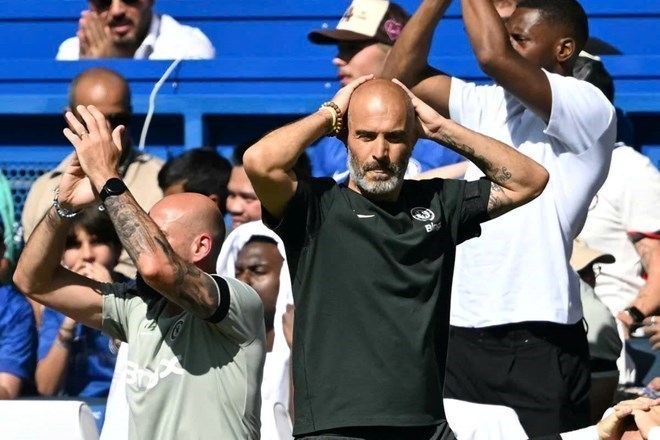
Maresca left Chelsea on New Year's Day after 18 months in office, despite bringing him to the UEFA Conference League and FIFA Club World Cup last season, and helping the team win a Champions League spot thanks to fourth place in the Premier League.
However, victory is no longer the number one priority at Chelsea. The important thing is the suitability with the board's plan, including the orientation to recruit young talents with great potential from around the world.
Chelsea currently operates with a complex leadership structure: two bosses, two sporting directors - Paul Winstanley and Laurence Stewart - along with many personnel in the "integrated football leadership structure", including Dave Fallows (former Liverpool scouting and recruitment director) and scouts Sam Jewell, Joe Shields.
In this environment, the head coach is also expected to follow the recommendations of the medical department instead of just "considering" as usual. For some seasoned coaches, this may be the reason why they shake their heads at The Blues.
That's Chelsea, and whether it's effective or not is another story. Because at Chelsea at this time, the measure of success is no longer as simple as before. And that is also one of the key reasons why Maresca is no longer in office.
In nearly 20 years under Roman Abramovich (2003-2022), Chelsea was associated with great ambitions and a "quick win" approach, recruiting top strategists such as Jose Mourinho, Carlo Ancelotti, Antonio Conte or Thomas Tuchel. That model worked when Chelsea won two Champions Leagues and five Premier Leagues in the Abramovich era, before the British government's sanctions forced Abramovich to sell the club in May 2022.
Maresca is almost impossible to be Abramovich's choice. His appointment clearly reflects Chelsea's shift. At the time of taking office, Maresca had less than 18 months of coaching experience. He had 6 months in Parma in Serie B and then was sacked for failing to promote the rival team, before having a full season at Leicester City and helping the "Foxes" win the Championship to return to the Premier League.
By choosing Maresca, Boehly and Clearlake have returned to the core plan: to find a young, potential coach to develop a squad of talented young players. The first attempt with Graham Potter failed, while Mauricio Pochettino - more experienced - only stayed for a season due to disagreement, when he wanted to use more older, more experienced players but was rejected by the owner. When Chelsea switched to Maresca, it further showed their determination to build their own way.
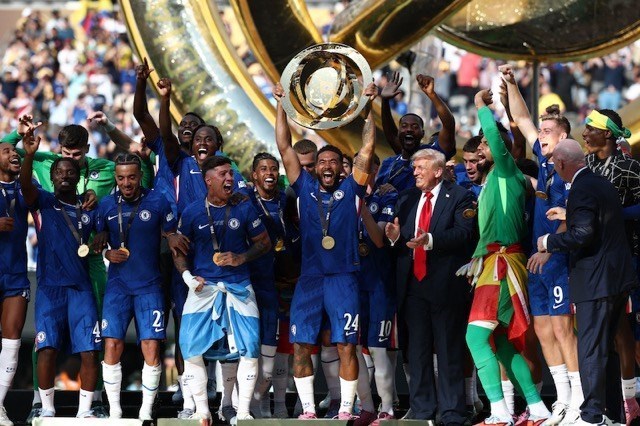
An Abramovich-era coach may quickly respond to requests from the "integrated football leadership structure", and demand the team provide enough tools to prioritize victory. On the contrary, when giving opportunities to a young coach, Chelsea may expect "gratitude" to make the conflicts of veteran captains unreflected. And the chosen person will be willing to adapt to the approach designed by the owner.
But that can only be effective for a while. Perhaps, after the titles last season, Maresca felt he was in a position to promote more strongly the recruitment of players he considered necessary to compete for the championship. This scenario once contributed to Pochettino's departure, as well as Tuchel leaving his position just a few weeks after a chaotic summer transfer window, when he once called on the team not to recruit Cristiano Ronaldo.
Therefore, when Chelsea appoints a new coach, the key criteria may be youthfulness, promisingness and ease of adaptation. The period when Chelsea recruited the best strategists seems to have receded into the past.


