
Perhaps nothing reflects more clearly the change of the modern midfielder position in the Premier League when Marc Guehi, a center-back, was chosen by Enzo Maresca to play in midfield instead of Mateo Kovacic, Nico Gonzalez or Matheus Nunes. Meanwhile, Manchester City still has to spend up to 125 million pounds to recruit Enzo Fernandez from Chelsea.
Fernandez belongs to the type of midfielder completely different from Guehi. He can receive the ball from the defense, participate in ball rotation in narrow spaces, push high like a number 8, penetrate the penalty area and create opportunities. Elliot Anderson, who moved from Nottingham Forest for 116 million pounds, also possesses many similar qualities. These deals reflect a clear trend: Premier League clubs are willing to pay huge sums of money for midfielders who are familiar with the English football environment.
Fernandez's fee can therefore be explained by his experience in the Premier League, reputation and proven adaptability. Similar options in Europe are much lower in price, but do not bring the same level of certainty for teams under pressure to succeed immediately.
The summer of 2026 witnessed a series of midfielder signings with very high fees. Manchester United signed Andrey Santos, Carlos Baleba and Youri Tielemans, while Tottenham spent a large sum of money for Sandro Tonali and Mateus Fernandes. Arsenal brought Bruno Guimaraes in for 75 million pounds, a figure that was once enough to be surprising but now becomes relatively acceptable in the current transfer level.
What is worth thinking about is that the sharp price increase does not mean that the quality of midfielders in the Premier League also increases correspondingly. If you list the top central midfielders in the world today, most of them are playing outside of England.
Vitinha and Joao Neves play for Paris Saint-Germain, Jude Bellingham for Real Madrid, Pedri and Rodri in Barcelona, and Joshua Kimmich for Bayern Munich. Besides, there are names like Frenkie de Jong, Fabian Ruiz, Federico Valverde or Aurelien Tchouameni.
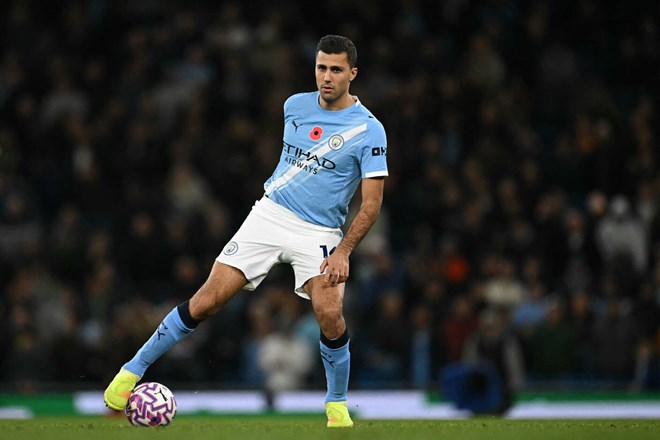
The Premier League still has Declan Rice, Moises Caicedo, Bruno Fernandes and some other quality players. Fernandez plays well, Mateus Fernandes is promising, and Baleba has left many impressive performances. However, the richest league in the world lacks midfielders who possess control and creativity at the highest level.
Maresca's use of Guehi further highlights this trend. According to Chelsea coach, the Premier League requires midfielders with fitness, strength and tackling ability. Players must be strong enough to cover a wide range, constantly move and adapt to high-intensity matches. That partly explains why a player like Guehi can be pulled into midfield.
However, physique is not the only factor that determines the quality of a midfielder. Players like Rodri, Bernardo Silva or Kevin De Bruyne have proven that the ability to pass the ball, read the game and control the tempo can also determine a match. Currently, the Premier League seems to prioritize players who can run, compete and cover space, instead of purely creative midfielders.
Financial factors and pressure from the board of directors also contribute to pushing the market in that direction. For sporting directors, spending a large amount of money on a player who is already famous and familiar with the Premier League is often less risky than an unverified deal.
When Nicolas Pepe fails at Arsenal or Jack Grealish does not meet expectations at Man City, responsibility is easily pushed to the players themselves. Deals like Fernandez, Anderson or Morgan Rogers also operate according to the same logic: reputation and experience help the club more easily defend their decisions.
The Premier League is therefore forming a loop. Teams spend heavily to not be left behind, expensive deals become symbols of ambition, and new prices continue to be set. The hotter the market, the harder it is for clubs to stay out of the game.


