
Finally, the "longest-kept secret" of international football has also been confirmed: Zinedine Zidane officially becomes the head coach of the French national team.
At the age of 54, the former Ballon d'Or winner is one of the greatest symbols of French football. He made great contributions to helping Les Bleus win the 1998 World Cup and EURO 2000, before reaping a series of successes as Real Madrid coach with many Champions League and La Liga titles.
Taking over the position from Didier Deschamps after more than a decade, Zidane is facing the opportunity to complete his massive collection of titles with the French national team in the position of coach. After only finishing fourth at the 2026 World Cup, Les Bleus will enter the preparation stage for the UEFA Nations League before heading towards the EURO 2028 qualifiers.
Despite owning a glorious record, Zidane has not led any team since leaving Real Madrid in 2021. During that time, he almost stayed away from the limelight, kept all plans secret and rarely appeared in front of the media.
Deschamps and Zidane always respect each other, but they have never been close friends. That has been true since the two were side by side in the French and Juventus colors, and that relationship has not changed until now.
Deschamps has never felt comfortable when Zidane is considered a near-certain successor on the Les Bleus coaching bench. After announcing that he would leave the French national team after the World Cup in January last year, Deschamps is said to have reached an oral agreement for Zidane to take over. This information unintentionally adds pressure to the strategist who is about to retire.
However, Zidane takes over a team that owns a very solid foundation and is likely not to create too much disruption.
With stars like William Saliba, Ousmane Dembele, Michael Olise and Kylian Mbappe, the French team is considered to own four of the best players in the world today. Except for the full-back position, the Les Bleus squad has significant depth in most lines, harmoniously combining youth, experience and professional quality.
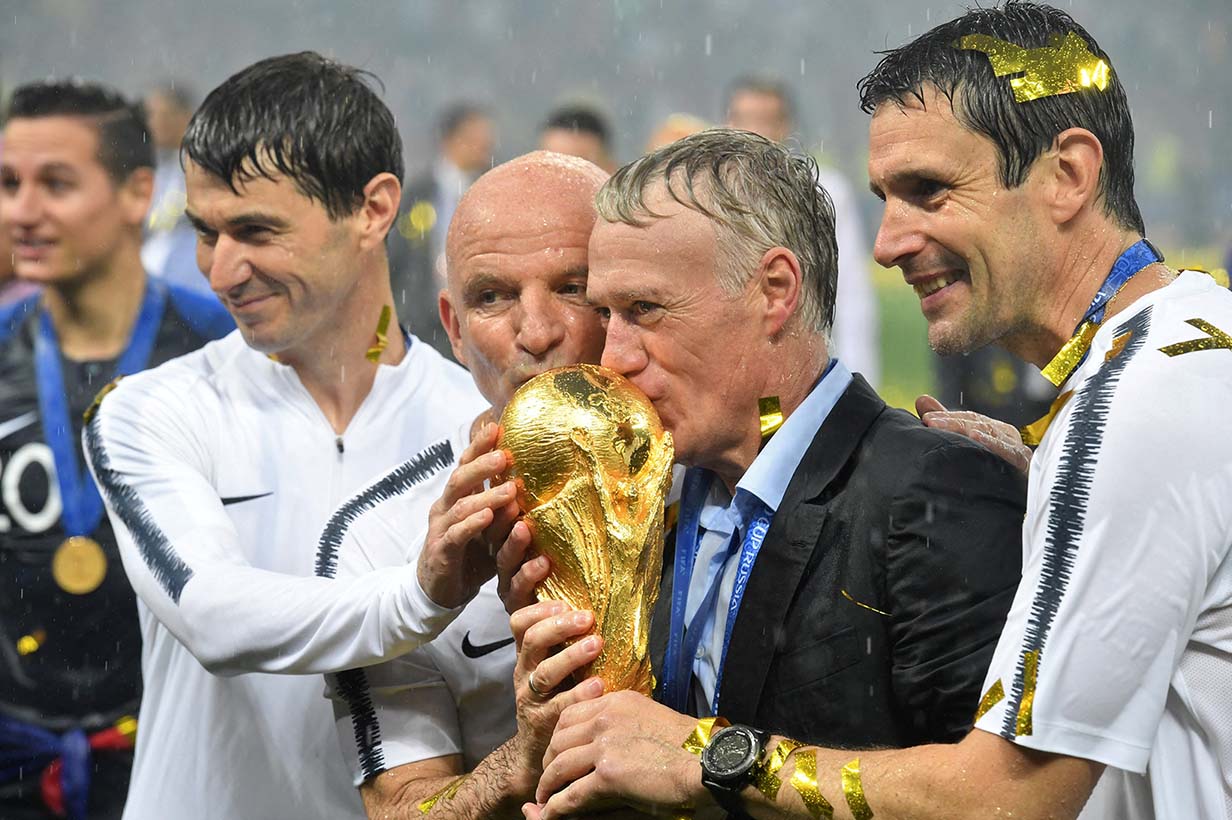
Some veterans such as N'Golo Kante or Lucas Hernandez are likely to leave the national team, so Zidane must add new factors and continue to look for young talents of French football. However, the main squad of the national team is predicted not to change much.
In terms of tactics, Zidane may carry the philosophy that was successful at Real Madrid. He prefers a three-midfielder system and is likely to move the French team from the 4-2-3-1 formation under Deschamps to 4-3-3. However, this change also means that Michael Olise may have to return to the wing instead of continuing to play in the number 10 role.
The biggest changes are likely to come in the coaching staff. David Bettoni, Zidane's close associate for many years, will take on the role of number one assistant. Hamidou Msaidie and Gregory Dupont, two members who used to work with Zidane at Real Madrid, are also expected to join the coaching staff as assistants and fitness coaches.
In addition, former goalkeeper Fabien Barthez is expected to be in charge of coaching goalkeepers, while Bernard Diomede, Zidane's former teammate in the French national team and currently leading the French U19 team, will also participate.
Compared to the Deschamps era, Zidane plans to build a larger and more specialized coaching staff. The new working structure is expected to bring a more professional environment, while creating clear differences for French players.


