
France's journey at the 2026 World Cup will close after the third-place match. Didier Deschamps' team entered the tournament as a championship contender and maintained that image until the semi-final match against Spain. However, the 0-2 defeat ended all hopes, and closed Deschamps' 14-year reign as head coach.
After 184 matches leading Les Bleus, Deschamps left the national team with a remarkable record including a World Cup title, two World Cup finals, one EURO final and one UEFA Nations League title. However, the lackluster performance against Spain made many French fans no longer regret it, instead waiting for a new era under Zinedine Zidane.
In terms of squad quality, France is considered one of the strongest teams in the tournament. Stars like Kylian Mbappe, Ousmane Dembele, Michael Olise or Randal Kolo Muani are capable of creating a difference against any opponent. But against Spain, they were almost completely neutralized.
In the first 64 minutes of the match, the French attack only created a meager 0.04 expected goals (xG), a number clearly reflecting the deadlock of Les Bleus against the opponent's effective defense and pressing system.
This is also the third consecutive time Deschamps has failed against Luis de la Fuente, after the EURO 2024 and Nations League 2025 semi-finals. It is worth mentioning that each time they faced each other, the French team performed worse than the previous time.
The scenario of this match was not unexpected. Spain controlled the ball, controlled the midfield and continuously stretched France's defense system. Meanwhile, Deschamps remained loyal to his familiar approach, placing his trust in personal quality instead of adjusting tactics to regain the game.
Even Mbappe admitted that his team is at a disadvantage when they often face the situation of losing troops in midfield.
Deschamps' failure to change the operation makes France almost powerless. Personnel adjustments such as bringing Manu Kone or Desire Doue on the field are only substitutions according to position, not creating a difference in tactics.
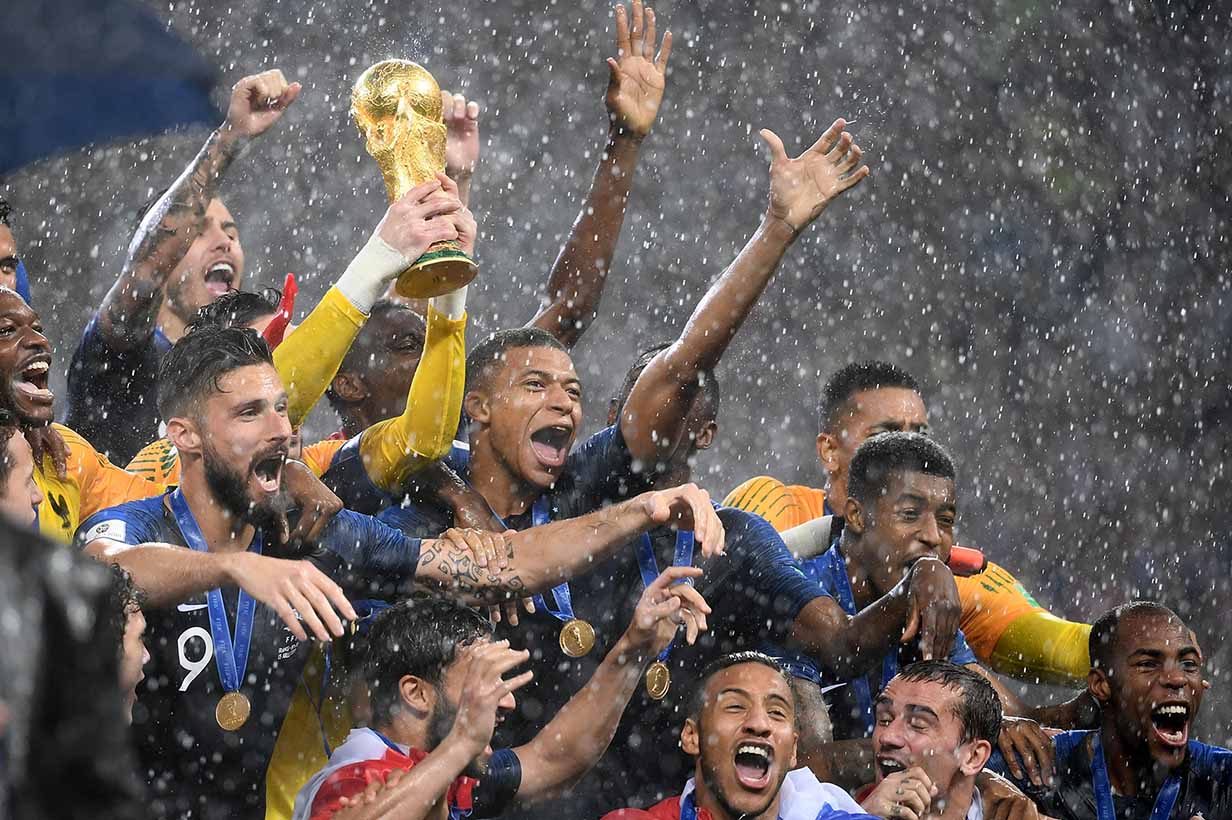
That is also a characteristic in Deschamps' philosophy over the years. He prioritizes stability, maintains the morale of the whole team and gives decision-making power to the stars on the field. This approach once brought resounding success with the 2018 World Cup championship and the 2022 runner-up title.
However, when opponents both control the ball better and organize pressing effectively, excellent individuals also find it difficult to develop their abilities if they lack space and time to handle the ball.
The defeat against Spain shows the limits in Deschamps' way of operating. It is the principles that once helped him succeed that have become a barrier when France faces tactically organized teams at the highest level.
Now, all attention is focused on Zidane, who is expected to succeed Deschamps. Despite owning three Champions League titles and two La Liga titles with Real Madrid, Zidane has not worked since 2021. Moreover, his entire coaching career has been associated with Real Madrid, a very different environment from national team football.
The positive point is that Zidane understands French football very well, and also has in his hands a generation of the most talented players in the world. The challenge for the 53-year-old legend is to find a balance between individual quality and collective cohesion.
If Zidane takes over the French team, what fans expect is not only victories, but also a team that knows how to adapt to all opponents and maximize resources.


