
Expectations of workers
The proposal to reduce working hours for workers in the private sector to 40-44 hours/week, similar to the public sector, is receiving attention from workers. If researched and implemented, this change may directly affect rest time, life as well as work organization.
Ms. Tran Thi Ha (office worker, Cau Giay ward, Hanoi) believes that working a week of 40-44 hours may become a trend in the future, as workers are increasingly concerned about mental health.
If there is more rest time, workers can enter a new working week with better labor and concentration" - Ms. Ha said.
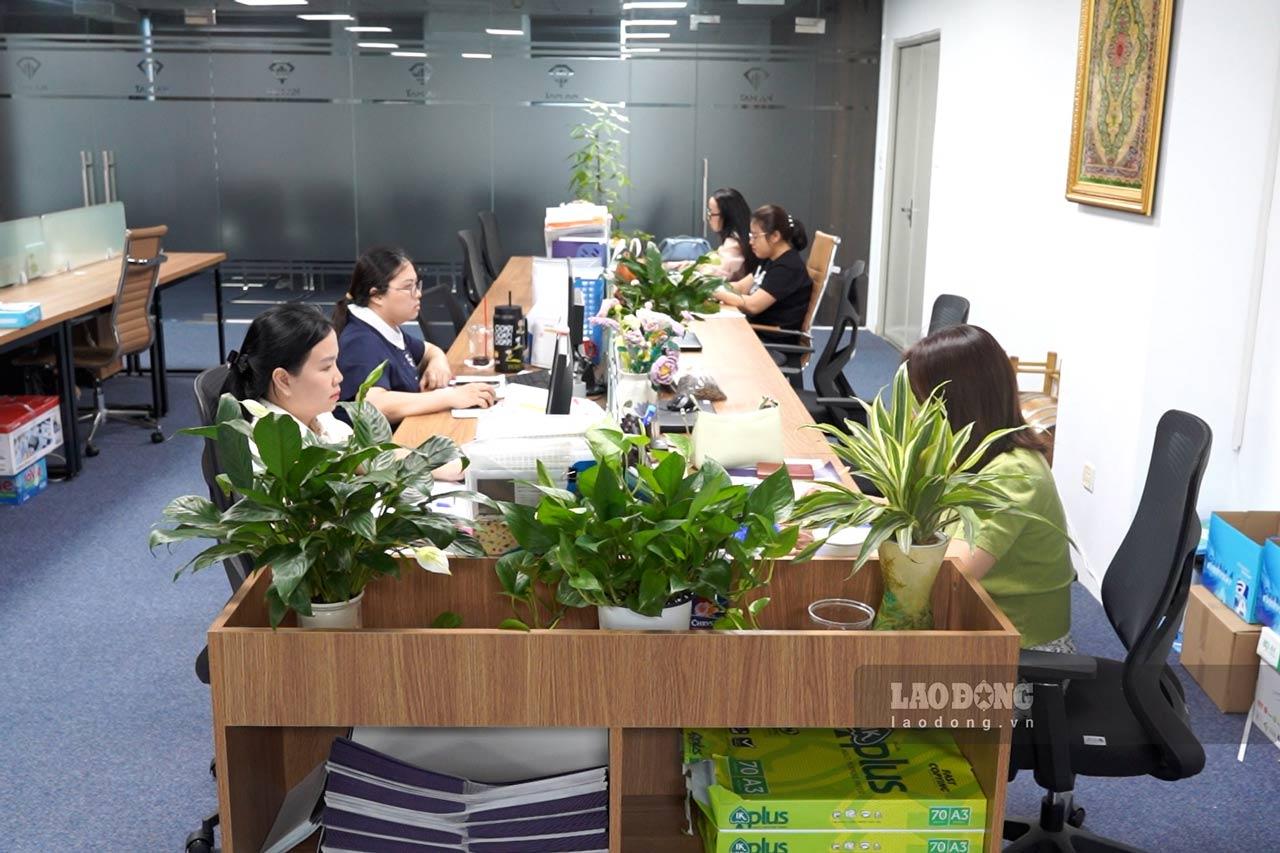
Meanwhile, Mr. Nguyen Tien Duong, working at a plastic recycling workshop in Phu Xuyen commune (Hanoi), said that working hours reductions need to be implemented in accordance with the specific nature of work, and policies and management need to be built to avoid affecting the rights of workers. "Reduce working hours but not reduce income" - Mr. Duong said.
Businesses need to change human resource management
Ms. Nguyen Khanh Phuong Ngoc, Deputy Director of BRANDI HAUS General Trading & Service Co., Ltd., said that currently the company has applied 40-44 hours/week for all personnel.
My company has applied working hours below 48 hours and has shown effectiveness. From an operational perspective, we pay more attention to work results than working hours at the company. However, for the specific nature of a media company, such working hours may be appropriate. However, if building a common policy, in my opinion, it is necessary to have more careful research for each type of business, with a clear roadmap for all parties to adapt," Ms. Phuong Ngoc stated her point of view.
Talking to Lao Dong Newspaper, Assoc. Prof. Dr. Pham Thi Bich Ngoc - Head of Human Resource Management Department, Faculty of Economics and Human Resource Management, National Economics University, said that shortening working hours can bring positive impacts such as reducing exhaustion and stress for workers.
According to her, if working hours are reduced, one of the first things businesses need to do is review personnel. "Businesses must determine whether they can maintain one person by increasing labor productivity or need to add labor" - Assoc. Prof. Dr. Pham Thi Bich Ngoc analyzed.
For businesses that need to maintain operations in many working hours, shortening working hours may require reorganizing shifts and more flexible personnel allocation. This is also a different problem for each industry, depending on the nature of the work and the time the business needs to maintain operations.
In addition, from waiting times, unnecessary meetings to overlapping tasks, all need to be re-evaluated. Tasks that do not create value can also be removed or changed in implementation.
Businesses need to shift from the mindset of "recruiting people to fill the hours" to "recruiting the right people with capacity to create value". Along with that is investing in technology, automation and artificial intelligence (AI) so that employees can create more value in one working hour.
For workers, this change also poses a requirement to improve skills. "Salaires here are not associated with the employee's presence time but must be associated with the value of work and the results that employees are bringing" - Dr. Pham Thi Bich Ngoc assessed.
According to experts, policies also need to be implemented according to a roadmap, avoiding creating too much pressure on businesses in the transition process. Dr. Pham Thi Bich Ngoc said that a roadmap can be studied from 48 hours down to 44 hours and towards 40 hours, while monitoring the transition process.


