
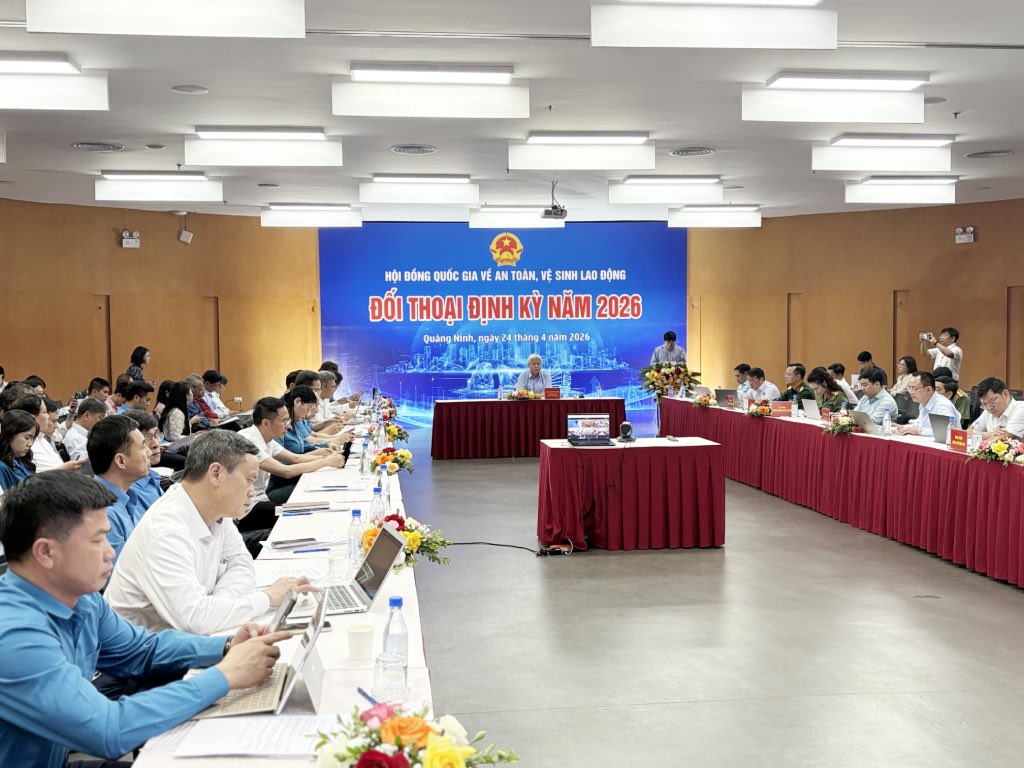
On the afternoon of April 24, in Quang Ninh, the National Council for Occupational Safety and Health held a periodic dialogue. Mr. Nguyen Manh Khuong - Deputy Minister of Home Affairs, Vice Chairman of the National Council for Occupational Safety and Health chaired the dialogue.
At the dialogue, representatives of the Department of Home Affairs of Nghe An province raised difficulties in resolving compensation for workers with occupational diseases when they have retired or have quit their old units and transferred to new units.
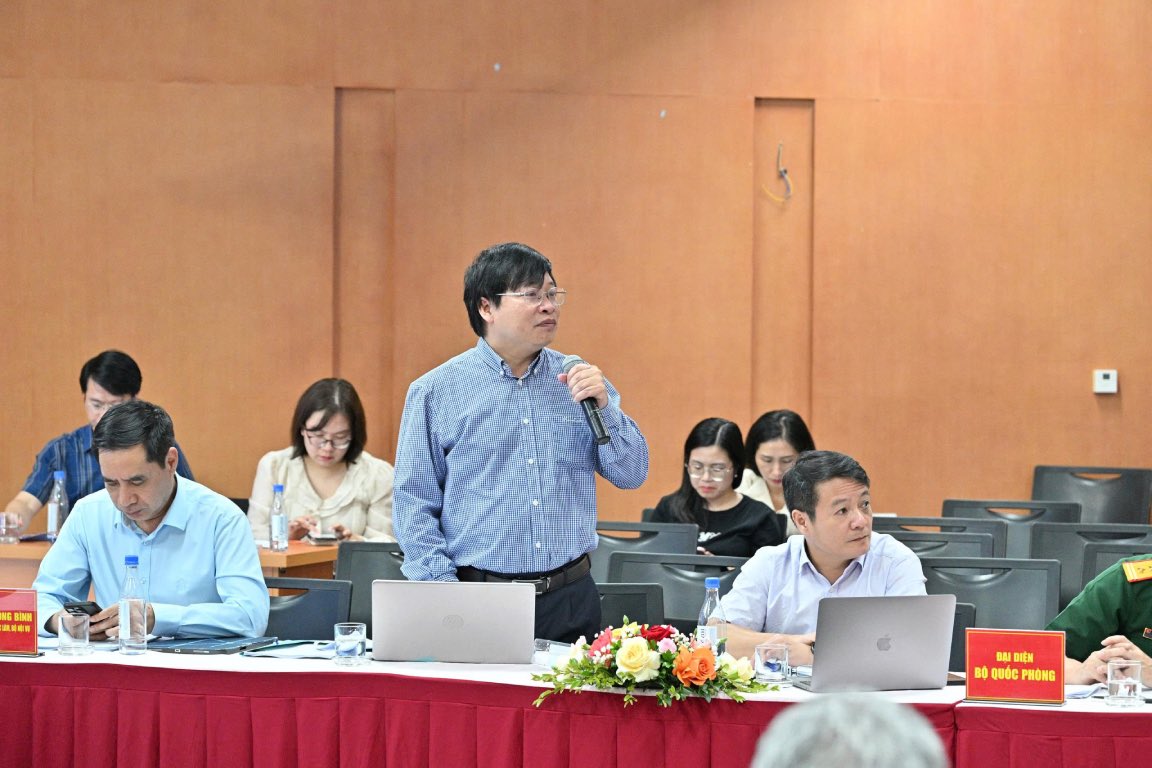
According to representatives of the Ministry of Health, for cases where workers discover occupational diseases after no longer being exposed to harmful factors in the working environment, or when they retire and are newly discovered, it has been specifically regulated in the Law on Occupational Safety and Health.
Clause 2, Article 27 of the Law on Occupational Safety and Health stipulates the responsibility of employers to prepare and manage health records of employees and records of employees suffering from occupational diseases.
However, in practice, most agencies and units only have periodic health check-ups, but cannot establish health management records according to the provisions of law," said a representative of the Ministry of Health.
Representatives of the Ministry of Health added that if businesses prevent employees from being exposed to harmful factors, or if occupational diseases are detected after retirement, Circular 28 of the Ministry of Health assigns the responsibility to employers to prepare and manage health records, occupational disease records and keep them throughout the time employees work at the unit; return health records, occupational disease records (if any) to employees when employees transfer to another agency or quit, retire, or take leave.
According to a representative of the Department of Employment (Ministry of Home Affairs), in cases where employees retire or transfer to another job and are newly diagnosed with occupational diseases, if the responsibility of the employer in the past is regulated, it is necessary to clarify the role and related relationships. According to a representative of the Department of Employment, in the content of amending the Law on Occupational Safety and Health, this issue has been raised to record the contributions of experts.
Regarding this content, the Vietnam General Confederation of Labor proposed to stipulate that enterprises must be responsible for compensating employees who suffer from occupational diseases after retirement or resignation due to occupational diseases arising from labor environment factors that employees regularly come into contact with during work and diseases that do not arise immediately but arise after a long period of time when exposed to occupational disease-causing factors.
According to current regulations, employees who suffer from occupational diseases that reduce their ability to work by 5% or more or die from occupational diseases while working for employers, or before retirement, before resigning, before transferring to work for another employer, will be compensated by the employer.
At the dialogue, delegates also raised difficulties, obstacles, and recommendations in the field of occupational safety and health; proposed solutions to improve policies... Relevant agencies answered many opinions at the dialogue.
Mr. Nguyen Manh Khuong - Deputy Minister of Home Affairs, Vice Chairman of the National Council for Occupational Safety and Health said that the dialogue of the National Council for Occupational Safety and Health is not only a forum for exchanging information but also a direct channel to correctly identify problems, handle bottlenecks and promote substantive reform in the field of occupational safety and health.
Through recent dialogues, especially in 2025, it can be affirmed that the quality of dialogue has been clearly improved, and many valid recommendations have been received.
However, Mr. Nguyen Manh Khuong also pointed out shortcomings and limitations: The system of regulations is still overlapping and lacks synchronization in some contents; administrative procedures in some stages are still complicated and do not really create favorable conditions for businesses; the organization of implementation in some places is still formalistic and ineffective, especially for small and medium-sized enterprises, the informal labor sector is still a weak link in ensuring occupational safety and health. These shortcomings, if not handled promptly, will continue to be barriers to the goal of sustainable development and improving the quality of human resources.

Speaking in conclusion, Mr. Nguyen Manh Khuong requested ministries, branches, and localities to seriously review current regulations, promptly propose amendments and supplements to inadequate contents; ensure consistency and feasibility when put into practice.
Along with that, continue to promote administrative procedure reform in occupational safety and health in the direction of reducing the burden of compliance, increasing transparency and forecasting, creating favorable conditions for businesses, especially small and medium-sized enterprises.
It is necessary to continue to maintain and improve the quality of the dialogue mechanism, ensuring that this is a two-way, effective information channel, promptly detecting and handling problems arising from practice...


