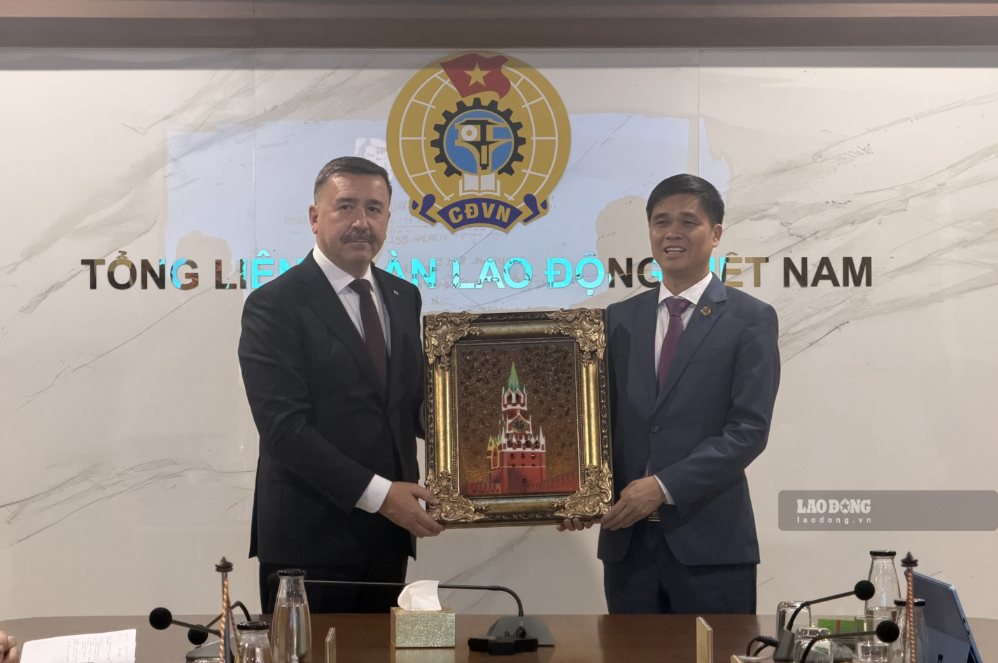
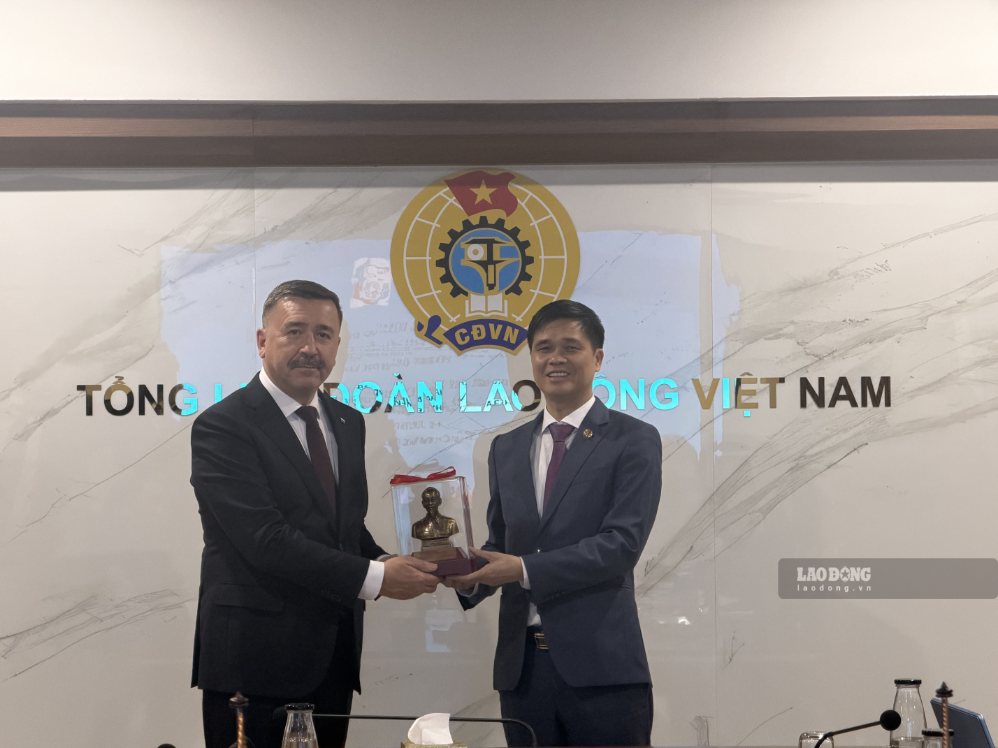
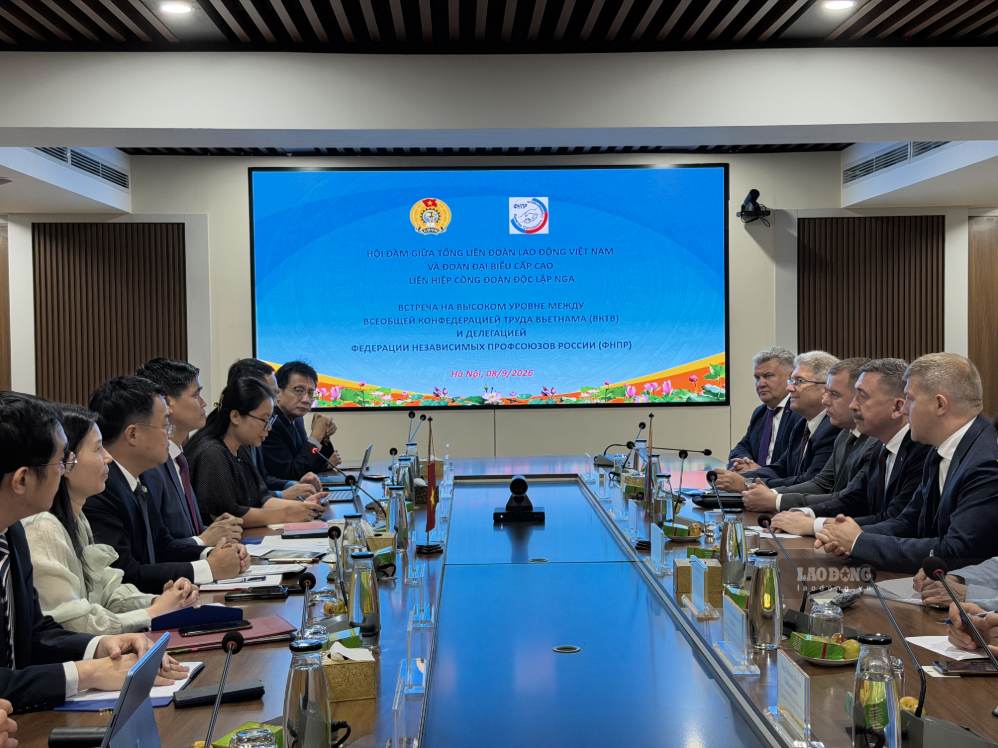
Also participating in the talks between the VGCL and the high-level delegation of the Russian Federation of Independent Trade Unions (FNPR) were representatives of departments of the VGCL, a number of industry trade unions and members of the FNPR delegation...
Standing Vice President of the VGCL Ngo Duy Hieu affirmed that the visit of the FNPR delegation takes place after many years that the two sides have not had the opportunity to exchange high-level delegations directly, so it is of special significance in continuing the tradition of solidarity and friendship between the two organizations.
Standing Vice President of the VGCL Ngo Duy Hieu emotionally expressed his feelings for the assistance of the former Soviet Union and the current Russian Federation to the Vietnamese people in general and generations of Vietnamese Trade Union officials in particular.
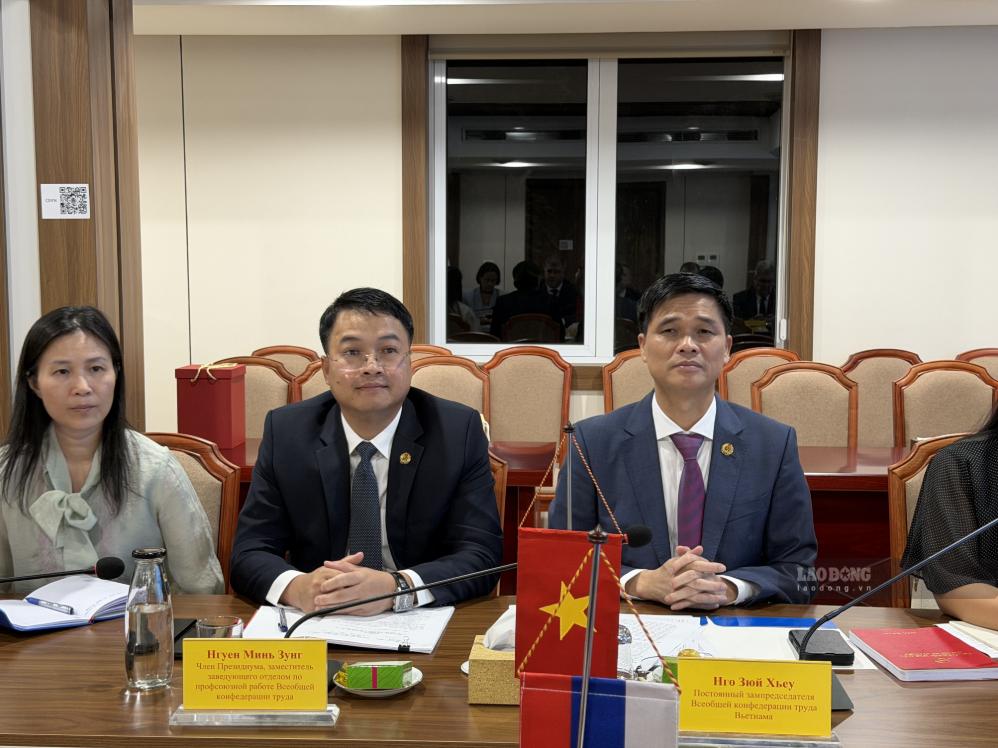
At the talks, the two sides exchanged in-depth views on trade union activities representing and protecting civil servants, public employees and laborers in state agencies and public non-business units; mechanisms for social dialogue, collective bargaining and labor dispute resolution; exchanged views on cooperative relations and cooperation orientations in the coming time.
One of the contents discussed by the Standing Vice President of the VGCL is that the Vietnam Trade Union focuses on dialogue, collective bargaining, legal advice, supporting the resolution of disputes related to union members and workers; organizing many programs to care for life, welfare, housing and support union members and workers in difficult circumstances.
Representatives of the General Confederation participate in the National Wage Council, contributing to negotiating and proposing the annual minimum wage level suitable to socio-economic conditions.
The Standing Vice President of the Vietnam General Confederation of Labor expressed her desire for FNPR to share more about some contents.
Including the model of trade union organization in the public sector of the Russian Federation; the relationship between industry trade unions and FNPR and regional and local trade union organizations; how to gather union members, grasp needs, participate in policy making and protect the rights of workers in public agencies and institutions.
Regarding collective bargaining, Standing Vice Chairman Ngo Duy Hieu also requested FNPR to share the scope, level and content of negotiations for civil servants, public employees and workers in the public sector; the handling of issues directly governed by law, state budget or general salary policies; as well as the role of industry agreements and agreements at agencies and units.
Measures to prevent labor disputes; the role of trade unions in consulting, representation, mediation and legal support; the relationship between internal settlement mechanisms, mediation, arbitration and courts; and at the same time ensure the rights and interests of workers and maintain the stable operation of public agencies and services.
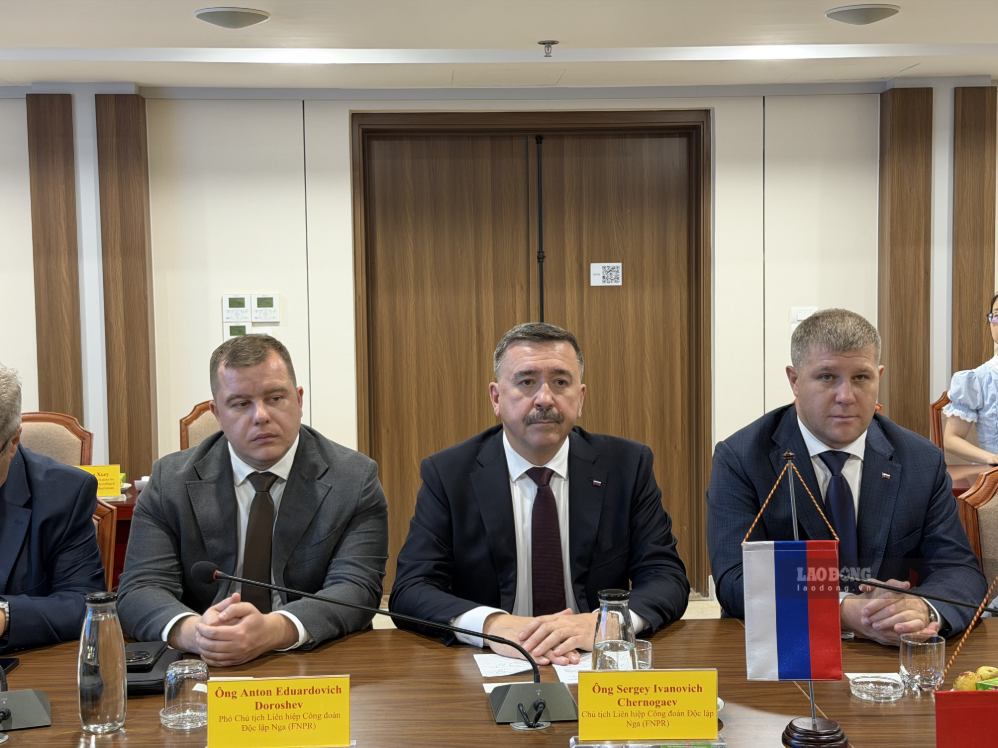
Speaking at the talks, Mr. Sergey Ivanovich Chernogaev - Chairman of FNPR affirmed the good friendship and cooperation between the two nations and two countries.
The FNPR Chairman said that FNPR currently has 19 million union members. The protection of union members and workers in different types of businesses and sectors.
Representing workers is the main task of FNPR. The function of inspection and supervision of the Trade Union is carried out regularly and seriously by inspectors and safety and hygiene officers...
On the basis of traditional friendly relations, the VGCL wishes to continue to maintain delegation exchanges, contacts with leaders and share information about the situation of workers and trade union activities in each country with FNPR.
Focus on exchanging experiences on representing and protecting workers; social dialogue, collective bargaining and resolving labor disputes; organizing trade union activities in the public sector; training and fostering trade union officials; digital transformation, occupational safety and health, and taking care of union member welfare.
The VGCL also wishes that the two sides continue to create conditions to promote direct relations between industry and local trade unions and appropriate training institutions; and at the same time maintain exchanges, consultations and mutual support at regional and international trade union forums based on the capacity and conditions of each party.