
Regular charging is still more beneficial for battery life
When using a fast charger from 15W or more, the phone will heat up because a large current is put into the battery in a short time. High temperature is a factor that can affect the lifespan of lithium-ion batteries if prolonged for a long time.
A test by the YouTube channel HTX Studio used six Android phones, half of which were charged with a fast charger and the other half with a regular charger.
After 500 consecutive charge-discharge cycles, equivalent to about a year and a half of actual use, the research team found that the battery capacity of fast-charged devices decreased by about 0.3% more.
This number is quite small and almost unrecognizable during daily use. However, the results still show that charging often creates less pressure on the battery in the long run.
According to technology expert Marques Brownlee, phone batteries can be imagined as a sponge absorbing electricity. When the battery is low, the absorption capacity is very good. However, as the capacity gradually increases, the absorption rate decreases and the excess energy will be converted into heat.
That is why phones often heat up during charging, especially when using high-capacity chargers.
A regular 5W charger can take about 3 hours to fully charge the battery from 0% to 100%, while a 15W fast charger only takes about 90 minutes. In return, the amount of heat generated during the fast charging process is also significantly greater.
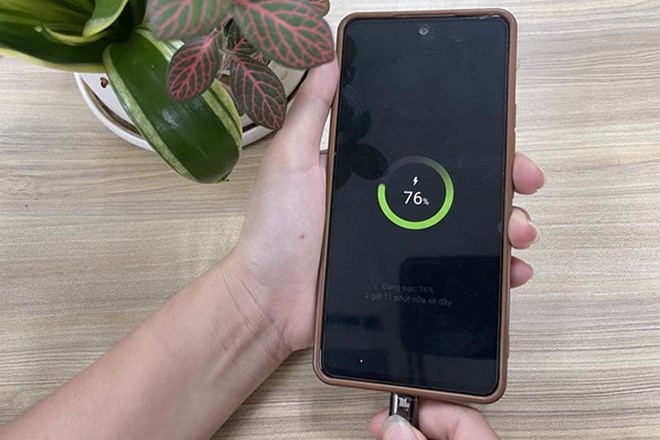
Fast charging is still safe if used correctly
However, users do not need to worry too much about fast charging. Modern Android phones are designed to support this technology from the beginning.
In fact, the charger does not continuously push maximum power into the battery throughout the charging process. Through the USB Power Delivery (USB-PD) protocol, the phone and the charger continuously exchange data to adjust the current appropriately.
Usually, the charging speed will be very high in the early stages, especially from 0% to about 50%. Then the system will automatically reduce power when the battery reaches about 80% to limit temperature and protect battery life.
In addition, each battery is equipped with a battery management system (BMS) with the task of controlling temperature, preventing overcharging and reducing the risk of damage.
Experts recommend that users should maintain battery capacity in the range of 20% to 80% if they want to optimize long-term battery life. Many current Android phones have also integrated battery protection features, automatically limiting or delaying charging to 100%.
In addition, you should use genuine chargers or products from reputable brands with USB-IF certification, avoid charging while playing games or placing your phone in direct sunlight.
For wireless fast charging, users should also use it at a moderate level because this method usually generates more heat than wired charging.
In terms of pure battery life, chargers often still have a certain advantage thanks to lower temperatures and less pressure on the battery over long periods of time. Meanwhile, fast charging brings superior convenience and has been optimized by manufacturers to ensure device safety.
Therefore, users can completely use the fast charger daily without too much worry, as long as they maintain proper battery charging habits and avoid letting the phone operate in a high-temperature environment.


