
Not just turning off the broadcasting stations
2G was commercialized in the world from 1991 and appeared in Vietnam from 1993. For more than 30 years, this technology has been associated with the process of mobile phones becoming a popular means of communication.
However, mobile usage demand has changed significantly. If 2G mainly serves voice and SMS messages, new generations of networks must meet large amounts of data from video, social networks, digital payments, online public services and real-time applications.
4G has now become a popular connection platform, while 5G continues to expand. In that context, maintaining an old network layer using frequency resources is increasingly less suitable for the development needs of mobile networks.
Frequency bands once used for GSM platform network technology, including 900 MHz and 1,800 MHz, can be planned for more modern mobile information systems. This is one of the bases for management agencies to build a roadmap to stop 2G technology from 2024.
However, shutting down a mobile network that has existed for decades is not simply stopping the operation of broadcasting stations.
According to information from VNPT, one of the major challenges lies in coverage and equipment. 2G has the ability to cover a wide area, while a part of users still use phones that only support this technology. If the 2G network stops before the replacement network is sufficiently responsive and users have not completed the conversion, communication may be affected.
Therefore, the transition process must be carried out in parallel on both sides: upgrading infrastructure and bringing users to new technologies.
Converting from device to subscriber
According to information from VNPT, the preparation process for stopping 2G of this enterprise has been implemented since 2021. The initial focus is to expand and optimize the 4G network, especially in areas where 4G coverage is still limited compared to 2G.
Remote, isolated, border and island areas are placed in the group that needs attention due to coverage characteristics. According to data provided by businesses, 4G/5G coverage currently reaches over 99% of the population.
In parallel with infrastructure development, subscriber and device conversion is carried out in stages. In areas that have met the conditions, the 2G network is gradually narrowed down to switch to new technologies.
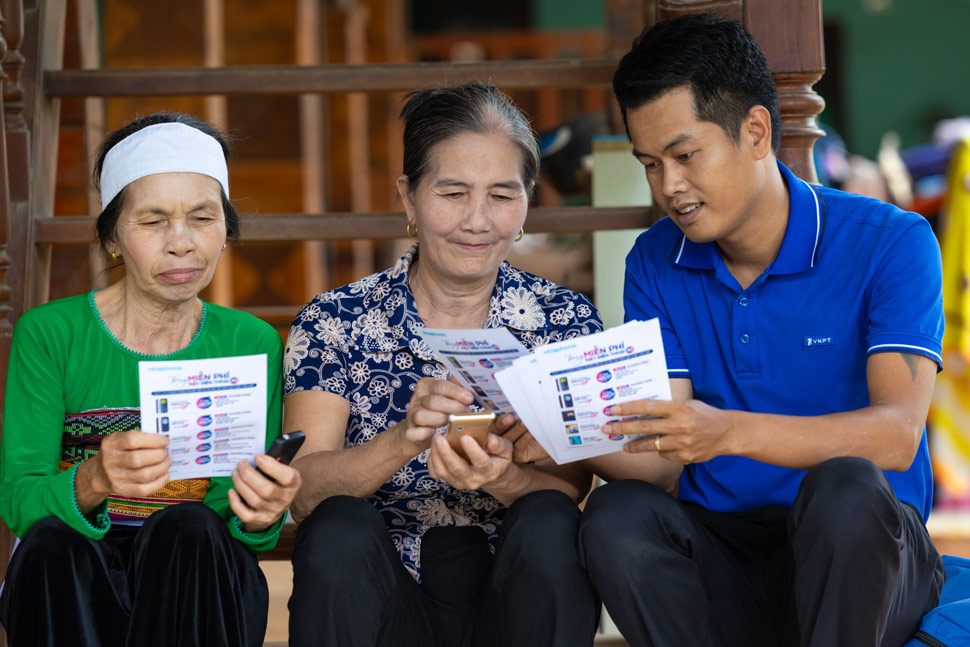
The greater difficulty lies in the group of people who still use 2G phones.
For smartphone users with 4G or 5G support, the conversion can be quite simple. Conversely, the elderly, low-income people, or people who only use feature phones may have to change their devices, SIMs, or service usage.
Conversion is therefore not just a technical operation on the network system. Subscribers and devices in this group need to be reviewed, notified and supported before the 2G network stops operating.
The forms of access being implemented include notification via text messages, calls, social networks, broadcasting systems in communes and wards and direct consultation. Some conversion support policies are applied such as support for devices, SIM card changes, mobile data support and appropriate packages.
On the technical side, an important requirement is to ensure the ability to make calls on the 4G network via VoLTE. When the phone, SIM and service are compatible, users can continue to make calls on the 4G network without having to return to 2G.
According to the roadmap, 2G phone subscribers will complete the conversion before October 15, 2024. With M2M/IoT connections still using the 2G platform, the process is extended and completed before September 15, 2026. The important point of this process is that users are transferred to a new infrastructure before the old technology leaves the system.


