
On June 26, according to the Lai Chau Electronic Information Portal, the Lai Chau Border Guard Command has just coordinated with the Lai Chau Provincial Department of Science and Technology and MISA Joint Stock Company to organize a training class on artificial intelligence (AI) application in performing tasks of the Border Guard force (BĐBP).
According to Senior Colonel Truong Minh Duc - Commander of the Provincial Border Guard Command, in the face of the requirement to protect territorial sovereignty and national border security in the new situation, officers and soldiers need to proactively approach and master technology, and gradually effectively apply AI to practical work.
Colonel Truong Minh Duc said that AI can contribute to improving the efficiency of information collection, analysis, and processing; supporting advisory work, situation forecasting, area management and crime prevention and control in border areas. At the same time, he requested lecturers to convey content close to reality, and students to actively study and practice to effectively apply knowledge to tasks at agencies and units.
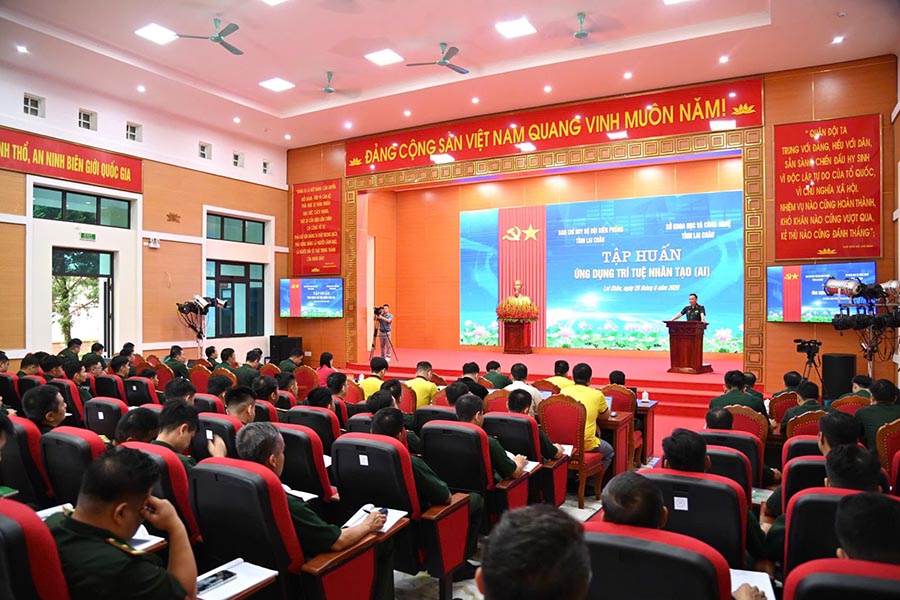
During the training period, trainees studied and practiced 5 key topics including: an overview of artificial intelligence and guidance on transparent AI use, respect for intellectual property rights; AI application in work progress management, clerical work, storage and data security; AI application for translation work in talks; building virtual assistants to search for documents, support writing conference minutes, compiling specialized reports, answering content related to troop management; building videos, images, infographics to serve propaganda, dissemination, legal education and mass mobilization.
Through the training class, 120 trainees are equipped with basic knowledge, practical skills and methods of applying artificial intelligence to each field of work.
This is a specific step of Lai Chau Border Guard in implementing the digital transformation policy, contributing to building a team of cadres with digital thinking and digital skills, gradually forming a modern working environment, improving the quality of management, command, and administration, meeting the requirements of protecting national territorial sovereignty and border security in the new situation.


