
With the goal of building a "Drug-free commune", Tan Hung Commune Police (Dong Nai City) is synchronously implementing drug prevention and control solutions, mobilizing the participation of the entire political system and people, striving to make the locality a drug-free area by 2028.
Tan Hung commune has a large number of ethnic minorities, mainly S'tieng people, accounting for about 33% of the population. Besides the socio-economic development results, the situation of crime and drug violations is still complicated, especially in ethnic minority areas.
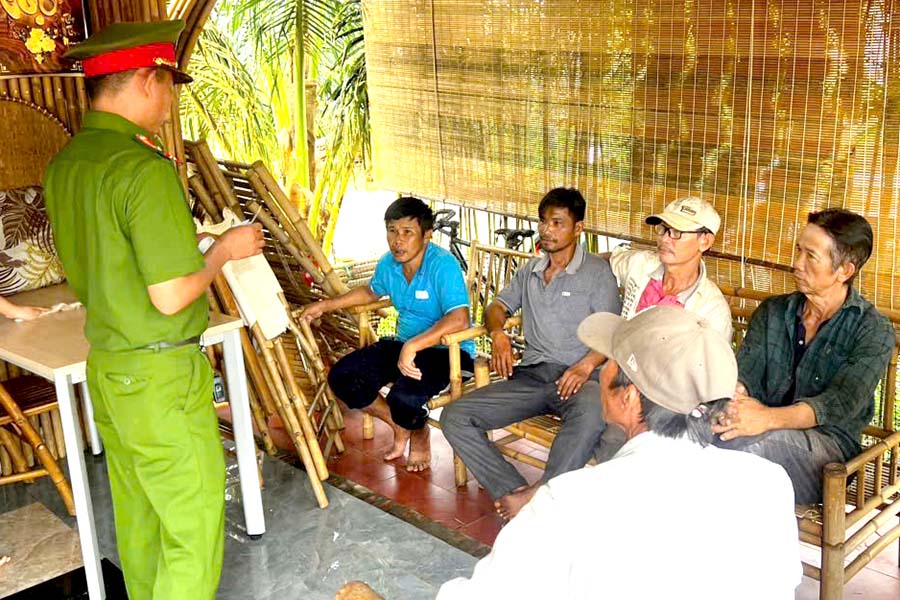
In the first 6 months of 2026, the commune police discovered and prosecuted 8 cases with 17 defendants for drug crimes, including 5 cases, 11 defendants are ethnic minorities. The whole commune currently has 54 cases of illegal drug use, including 22 ethnic minorities; 29 cases are being managed after detoxification, including 7 ethnic minorities.
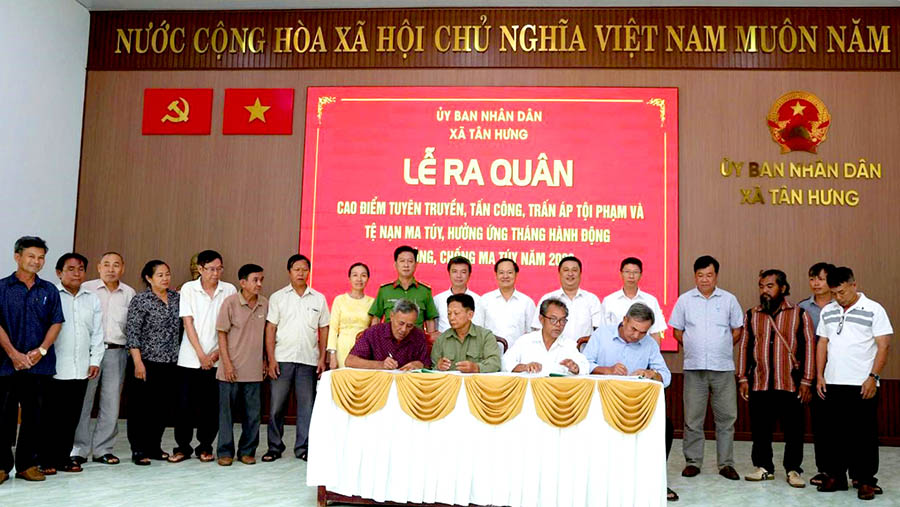
According to Tan Hung Commune Police, the main reason is that a part of the population still has limited legal awareness, lacks jobs, and is easily attracted by bad elements. In addition, propaganda work in some places is not suitable for the characteristics, customs, and habits of ethnic minorities; the role of village elders, prestigious people, and religious dignitaries has not been fully promoted. Meanwhile, drug sources from other areas still find ways to infiltrate with many sophisticated tricks.
Lieutenant Colonel Pham Ngoc Tuan, Head of Tan Hung Commune Police, said that the police force determines that drug prevention and control is a regular and long-term task, associated with the movement of all people protecting national security.
The focus is on strengthening the grasp of the situation, managing the area, managing addicts and post-detoxification people; resolutely fighting against acts of buying, selling, storing, transporting and organizing the illegal use of drugs, not allowing the formation of complex points and hotspots.
Along with that, the locality will innovate propaganda work in a direction suitable for ethnic minority areas; promote the role of village elders, prestigious people, religious dignitaries and mass organizations; and at the same time replicate the models "Drug-free residential area", "Family without drug-related law violators", "Peaceful hamlets and villages, without drugs", contributing to building a safe, stable and sustainable living environment.


