
More than half a century after the country's reunification, there are still many martyrs resting in graves whose identities have not been identified. At Lai Vung - Lap Vo Martyrs' Cemetery (Dong Thap), functional forces are excavating 184 graves to collect remains samples for DNA testing, contributing to returning the names of those who sacrificed, according to the Dong Thap Provincial e-Portal.
This is an activity under the "Operation 500 days and nights to promote the search, repatriation and identification of martyrs' remains" launched by the Government, towards the 80th anniversary of War Invalids and Martyrs' Day (July 27, 1947 - July 27, 2027). Each collected remains sample not only serves DNA testing but also opens up more hope to close the waiting journey of families after many decades.
From early morning, working groups urgently deployed tasks. Some people recorded, digitized information, some dismantled graves, and some carefully peeled off each layer of soil. After many years, many remains are no longer intact, in some cases only small bone fragments are left mixed in the mud. Therefore, each layer of soil is carefully screened to not miss samples.
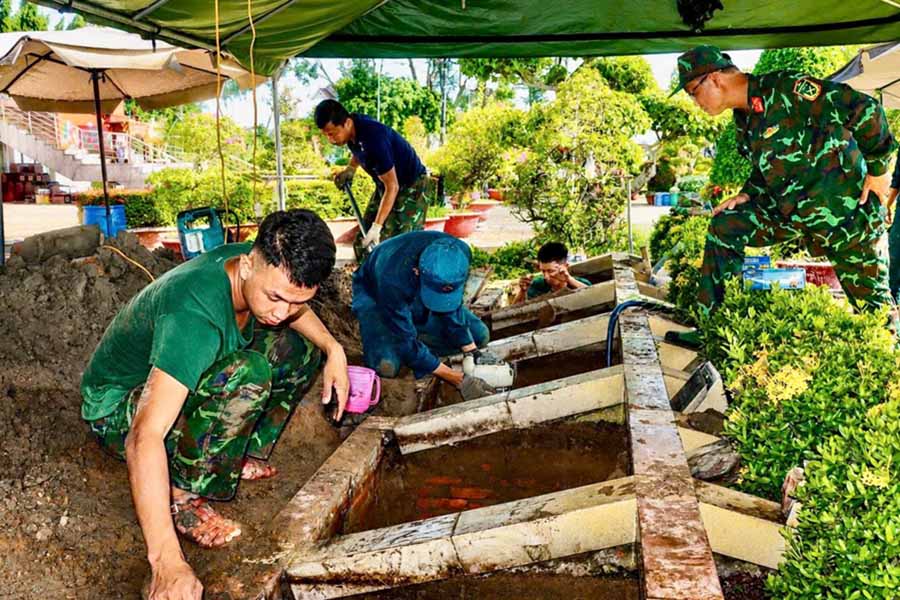
Excavation work faced many difficulties when the graves were located more than 3m deep underground. The cemetery has been renovated many times, forming three layers of graves stacked on top of each other, while groundwater continuously flooded into the excavation pit, forcing the pump to operate continuously.
Under the hot and erratic weather of July, the forces still persistently stayed at the scene, ensuring that each remains sample was collected and preserved according to the correct procedures, minimizing the risk of cross-contamination of DNA.
According to Senior Lieutenant Colonel Nguyen Tuan Anh, Deputy Head of the Political Department of the Military Command of Dong Thap province, as of July 10, the force had exhumed 128/184 graves that have not been identified and collected 97 sets of remains for DNA testing.
He said that the biggest obstacle is the cemetery structure with deep graves, flooded and restored many times, making it time-consuming to determine the location of remains. However, officers and soldiers always identify this as a sacred task, striving to complete it with the highest sense of responsibility.
In the middle of the scene, Mr. Tran Anh Tuan, a member of Task Force No. 1, quietly worked with his teammates from morning to afternoon. "Whether it was sunny or rainy, the brothers still worked. What makes me most proud is that I can contribute a small part to help the uncles and aunts find their identities," he shared.
Each tomb exhumed is an additional opportunity to identify martyrs, helping families know where their loved ones rest after more than half a century of waiting. After receiving the remains, the remains will continue to be preserved, completed dossiers and DNA testing according to strict procedures, so that each remaining mark can become a "light of hope" on the journey to return the names of those who fell.


