
Determination from model points
An Cu commune was established on the basis of merging Van Giao, Vinh Trung and An Cu communes before, with a population of over 40,000 people. Among them, Khmer ethnic people account for more than 77%, religious activities are concentrated at 18 Khmer pagodas - cultural and spiritual institutions that have a profound impact on community life.
Along with socio-economic development, the security and order situation in the locality also has complex factors, especially the risk of drug addiction creeping into residential areas.
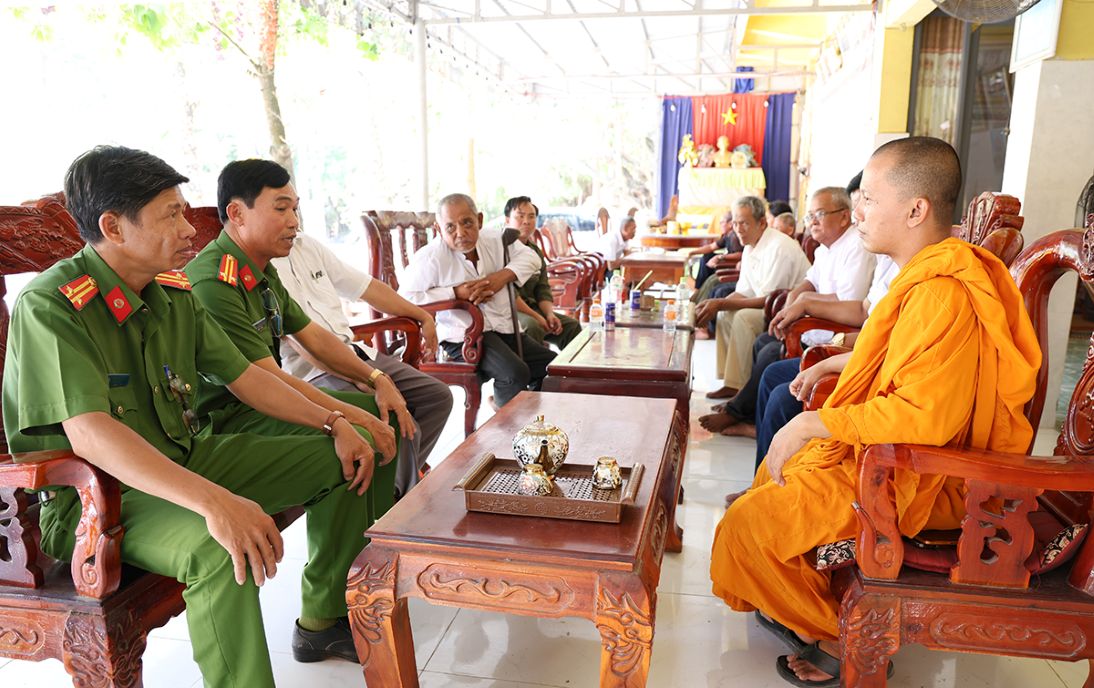
Faced with this reality, An Cu Commune Police proactively advised the Party Committee and the Commune People's Committee to deploy preventive and combat measures from an early stage. Accordingly, Srây Skốth hamlet was selected as a pilot area to transform and create a platform to replicate the "drug-free commune" model throughout the commune. The Police force focused on reviewing and compiling a list of suspected subjects, promptly fighting and handling, and preventing hot spots from arising.
Lieutenant Colonel Nguyen Van Vu - Deputy Head of An Cu Commune Police - said that propaganda work is identified as a key factor: "For ethnic minorities, the content of propaganda must be concise, easy to understand, associated with practical harms so that people can easily absorb and raise their awareness of prevention." This policy has received high consensus from the people.
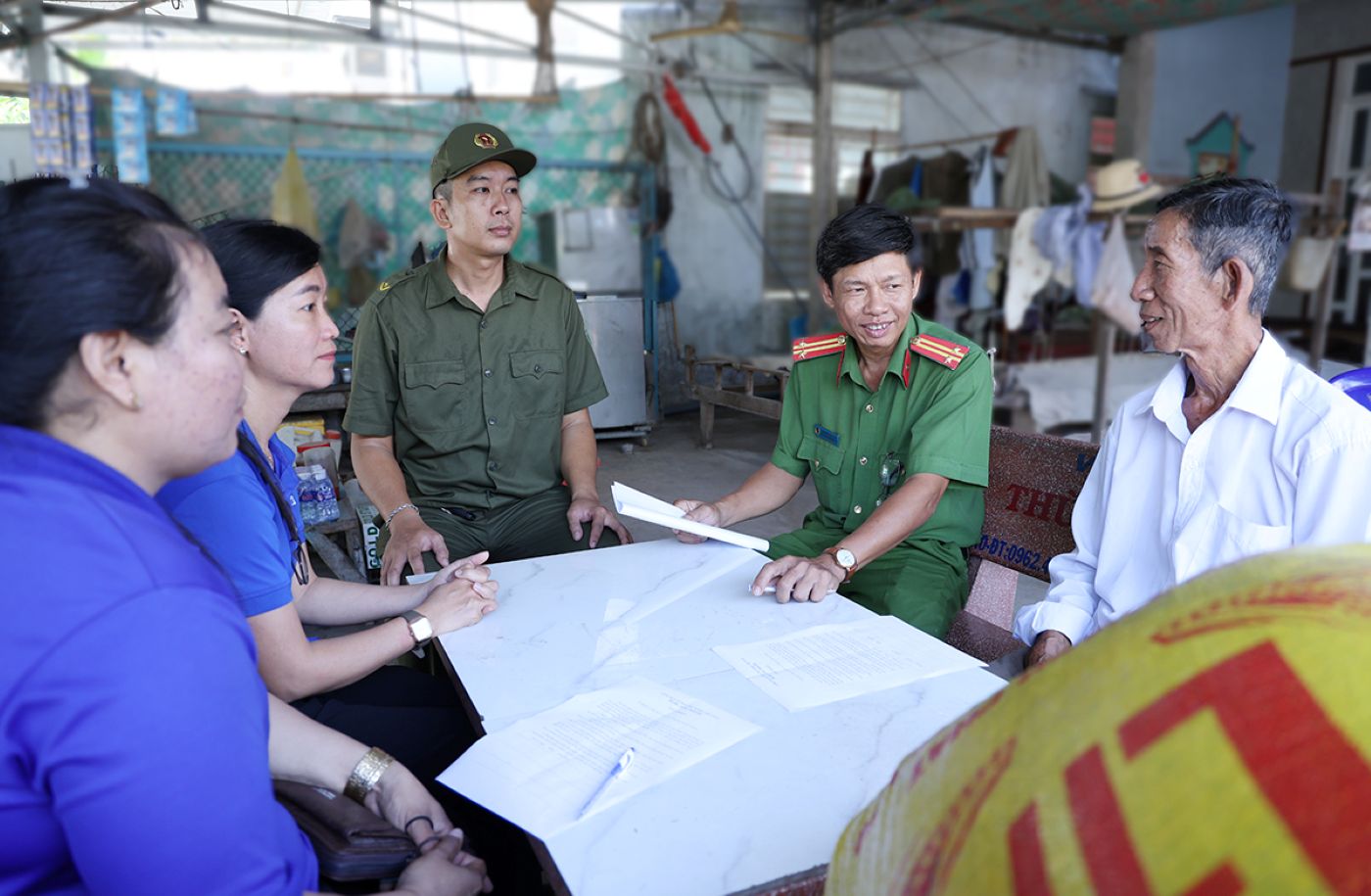
Mr. Chau Menh (Sray Skốth hamlet) shared: "People strongly support building a'drug-free commune'. In my family, I always remind my children and grandchildren to stay away from social evils, because drugs not only destroy health but also lead to many bad consequences for society.
Extended arm" from Khmer pagodas
A highlight in drug prevention and control in An Cu is the close coordination between the government and religious establishments. In the life of Khmer people, monks and abbots of pagodas play a particularly important role, being spiritual support and orienting behavior for Buddhists.
At Van Rau Pagoda, Venerable Chau Soc Phi Rin - abbot of the pagoda - said that the integration of propaganda on drug prevention and control is carried out regularly in religious activities. "We remind Buddhists to care for and manage their children in their families, stay away from social evils. Each person must be a'shield' from their family" - the Venerable shared.
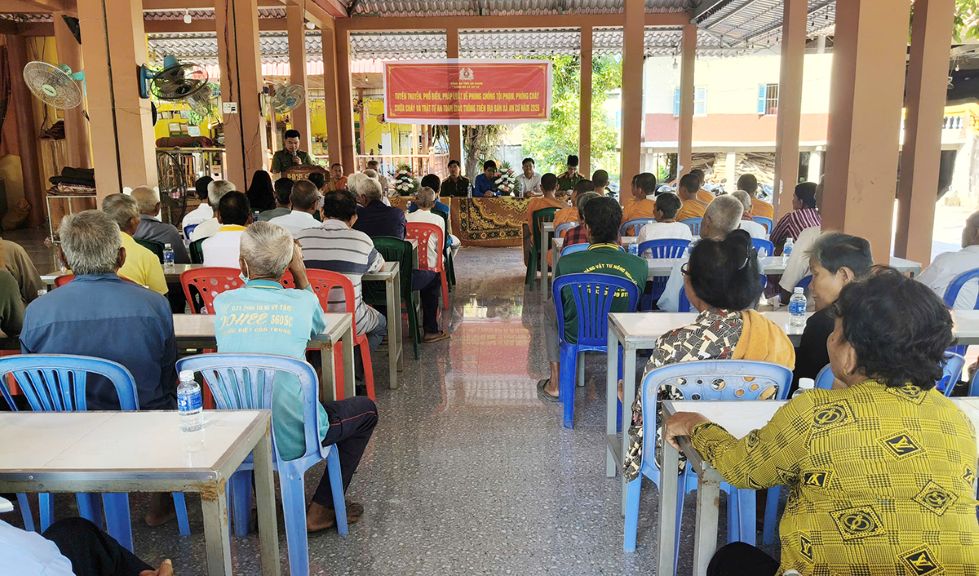
Not only stopping at propaganda, dignitaries also actively coordinate with functional forces in detecting and providing information related to suspicious subjects. The characteristic of the Khmer pagoda campus being large and deserted at some times allows bad actors to take advantage of it to gather and use drugs.
Thanks to the vigilance and responsibility of the abbots, the Commune Police promptly invited 12 subjects with suspicious signs to work, thereby detecting 5 cases testing positive for drugs to establish dossiers for handling according to regulations. These initial results show the clear effectiveness of the "skillful mass mobilization" model in ensuring security and order.
Roadmap to 2028
According to the plan of the Steering Committee of An Cu commune, after the model in Srây Skốth hamlet achieves efficiency, the locality will continue to expand it in 2026 in hamlets: Văn Trà, Vĩnh Thuận, Mằng Rò and Vĩnh Tâm.
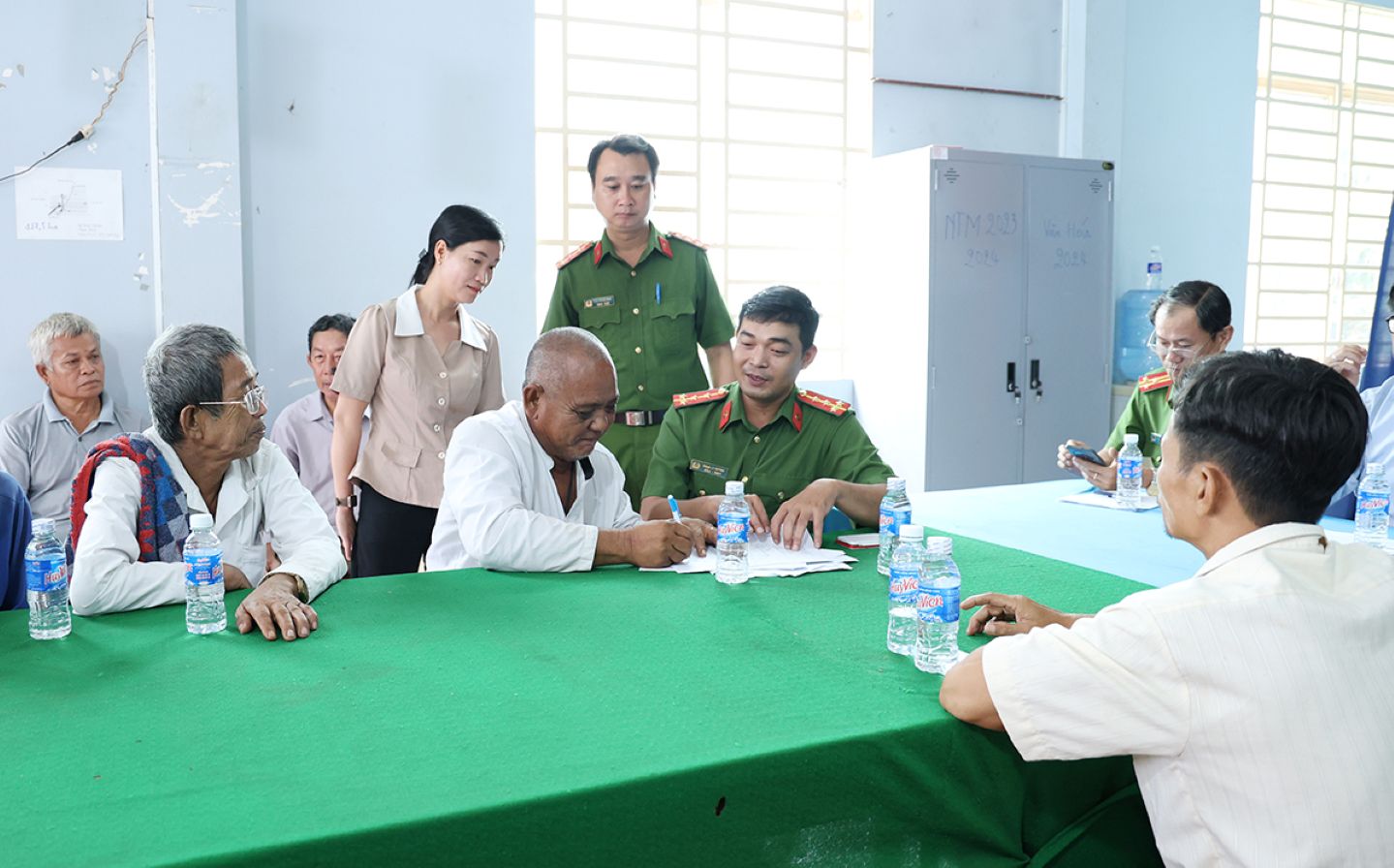
Mobilizing the combined strength of the entire political system, especially the role of religious dignitaries and prestigious people in the community, is creating a "soft shield" but sustainable, contributing to preventing drug addiction from the root.
With drastic direction, synchronous implementation and the consensus of the people, An Cu commune sets a goal that by 2028 it will basically complete the criterion of "drug-free commune". More importantly, this journey is contributing to building a safe and healthy living environment, maintaining long-term peace for the border villages of An Giang province.


