
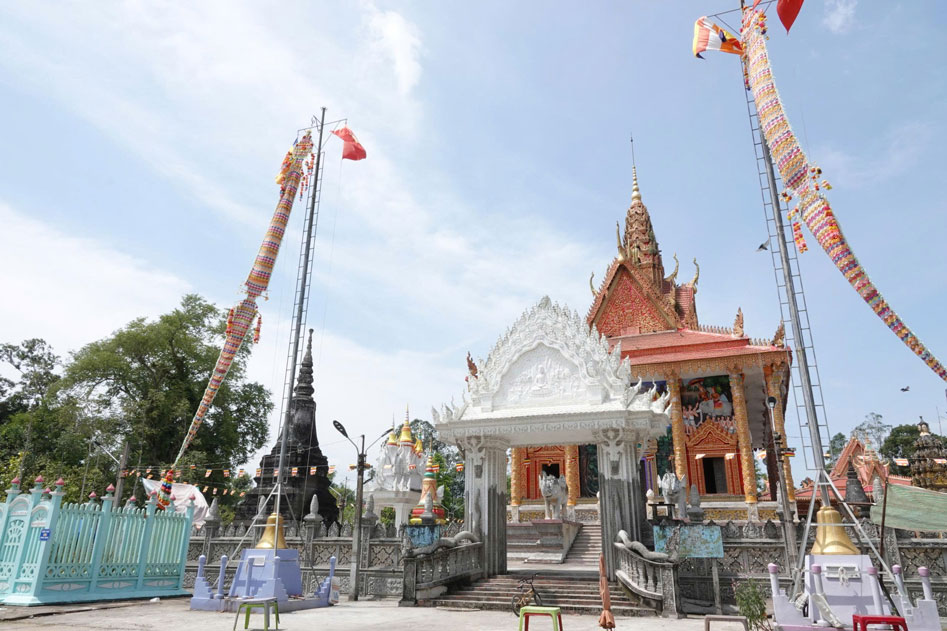
Champa Wonaram Pagoda (commonly known as Champa Pagoda) was built in 1688. The name of the pagoda originates from the past, when it was located on a high sand dune, year-round brilliant with white and red porcelain flowers spreading fragrant fragrance. Over nearly 3.5 centuries, the pagoda has become an important religious center of the Khmer people in the locality.
The most unique highlight that makes pilgrims come to the pagoda is the system of rare ancient trees. Among them, the "old" tamarind tree with a lifespan of more than 700 years stands out.
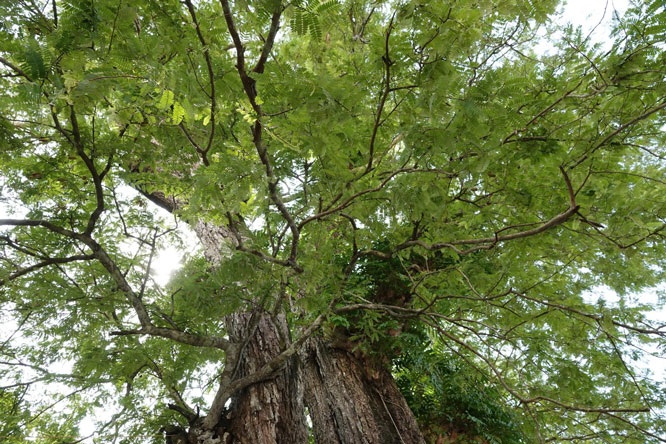
This tamarind tree is more than 30m high, with a wide spread canopy covering a large space. The trunk is so massive that it takes more than 5 people to hug it, the bark is rough and solid like carved into time.
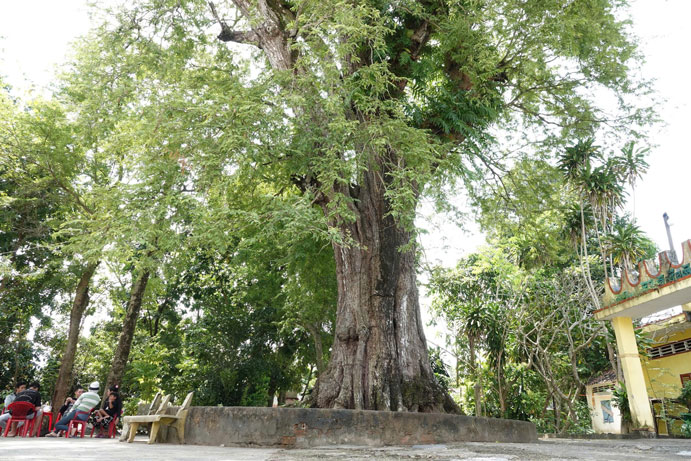
According to the monks at the pagoda, plant researchers from Ho Chi Minh City measured and determined that the tree has existed for 7 centuries. In particular, despite experiencing many ups and downs, the tree is still lush green and laden with fruit every season, symbolizing the lasting vitality of this land.
Behind the main hall is the second ancient tamarind tree with a lifespan of about 300 years. For many years, the tree has maintained its majestic appearance, providing shade for generations of monks and Buddhists practicing at the pagoda.
Besides the pair of precious tamarind trees, the campus of more than 6 hectares of Champa Pagoda also impresses with many other long-lived trees. Typical examples include Barringtonia acutangula roots with round leaves over 150 years old or velvet pink peach trees that bear seedless fruit all year round with a characteristic sweet and fragrant flavor.
The combination of traditional Khmer architecture and hundred-year-old ancient trees creates a harmonious and sacred complex. Coming to Champa Pagoda, visitors are not only to worship and pray for peace but also to listen to the "breath" of history through the roots of ancient trees, finding peace of mind in the bustling pace of life.


