
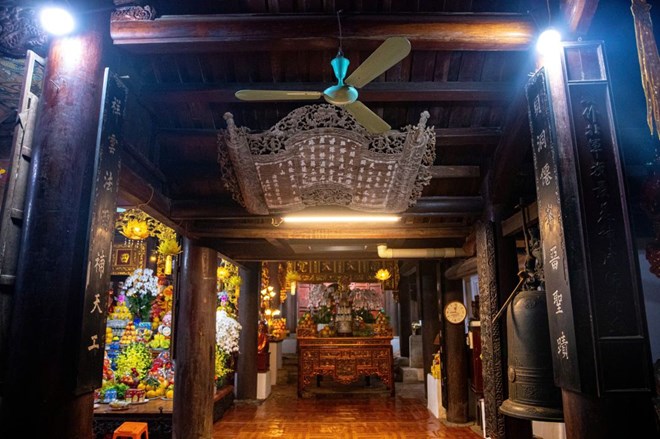
Quang Nghiem Pagoda, also known as Tram Gian Pagoda, is an ancient pagoda in Xu Doai region. Located on Tien Lu mountain (Chuong My ward, Hanoi), the pagoda is associated with historical documents and folk beliefs through many periods... Legend has it that this place was once the place of practice of Saint Boi - Nguyen Binh An, who was popularly revered as a virtuous person with many spiritual responses.
According to records in "Dai Nam Nhat Thong Chi", the story of Duc Thanh Boi contributed to creating a sacred reputation for the pagoda. From the Tran Dynasty to later periods, the pagoda has been restored and embellished many times.
Especially during the Le Trung Hung period, many important items such as the upper hall, front hall or corridor were repaired and supplemented. By the end of the 17th century and in the 18th century, the pagoda was supplemented with bell towers, cast bronze canteens and sculpted Buddha statues, creating a majestic appearance like today.
In that process, the Dang family played an important role, notably the Nghiem Quan Chua - a noble female figure. She was originally named Dang Thi Ngoc Phuc, also known as Trinh Thi Ngoc Ky after being adopted by Lord Trinh Trang and conferred the title of Quan Chua.
According to the stele records, Nghiem Quan Chua was a person with a Buddhist heart, early vowing to contribute to the restoration and development of Quang Nghiem Pagoda. She donated about one hundred acres of rice fields to make retaining fields, serving worship and maintaining religious activities. She also built more large halls, contributing to expanding the scale and increasing the solemnity of the Zen temple.
The contributions of Nghiem Quan Chua are recorded in the stele through offering fields and erecting electricity, from which people in the area all benefit.
Today, the statue of worship and records about her are still present at Tram Gian Pagoda, as a testament to her heart and imprint that she left behind. Over time, the story of Nghiem Quan Chua continues to be mentioned as an inseparable part of the history of formation and development of this ancient pagoda.


