
Dong Lai Zen Monastery, or often called Buddha Pagoda, or more familiarly Banh Xeo Pagoda, is located in Tinh Bien ward, in a space associated with many legends of the That Son region (An Giang province).
The pagoda was opened by Venerable Thich Thien Dao in 1959 after a period of cultivation in a cave on Cau Mountain. Initially, it was just a simple structure located on the mountainside, and in 1962, the Nirvana Buddha statue about 6m long was honored, thereby forming the name Phat Nam pagoda.
Through the period of war and many upheavals, the pagoda was not only a place for religious activities but also once supported people in difficult circumstances.
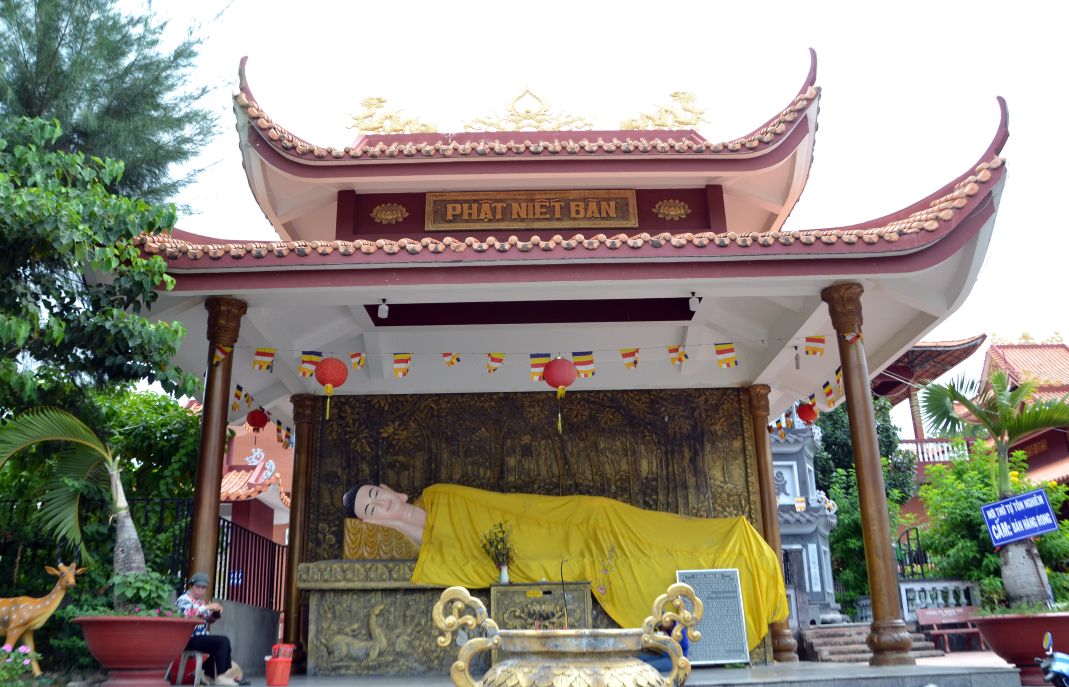
After 1991, the pagoda was rebuilt to be more spacious, becoming a familiar destination for Buddhists and local people. Currently, the main hall is decorated with Tam The Buddha inlaid with gold, the Thập Bát La Hán relief and green space, creating a feeling of tranquility.
The name "Banh Xeo Pagoda" originates from the activities of pouring vegetarian banh xeo maintained at the pagoda. Around 2006, when Venerable Thich Thien Chi was still abbot, banh xeo making initially only took place on the full moon days or at the end of the lunar month, when Buddhists came to offer and then together prepared food to treat guests.
Over time, the number of visitors is increasing, and this activity is maintained regularly. On average, about 800 - 1,000 cakes are made each day, more on weekends or crowded days.
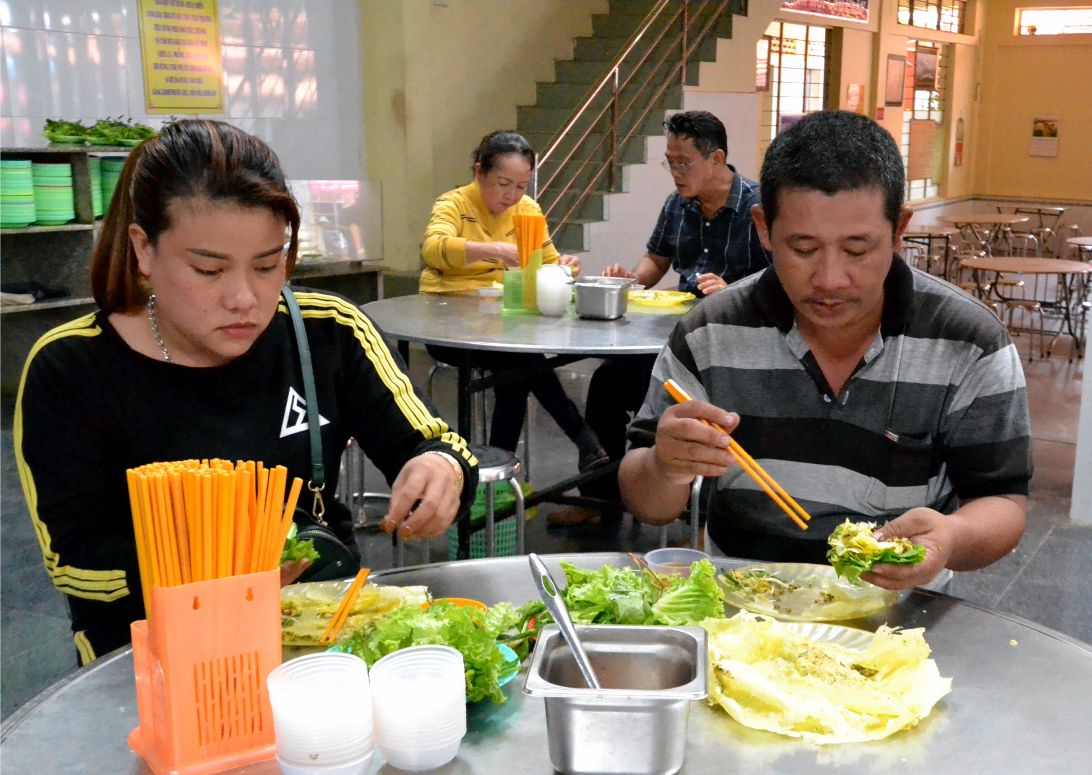
The kitchen area is where continuous cake making stages take place. Many cast iron pans are placed on rows of firewood stoves, the cake maker performs making dough, filling, turning the cake in hot and smoky conditions. Behind, people come to the pagoda to queue to receive cakes, the dining area prepares raw vegetables and dipping sauce for accompanying use.
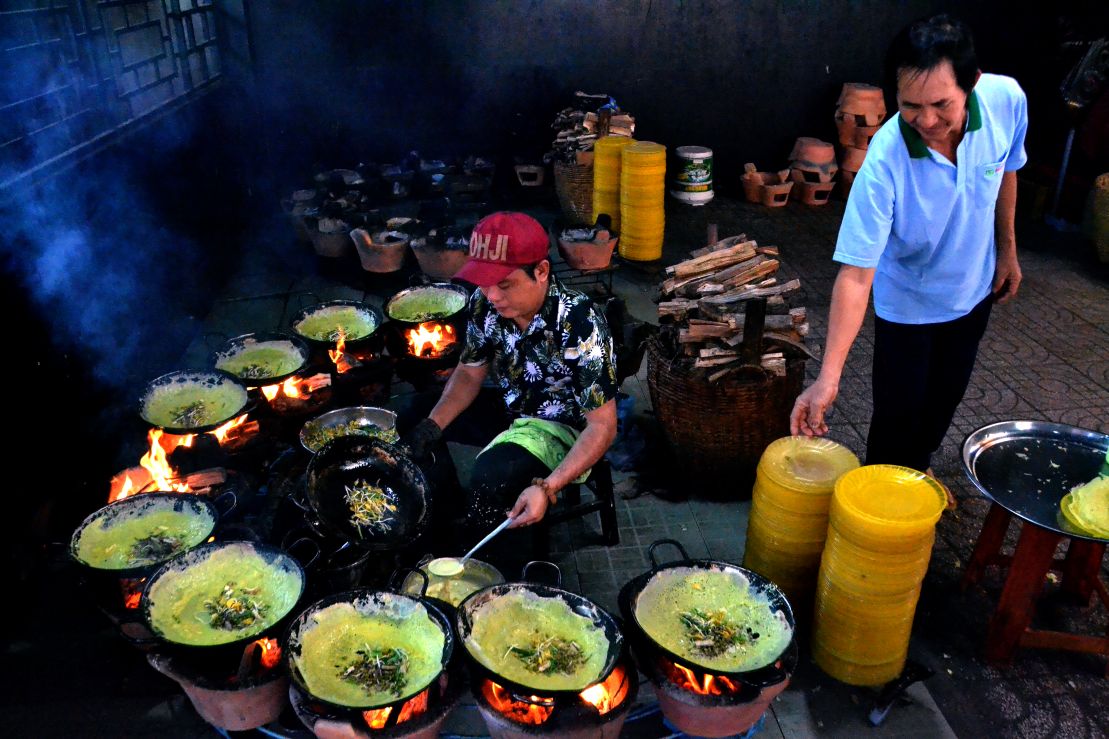
For the participants, pouring cakes is not only a daily job but also carries the meaning of sharing. This activity gradually becomes a part associated with the pagoda's activities, contributing to creating a unique approach, combining spiritual space and daily life at Dong Lai Zen Monastery.


