
According to storm news, the latest low pressure from the Joint Typhoon Warning Center (JTWC), this morning March 26, a new low pressure has formed in the Pacific Ocean.
The center of the low pressure is located in the western Pacific Ocean, near the Marshall Islands. The strongest wind near the center of the low pressure reaches 30 km/h.
JTWC forecasts that the low pressure is unlikely to develop strongly into a tropical depression or storm in the next 24 hours.
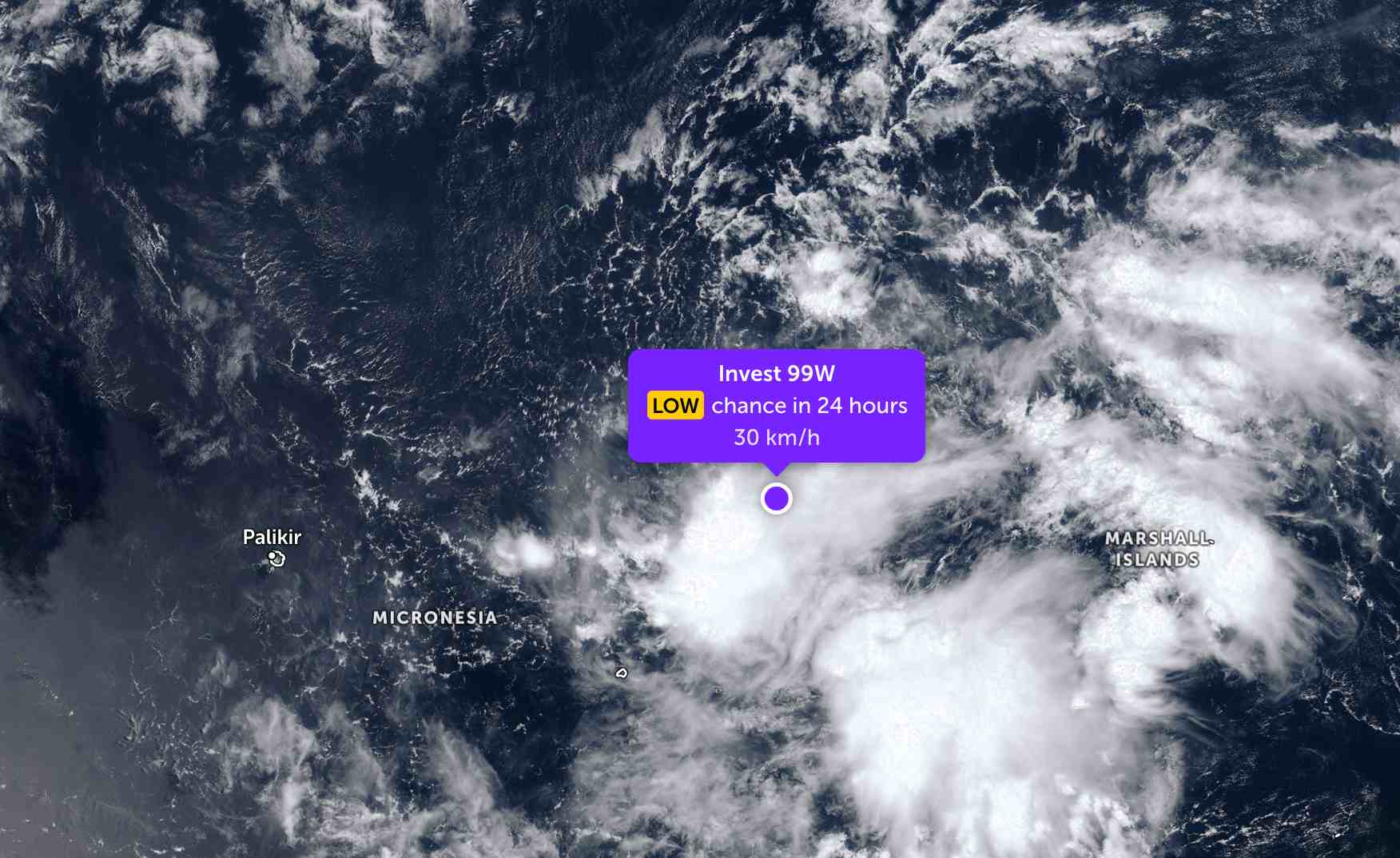
Because it is still quite far from the mainland, the low pressure has not significantly affected the weather on neighboring islands.
Meanwhile, Typhoon Narelle has intensified violently in the Indian Ocean, becoming a tropical storm of level 4. The strongest wind near the storm center reached 195 km/h, approaching super typhoon level.
The eye of the storm is currently off the coast of Port Hedland, in the Pilbara region, Western Australia. In the past 6 hours, the storm has moved in a Southwest direction at a speed of 19 km/h. Significant wave height reaches a maximum of 12.2 m.
JTWC forecasts storm Narelle will strengthen to super typhoon level this afternoon March 26 (local time), with winds up to 220 km/h before making landfall again in the Carnarvon coastal area (Australia).
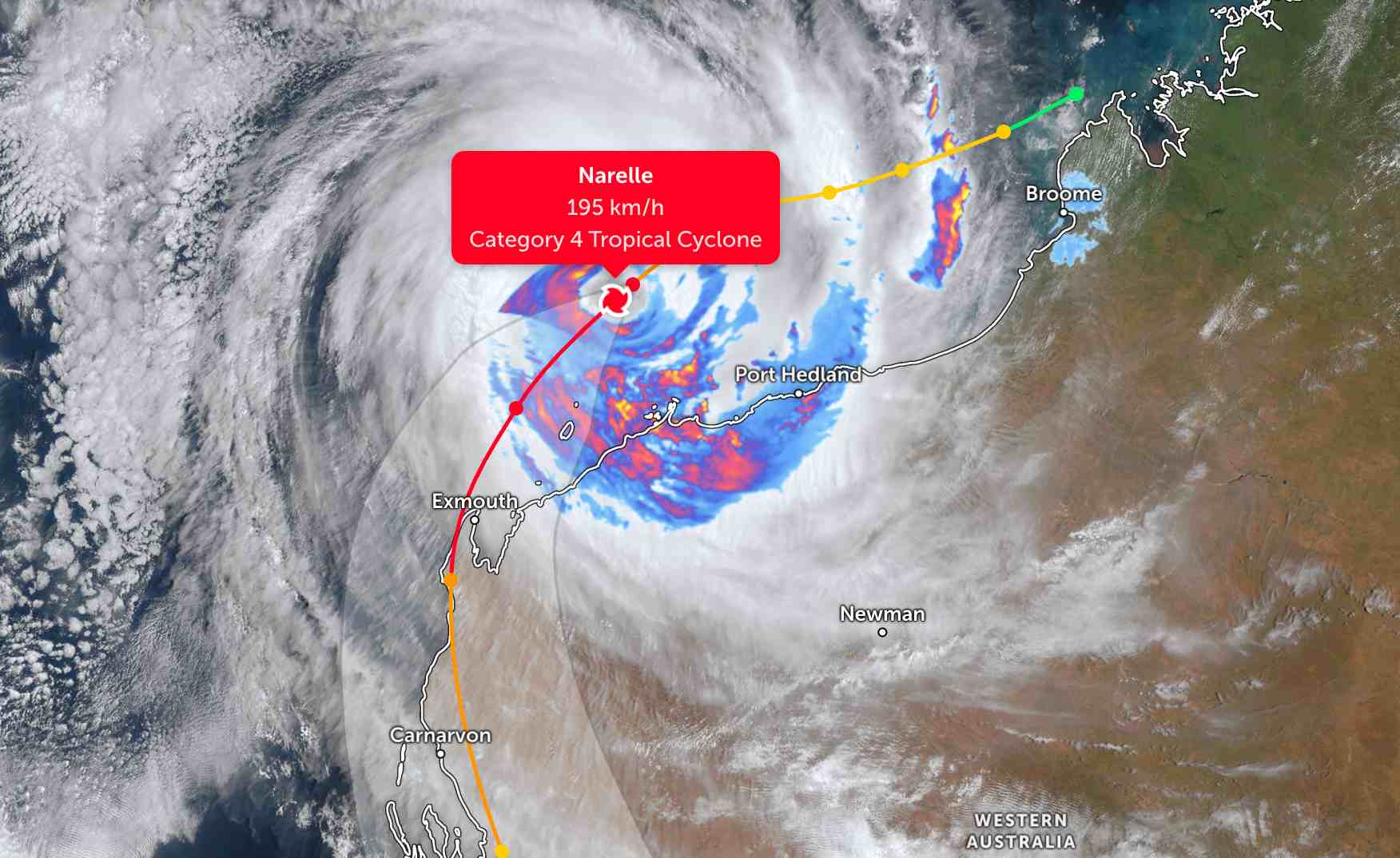
The Australian Meteorological Administration does not rule out the possibility that the storm may reach level 5 intensity in a short time.
Senior forecaster Jessica Lingard said that this storm has a large radius of strong winds. Today, the storm is likely to continue moving southwest, approaching the Pilbara coast.
By the end of the day, strong winds with potential damage will make landfall in Exmouth and Onslow, with gusts of up to 275 km/h.
The time is likely when the storm will make landfall late Friday night, around Shark Bay area.
The super typhoon is likely to begin weakening tomorrow as it moves further south, gliding over the coast near Carnarvon, and may weaken to Category 3 tomorrow evening before making landfall in Shark Bay area later in the night," she said.
People and tourists planning to visit Shark Bay or near the storm's path should pay attention to weather forecasts. Check flight schedules and follow local instructions to ensure safety.


