
Typhoon Koji officially made landfall in the area between Townsville and Bowen, then weakened into a tropical depression at about 10 am on January 11 (local time). However, the risk of dangerous flooding is still high.
According to the latest storm news from the Australian Meteorological Agency, gusts of wind at times reached 100 km/h, knocking down trees, fences and disrupting traffic as the storm moves in a South-Southwest direction.
Areas from Bowen to Mackay, including Whitsunday Islands, Proserpine and Airlie Beach, are directly affected.
Very heavy rain was recorded after Typhoon Koji made landfall. In Gargett, near Mackay, 146 mm of rain in just two hours caused many roads to be blocked and river levels to rise rapidly. Some residential areas in Marian, west of Mackay, recorded gardens and houses flooded.
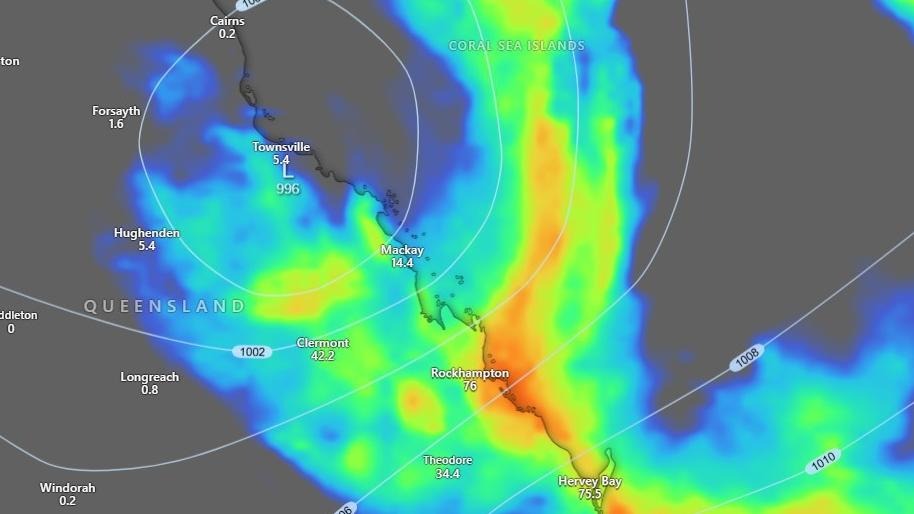
At coastal tourist destinations like Whitsundays, strong winds and torrential rain have caused many outdoor activities, boats and sea tours to be temporarily suspended. Some boats have broken anchors or are stranded in the Airlie Beach area.
Queensland authorities confirmed that many emergency rescues have taken place. A mother and two children were rescued from a car trapped in floodwaters near Bowen. Off the coast of Cannonvale, a ship sank, and two people had to swim ashore to escape.
The meteorological agency warns that rainfall in the next 24 hours may reach 100-250 mm, in some places up to 340 mm, increasing the risk of widespread flooding in tourist areas and coastal residential areas.
Tourists who are staying or planning to visit Townsville, Bowen, Proserpine, Whitsundays, Mackay should closely follow the weather forecast and low pressure, storm warning.


