
At the end of the year, when buckwheat flowers and wild sunflowers are in their bloom, many tourist attractions in Ha Giang (Tuyen Quang) and Ba Vi (Hanoi) witness overloaded scenes. The narrow roads are packed with traffic, many sections are congested up to kilometers, not only causing inconvenience to tourists but also raising questions about how to organize and behave in tourism activities.
This reality shows that, along with the increase in the number of visitors, the requirement to develop responsible tourism - respecting space, the environment and the local community - is becoming more urgent than ever.
Local overloaded tourism
Mr. Nguyen Tien Dat, CEO of AZA Travel said: When the flowers bloom, many people leave early in the morning, pouring into the small, narrow roads. On the road, many people stopped their vehicles to take photos and sightsee, causing congestion. Just one traffic incident is enough to paralyze the entire road".
On the other hand, Mr. Nguyen Anh Tu - a local tour guide - said that visitors are only crowded on weekends and go to certain destinations. During the week, the number of visitors is quite sparse, visitors also only stay 1-2 days, not staying long to explore the surrounding area.
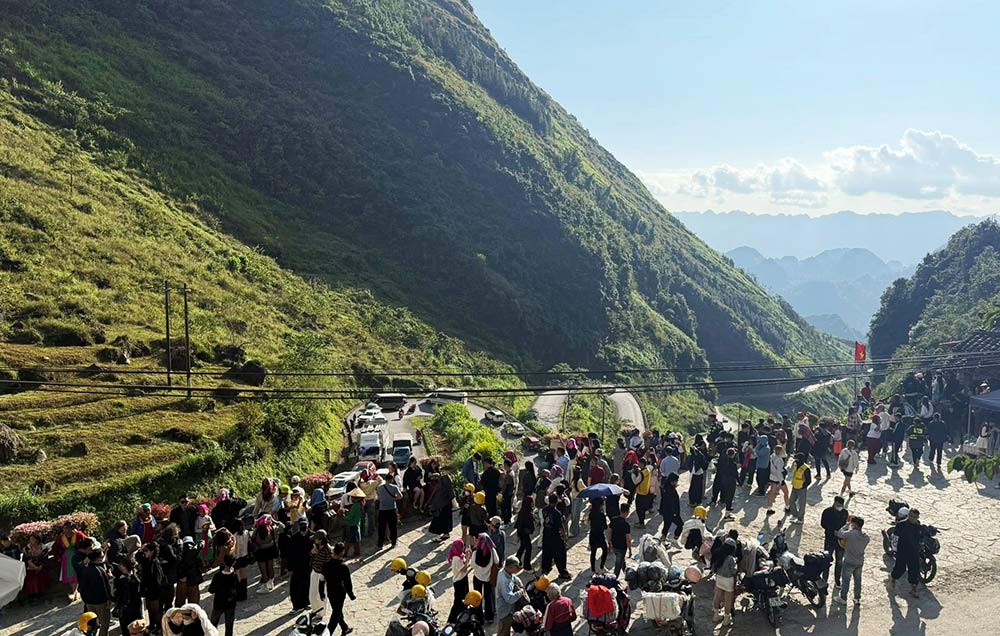
Explaining this, Mr. Nguyen Tien Dat said that Ha Giang tourism is only seasonal, and there is no connection with neighboring provinces and tourist areas. Therefore, it is not possible to attract tourists to stay long-term, use tourism services and spend money at the destination.
Mr. Dat emphasized that this is also a common weakness of the midlands and mountainous areas of the North. Therefore, despite their great potential and frequent visitors, tourist attractions in this area are still quite active and have not achieved the expected economic efficiency.
From this reality, the responsibility for tourism promotion and advertising activities needs to be acknowledged.
The fact that travel businesses, accommodation establishments, tourism service providers... have stepped up image communication in a short time, focusing on a few "hot spots" has unintentionally activated the psychology of tourism following the trend, causing the influx of visitors during peak times.
Sustainable tourism development requires localities and businesses not only to pay attention to attracting visitors, but also to consider the ability of destinations to receive them, avoid over- promoting during the peak season and lack of information to orient civilized tourism behavior.
Responsibility in tourism promotion is also demonstrated in strengthening coordination and linkage between localities in the region to build a common message, thereby orienting tourists to choose a long-term journey, spread across space and time.
Responsible tourism development requires localities to coordinate in building diverse journeys, connecting destinations based on the strengths of complementary landscapes, cultures and experiences. When visitors are led along continuous routes, their stay will be extended, and the experience will become richer. At the same time, reduce overconcentration in some locations. This is also a way to shift from seasonal tourism to more stable and sustainable development.
Linking network is still taking shape
According to research by the Vietnam Institute of Culture, Arts, Sports and Tourism, in recent years, along with the approval of the Northern Midlands and Mountainous Areas Planning, tourism development linkages between localities in the region have been gradually promoted. A number of coordinated activities in promotion - advertising, tour construction, and inter-provincial routes have been formed, contributing to expanding tourism space and diversifying experiences for tourists.
In fact, localities that have formed tourism brands early such as Lao Cai, Quang Ninh, Ha Giang are playing a " focal" role in connecting visitors in the region. Some inter-provincial tour routes such as Sa Pa - Y Ty - Ha Giang show the ability to expand the experience space, while dispersing visitors from locally overloaded areas during the peak season.
However, these models are mainly self-connected and experimental, and have not been upgraded to a stable inter-regional product.
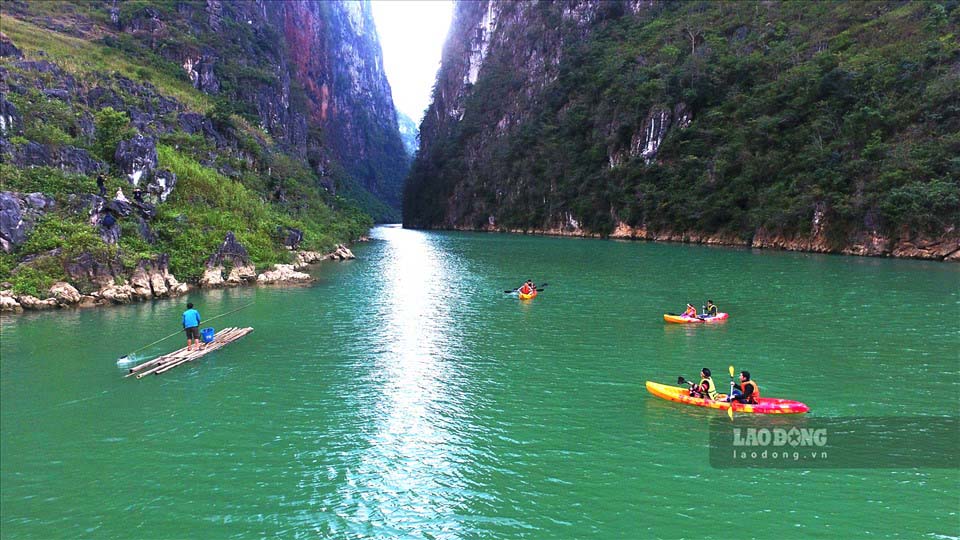
In promotion and advertising work, many localities have coordinated to participate in domestic and foreign tourism fairs and events, but the activities are still individual. Each province and city still promotes destinations according to its own message, lacking a common tourism brand for the entire Northern Midlands and Mountains.
This makes the image of regional tourism uncompetitive, especially in the international market, where tourists often choose regional destinations rather than administrative boundaries, said Mr. Pham Van Duong - representative of the Vietnam Institute of Culture, Arts, Sports and Tourism.
In addition, linkages in product development also clearly show limitations. Localities all focus on developing eco-tourism, community, culture - history, leading to overlapping products. Provinces with great potential but limited infrastructure such as Bac Kan, Lai Chau, Dien Bien are having difficulty "accepting the wave" from large tourist centers, due to the lack of a mechanism to connect products and share visitors in the region.
In the field of investment attraction, some localities such as Quang Ninh and Lao Cai attract large-scale tourism projects, while most of the remaining provinces are mainly small,un projects. Regional linkages in investment calling for new investment have stopped at the level of investment environmental promotion, and inter-provincial projects or investment chains have not been formed that are likely to spread to neighboring localities.
On the other hand, the linkage in human resource training and digital transformation is also disjointed. Tourism professional training and development programs are mainly implemented by each locality, lacking a regional coordination mechanism. Data platforms, digital maps and tourism information systems are still cut off according to administrative boundaries, making it difficult to build products and manage destinations inter-regional.
Promoting regional linkages - the key to sustainable development
In the context of dispersed tourism resources, unsynchronized infrastructure and the level of development between localities is still different, regional linkages are considered the "key" for tourism in the Northern Midlands and Mountainous provinces to break through in a sustainable direction.
According to research by the Vietnam Institute of Culture, Arts, Sports and Tourism, first of all, the linkage needs to be strongly implemented in tourism promotion, advertising and brand building activities. In reality, most localities still promote in individual, segmented ways, leading to duplication of messages and waste of resources.
The formation of a specialized tourism coordination department within the framework of the Regional Coordination Council is an urgent requirement, in order to develop a general promotion plan and implement inter-provincial promotional campaigns according to the theme. When participating in fairs and domestic and foreign tourism events under the common brand of the region, the recognition level will be higher. At the same time, it saves costs significantly for each locality.
"It is necessary to consider the formation of a regional financial mechanism, such as the Northern Midlands and Mountainous Tourism Development Fund, mobilized from local budgets combined with socialization. The apparent cost- mangrove sharing mechanism will create conditions for provinces with advantages in infrastructure and markets to play a "pull-up" role, supporting localities with difficulties in human resource promotion and training", Mr. Pham Van Duong commented.
Instead of developing individual products, localities need to coordinate in building inter-regional tourism product routes and clusters based on additional strengths, such as high-altitude mountain tourism routes, historical - revolutionary routes, or ecological routes associated with lakes and caves. Connecting destinations such as Sa Pa - Mu Cang Chai - Hoang Su Phi or Ba Be - Ban Gioc Waterfall not only helps diversify the experience but also extends the length of stay and increases spending of tourists.
An important pillar is linking the development of tourism infrastructure in the regional space, prioritizing transportation to connect key destinations and promoting public-private cooperation. At the same time, it is necessary to unify the criteria for the quality of infrastructure and tourism services in the whole region.
Finally, experts say that regional linkages need to be strengthened through human resource development and technology application. Joint training programs on tourism promotion, brand building and digital communication, along with building an information platform and digital map of unified tourism areas, will contribute to improving the efficiency of destination management and supporting businesses and tourists.


