
On March 25, Korean media reported that, according to performers, before the event "BTS comeback live: Arirang" taking place at Gwanghwamun Square (Seoul, Korea) on March 21, Netflix had contacted many large corporations inside and outside Korea to discuss sponsorship.
There is information that they were close to reaching an agreement with a national airline, but at the final decision, the two sides could not reach an agreement.
Not only that, Netflix also offered to cooperate with a global credit card company and an internet "giant" famous for search engines, with a sponsorship offer of up to hundreds of billions of won. However, all stopped at the negotiation level.
In fact, Netflix does not like to attach advertising or sponsorship to its original content, although there were previous exceptions such as "Squid Game 2" media cooperation with Kia.
To carry out BTS's event, Netflix spent a huge amount of money: both ensuring intellectual property rights (IP) for HYBE and bearing the estimated organizational costs of hundreds of billions of won. Netflix representatives confirmed that there were negotiations with businesses, but declined to disclose contract details.
However, viewership results still did not fully meet initial expectations. The livestream attracted about 18.4 million global views on the broadcast day, an impressive number but still lower than the prediction of "tens of millions of viewers at the same time".
Per week, the converted viewership reached 13.1 million, helping the program become the most viewed non-English content of the week (from March 16 to March 22) on Netflix, and also topped the charts in 24 countries.
One of the main reasons pointed out is the unfavorable broadcast time frame. BTS's performance starts at 8 pm in Korea, but US time is early morning (7 am East Coast, 4 am West Coast), while Europe falls at noon - a time when many people go out, limiting the attraction of live viewers.
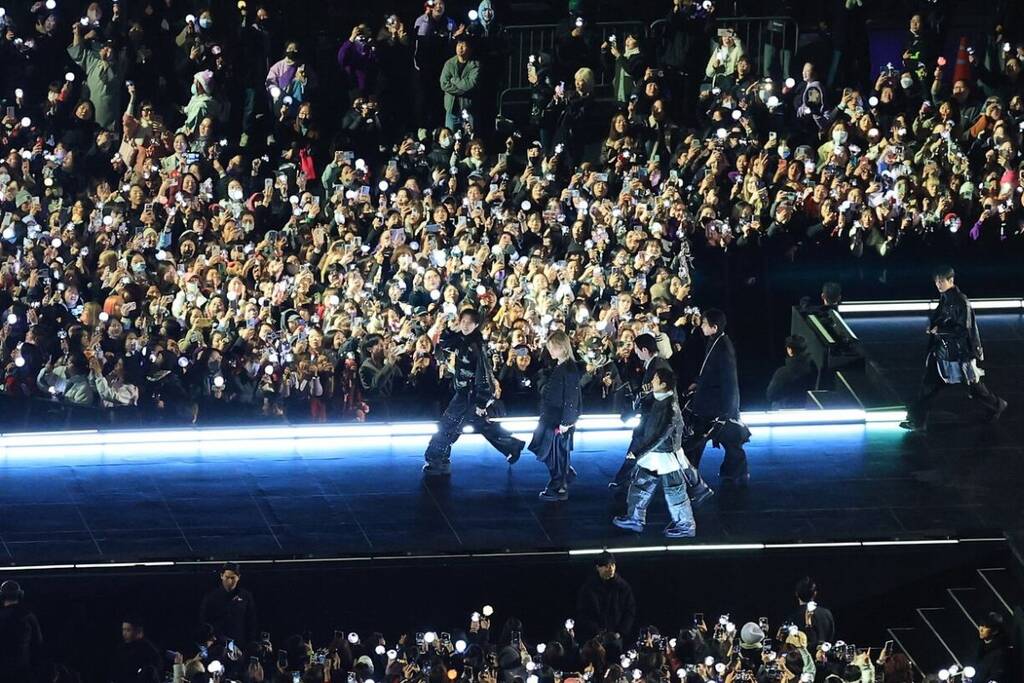
Previously, BTS was involved in controversy when HYBE announced: "It is estimated that about 104,000 people came to the concert venue at Gwanghwamun Square". This number is compiled from pre-booked tickets, data from 3 major telecommunications networks, cheap phone users and foreign tourists.
HYBE's report was much lower than the pre-event estimate by the police and city authorities of a maximum of 260,000 attendees.
However, according to real-time urban data from Seoul as well as the police, as of 8 pm on March 21 (the concert start time), the vicinity of Gwanghwamun and Deoksugung Palace gathered about 40,000 to 42,000 people.
The significant difference between the actual number of people and the initial expected number has caused mixed reactions from the public.
Controversy over "using too much national administrative resources for an event of a private company artist" erupted. Especially when the police deployed forces of up to 15,000 people to ensure security and respond to the risk of terrorism at the event.


