
Phase 2026-2027: Completing the arrangement of public service units and schools
This is the goal set out in Decision 282/QD-TTg, dated February 12, 2026, promulgating the Key State Administrative Reform Plan for the period 2026 - 2030 signed by Prime Minister Pham Minh Chinh.
Accordingly, in the period 2026 - 2027, complete the amendment and supplementation of the institutional system on the organization and operation of the administrative apparatus, ensuring a unified, synchronous, stable, and feasible legal basis for the government apparatus from central to local levels to operate smoothly, continuously, effectively and efficiently.
Improve institutions and policies on innovating management mechanisms and financial autonomy mechanisms for public non-business units to ensure timeliness and compliance with the Party's guidelines.
Complete the arrangement of public service units, schools, medical facilities, state-owned enterprises,...
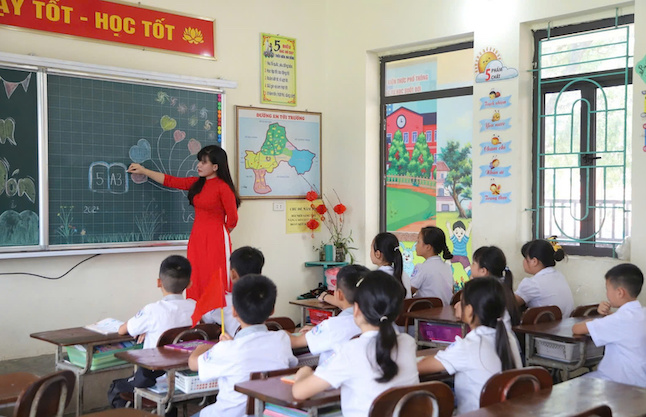
Schools and school sites close to each other, too small or super-small in scale, need to be rearranged.
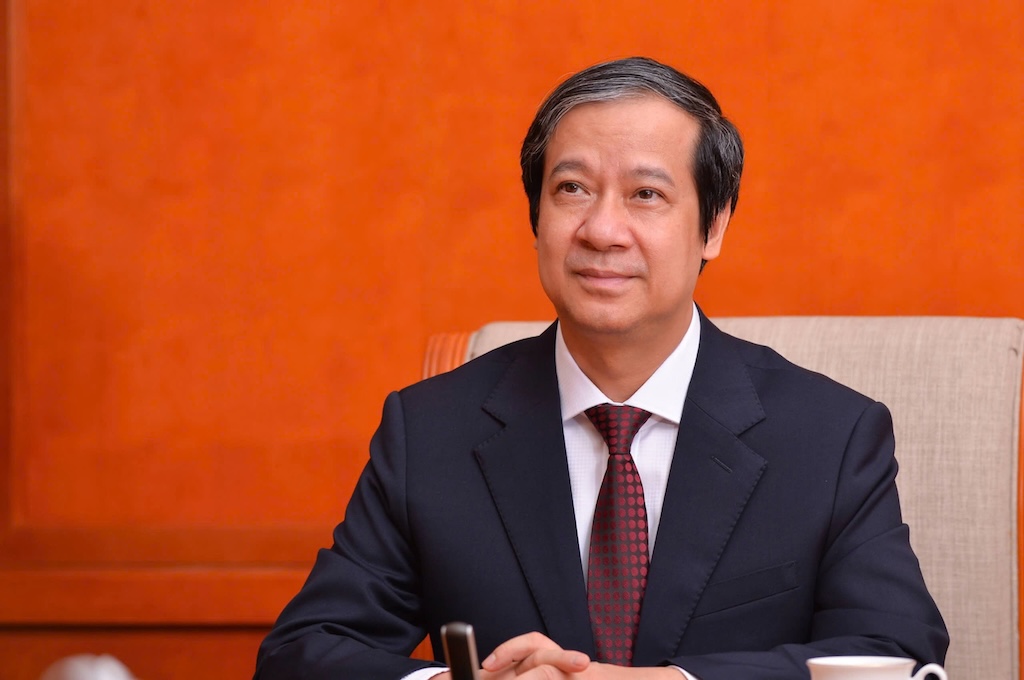
On the side of the education sector, Minister Nguyen Kim Son affirmed that the arrangement of educational and training institutions is a key task, of great significance in implementing the Central Committee's resolutions.
Therefore, the Ministry of Education and Training requests localities to firmly grasp the spirit of direction, understand correctly, do correctly, deploy cautiously but drastically, ensuring effectiveness, stability and sustainable development of education in the area.
The Ministry also sets a consistent requirement for localities: Do not organize arrangements mechanically. Each locality has different characteristics in terms of socio-economic conditions, population density, terrain, and traffic.
The arrangement must be based on specific practices, ensuring appropriateness and efficiency" - the Minister emphasized.
The head of the education and training sector noted that the arrangement must not affect the ongoing teaching and learning activities; do not let students have to take long breaks from school, do not interrupt the curriculum and school year plan.
The goal of the arrangement is to organize teaching and management better, more conveniently, thereby improving the quality of education. If the arrangement makes the scale too small, ineffective or reduces quality, it will resolutely not be implemented" - he said.
The Minister also requested localities not to set forced targets, not to chase after achievements, not to mechanically impose numbers like each commune only has one school left or reduce according to rigid proportions. Some localities need to reduce, but some localities must maintain or increase, especially in urban areas, industrial parks, where population is concentrated and schools are overloaded.
In particular, do not take financial autonomy criteria as the basis for arranging educational institutions. Education must be based on professional and quality principles. Do not use "non-educational" criteria to decide on education issues, in accordance with the spirit of the Central Committee's Resolutions.
For educational institutions in the same commune, especially schools and school sites close to each other, with too small or micro-scale, it is necessary to rearrange them. In case safety, facilities, and teaching quality are not guaranteed, resolutely stop operating or dissolve them, especially preschool groups and private kindergartens that do not meet the conditions.
Do not merge preschools with primary schools because of reducing focal points; do not merge preschools into general schools; do not merge primary, secondary, and high school into one, except for stablely formed private inter-level models" - the Minister emphasized.
For continuing education and vocational education, do not convert simultaneously and mechanically to the vocational secondary school model. The conversion must wait for guidance from the Ministry, with a roadmap, program, staff and guaranteed conditions.
For colleges, it is possible to consider merging single-discipline schools into multi-discipline schools, but avoiding too large scale, exceeding management capacity.


