Quite good for mangoes
In early December 2025, in the fields of Khanh Binh commune (An Giang province), the land that was previously only used to grow rice or was abandoned due to ineffectiveness, now the green color of mango gardens is bringing hope to change the lives of many households. Thanks to changes in production thinking, boldly applying science and technology and linking according to the cooperative model, farmers in border areas have gradually escaped poverty and their lives have become more stable.
Mr. Nguyen Hoang Bao Phuc (residing in Khanh Binh commune, An Giang province) shared: "I never thought that mango trees would help my family stabilize like now. Before, I grew rice in 2 crops but still lacked in front and back. Since switching to growing mangoes, after nearly 7 years, the family's economy has improved significantly".
Mr. Phuc's family has about 1ha of land, previously unstable rice production. When he switched to other crops, he was initially hesitant. But after receiving technical training and visiting the mango model according to VietGAP standards, he decided to invest in conversion.
"Thanks to following the process, the yield is stable, mangoes are purchased by traders. On average, I earn about 12 - 15 tons per year, the profit is 3-4 times higher than growing rice before, said Mr. Phuc.
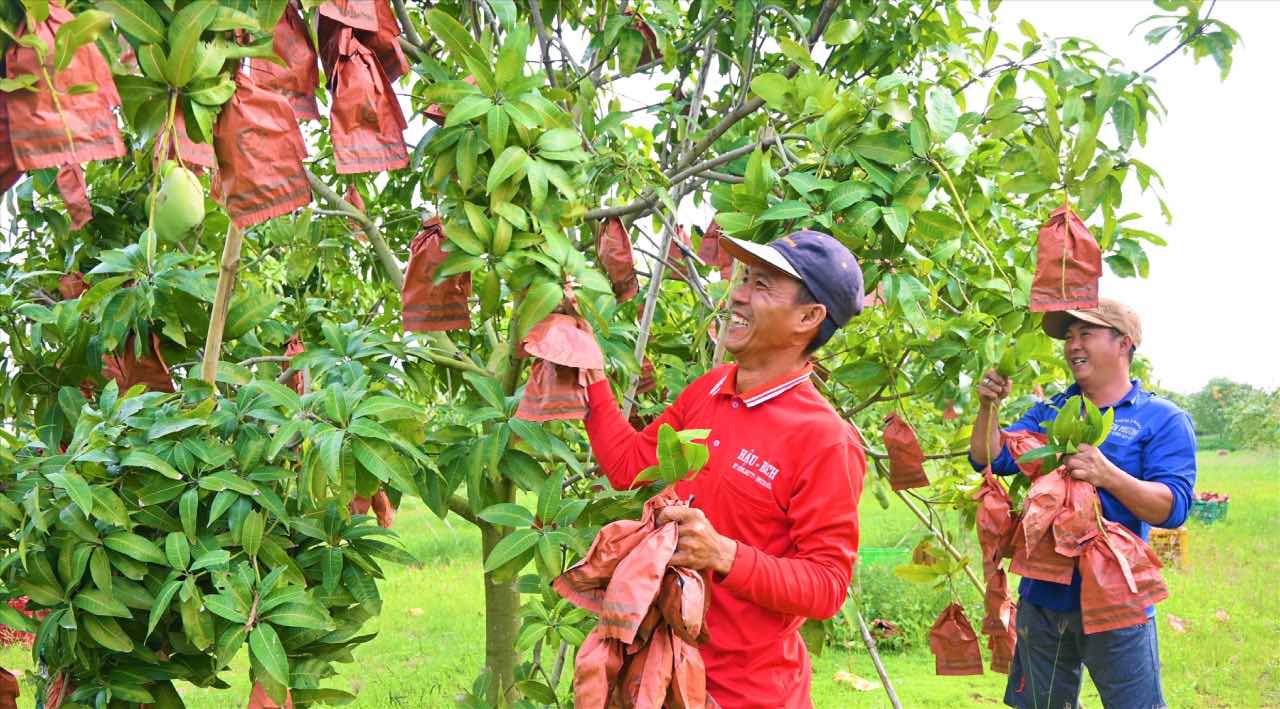
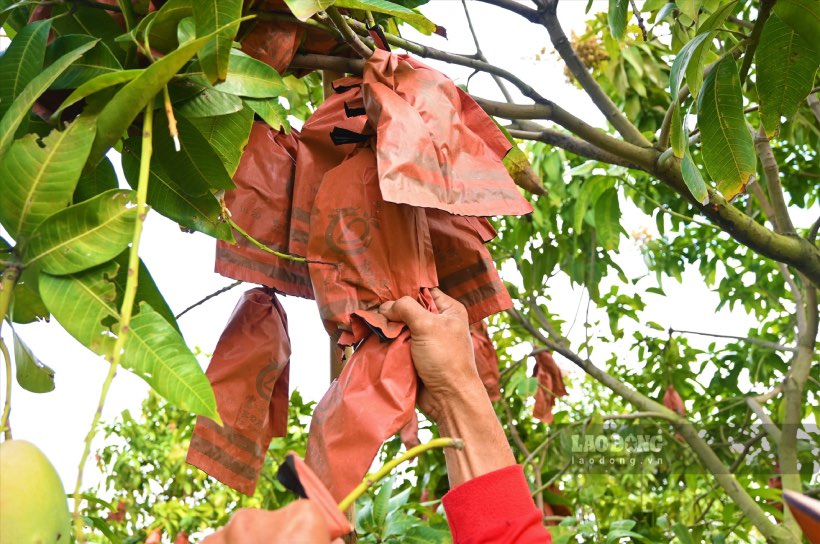
Not only Mr. Phuc's family, many households in Khanh Binh, Nhon Hoi, Phu Huu communes... have also converted ineffective land to grow high-quality mangoes. Many places form specialized farming areas with an area of several dozen to several hundred hectares, contributing to changing traditional farming practices and creating stable livelihoods for people in border areas.
Mr. Nguyen Van Hung (residing in Phu Huu commune, An Giang province) said that his family grows more than 8 hectares of mango, mainly mango (monoai variety from Ta Keo region, Kingdom of Cambodia). His family has cooperated with other households to establish cooperatives to produce more on a large scale and methodically.
"licensing production helps change the way of doing things. If people do it individually, the products will not be uniform and the prices will be unstable. At the cooperative, we are given input, technical training, and product sponsorship according to the contract. Thanks to that, the market is more confident, said Mr. Hung.
According to Mr. Hung, the cooperative model also helps farmers reduce production costs, especially fertilizers and pesticides. Synchronous production helps control pests better, handle crops effectively, thereby increasing households' income every year.
Mr. Tran Thanh Nghi - Chairman of Phu Huu Commune People's Committee (An Giang Province) - said that the total mango output in the harvested area in 2025 is estimated at 17,070 - 22,760 tons, the selling price is from 5,500 - 19,000 VND/kg, the yield is 30 - 40 tons/ha. After deducting costs, people have a profit of growing mangoes of 30 - 50 million VND/ha/year.
"Manoai trees have helped people in the commune escape poverty and become quite rich. Especially since mangoes have been exported, the selling price is very good, farmers make a lot of profit. From there, the economy has improved, helping to make the security and order situation more stable, the face of the countryside is increasingly innovative," said Mr. Nghi.
There are still many difficulties but the direction is clear
According to Mr. Truong Chi Thong - Head of the Economic Department of Khanh Binh Commune People's Committee (An Giang Province), in recent times, prolonged storms have caused about 103/900 hectares of mango in the closed dyke area to be flooded. The reason is that the ditch system is silted up, the sewer system is degraded but has not been invested in. Meanwhile, the private investment pumping station does not meet the capacity, causing prolonged flooding, greatly affecting the care, harvesting and productivity of mango trees.
After the merger of administrative units, Khanh Binh commune encountered many difficulties in capital sources to complete the irrigation system to serve timely drainage. "Given this situation, Khanh Binh commune recommends that the Department of Agriculture and Environment of An Giang province pay attention to surveying, planning and investing in upgrading irrigation systems and pumping stations to serve sustainable production for farmers," said Mr. Thong.
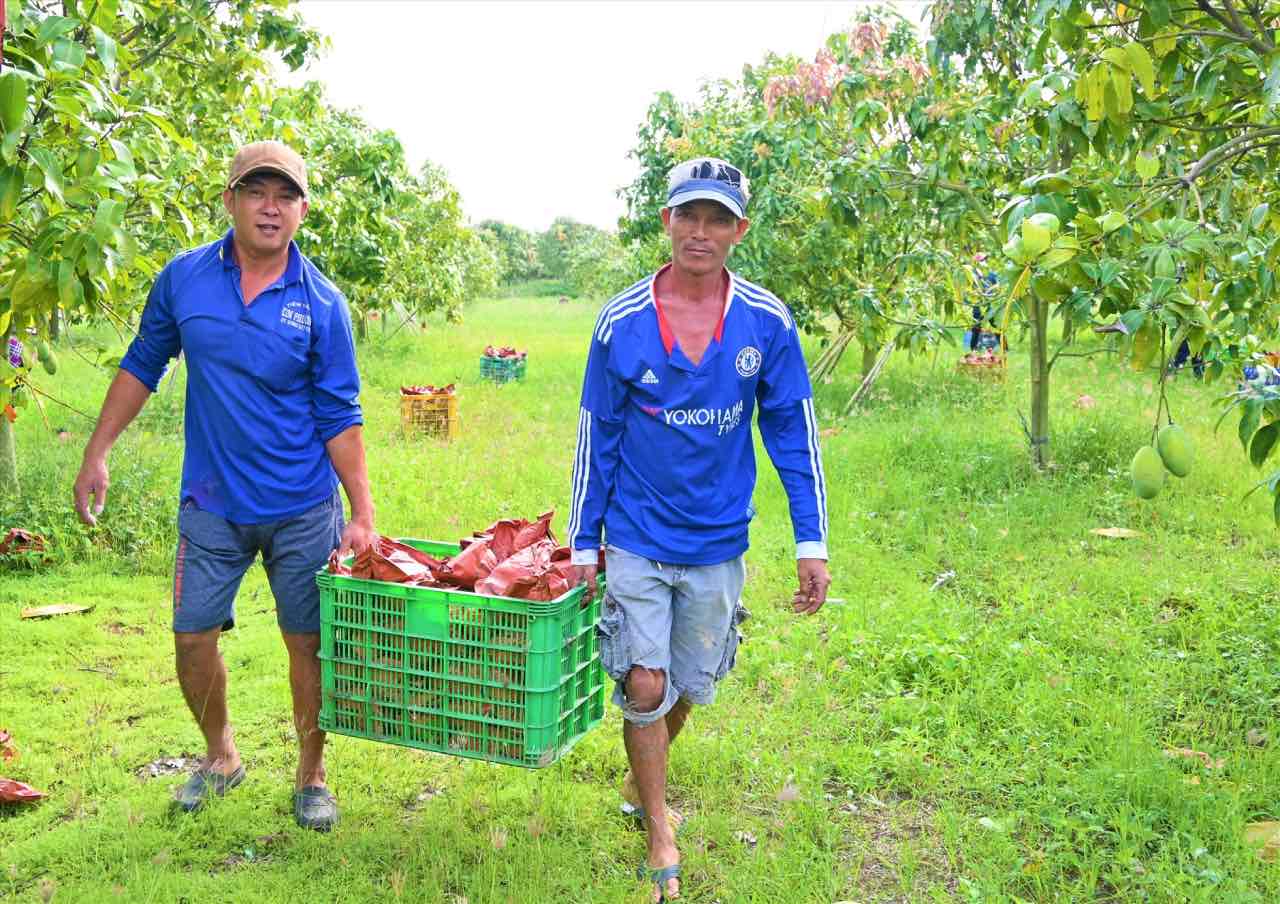
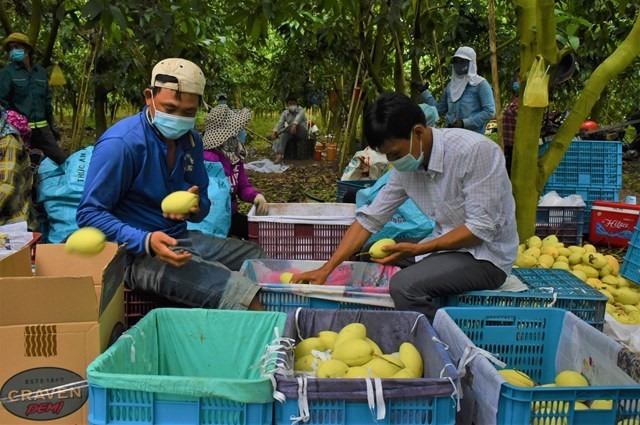
Mr. Thong commented that thanks to the correct policies of An Giang province, the cooperation of cooperatives and efforts to change people's thinking, mango trees have become a new symbol of border agriculture. The land that was once difficult to cultivate has now risen strongly, becoming a bright spot in the conversion of crop structure. In the coming time, when support policies are implemented synchronously, from growing area codes, cold storage, packaging to consumption linkages. Mango will continue to play an important role, creating sustainable livelihoods and increasing farmers' income.
Mr. Tran Thanh Nghi - Chairman of Phu Huu Commune People's Committee - frankly acknowledged that although mango trees are opening a way out of poverty for farmers in border areas, the local production and transportation infrastructure still has many bottlenecks that have lasted for many years. Not only transportation, the irrigation system serving mango production also has many limitations. Some canals have not been dredged synchronously; culverts in drainage pipes are still mainly opened and closed by hand.
Chairman of Phu Huu Commune People's Committee Tran Thanh Nghi said that in the coming time, Phu Huu Commune People's Committee will propose that the province prioritize investment in inter-hamlet roads, bridge upgrades, 3-phase power support and modernization of irrigation systems. "Once there is a good infrastructure, new businesses will come, and farmers will feel secure in expanding production. That is a prerequisite for Phu Huu mangoes to develop sustainably, said Mr. Nghi.
Towards the border mango brand
Mr. Truong Chi Thong - Head of the Economic Department of Khanh Binh Commune People's Committee - said that Khanh Binh Commune currently has 900 hectares of mango cultivation, with an average yield of 15 tons/ha, selling price from 7,000 - 16,000 VND/kg. In 2025 alone, 569.4 hectares were granted growing area codes with 17 codes for mango trees, serving export to 6 units.
According to Mr. Thong, the advantage of the border area is that the land is suitable for mango trees, especially the mango variety. An Giang province has oriented the development of mangoes according to the chain of linkages, application of science and technology and traceability. This is a fundamental direction to help people escape poverty sustainably.
"The commune is encouraging businesses to sign long-term covered contracts. When farmers see a stable output, they boldly invest more, use organic fertilizers, fruit bags, and reduce chemicals to ensure biosafety for mangoes, said Mr. Thong.
Mr. Truong Chi Thong said that Khanh Binh commune is also supporting cooperatives to continue completing documents for granting growing area codes, in order to meet export requirements to the Chinese market and Southeast Asian countries. At the same time, the commune coordinated with the agricultural sector to open training courses on cutting techniques, fruit packaging, flower processing... to improve the even quality of mangoes, aiming to build a sustainable and highly competitive border mango brand.
Mr. Tran Thanh Nghi - Chairman of Phu Huu Commune People's Committee - shared: "Phu Huu has a large mango growing area. The advantage of the border area is that the soil is suitable and the productivity is stable, but to make mangoes a key industry, it is necessary to follow the direction of standardization, cleaning and having a clear brand.
In the coming time, Phu Huu Commune People's Committee will build the brand "Xoai Phu Huu - An Giang border area". When farmers follow the correct technical process and the products have clear traceability, businesses will boldly sign long-term sponsorship contracts. That is the way to help farmers in border areas escape poverty sustainably.
At the same time, the locality will continue to open a training course on flower processing techniques, organic fertilizer, fruit bags and disease management, in order to create quality- homely mangoes. This is a prerequisite for building an agricultural product brand.