
Issuing securities to expand capital sources for businesses
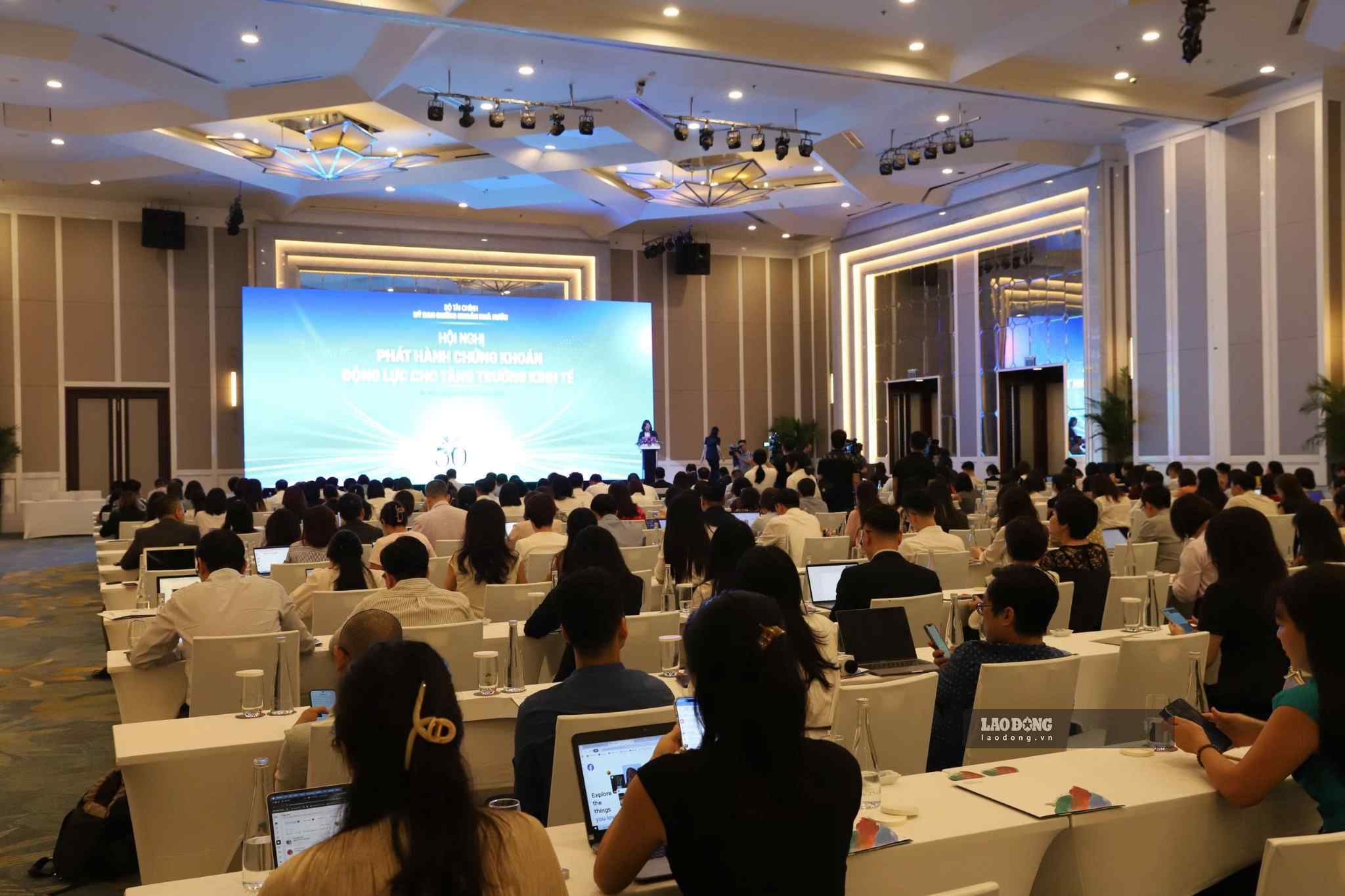
At the Conference "Securities Issuance - Driving Force for Economic Growth" held on July 7 in Hanoi, Chairman of the State Securities Commission (SSC) Vu Thi Chan Phuong emphasized that while bank credit capital mainly meets short-term needs, the capital market plays a role in providing medium and long-term resources to serve investment, production and business and economic development.
According to Ms. Phuong, securities issuance activities not only help businesses mobilize capital but also contribute to transforming idle capital in society into resources for development investment, improving the efficiency of capital allocation of the economy.
Participating in the capital market also creates motivation for businesses to improve governance, increase transparency, accountability and reputation in the market. These are important factors to help businesses access domestic and international capital sources more effectively, while reducing dependence on short-term credit.
According to data released by the Chairman of the SSC, in 2025, the total value mobilized through private placement of shares and corporate bonds reached more than 763,000 billion VND.
In the first 6 months of 2026, the value of share issuance reached about 114,000 billion VND, an increase of more than 67% compared to the same period last year. The value of private corporate bond issuance reached nearly 149,000 billion VND.
According to the SSC, these figures reflect the business's need to expand investment as well as the increasingly strengthened confidence of investors in the development prospects of the Vietnamese stock market.
One of the milestones emphasized at the conference was that Vietnam was upgraded by FTSE Russell from a frontier market to a secondary emerging market. According to the leader of the SSC, the upgrade will contribute to improving the position of the Vietnamese stock market, expanding the ability to attract international capital flows, improving liquidity and creating more favorable conditions for businesses to mobilize capital.
However, Ms. Vu Thi Chan Phuong believes that the opportunity from upgrading can only be converted into real capital flows if the market has many businesses that meet the standards of scale, management, information transparency and efficient capital use. Therefore, along with perfecting institutions and improving the quality of market operation, promoting businesses to actively mobilize capital through issuing shares and bonds will be a key factor to take advantage of this opportunity.
Regarding the legal framework, the SSC said that in the past time, it has coordinated with the Ministry of Finance to review and improve regulations on securities issuance in the direction of creating more favorable conditions for businesses but still ensuring the quality of goods and market transparency.
Tighten management of bond issuance to protect investors
For the corporate bond market, the Government has just issued Decree 200/2026 regulating the offering and trading of corporate bonds privately in the country as well as offering to the international market.
According to the SSC, the decree is built on the principle of balancing two goals: creating conditions for businesses to access medium and long-term capital sources, while improving the quality of issuing businesses, strengthening the responsibility of market participants and protecting investors.
Leaders of the SSC believe that when enterprises issue transparently, manage well and use capital for the right purpose, capital mobilization costs will decrease, and access to domestic and foreign capital sources will also be improved. This is the foundation for the Vietnamese stock market to develop stably, sustainably and approach international standards.
Clarifying the new points of Decree 200, Ms. Pham Thi Thanh Huong, Chief Inspector of the SSC, said that Decree 200 adds many regulations to strengthen the management of capital use from private placement of corporate bonds. Accordingly, in cases where the project has not reached the disbursement schedule, businesses are allowed to deposit idle money at commercial banks or purchase deposit certificates, but this plan must be clearly stated in the issuance plan.
For changes in the purpose of capital use or conditions of bonds, enterprises must have the approval of representatives of at least 65% of the total outstanding bonds. In case bondholders do not agree with this change, enterprises are required to buy back bonds before maturity.
In addition, Decree 200 stipulates that collateral must not include shares, stocks, bonds or contributed capital of the issued enterprise itself in order to improve the quality of collateral and limit risks in the market.


