Violation is clear, the cause is still difficult to determine
Many days after the collective poisoning incident after eating banh mi thit cha in Dien Ban ward, Da Nang, causing at least 26 people to be hospitalized, the rights of the victims have not been satisfactorily resolved.
From the inspection dossier, the related food supply chain revealed many worrying loopholes: violating points of sale, violating raw material supply, while food samples are no longer for testing. This makes it difficult to trace the cause, determine responsibility and protect consumers.
According to a report by the People's Committee of Dien Ban ward, on June 15, functional agencies received information that there were 26 cases of patients hospitalized at Quang Nam Regional General Hospital. Patients had symptoms of abdominal pain, nausea, vomiting, fever, loose stools, suspected of being related to eating bread in the area.
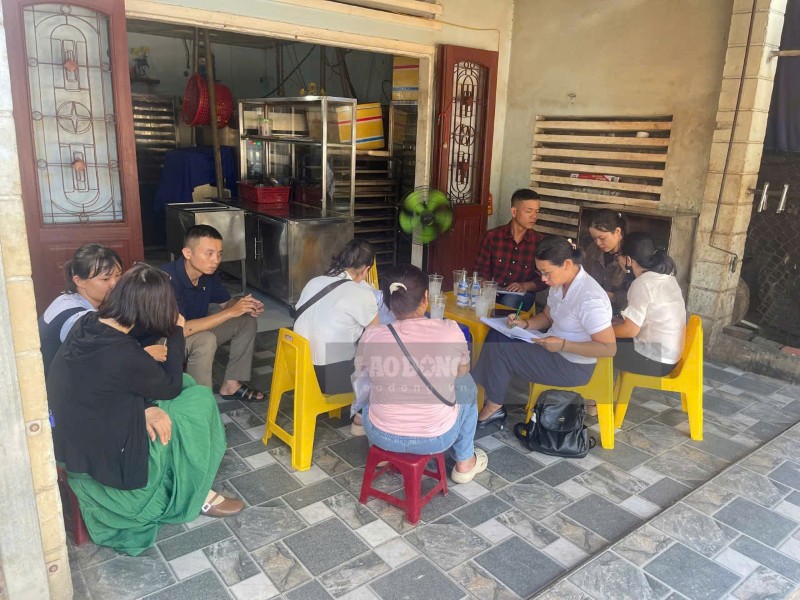
The investigation recorded that on June 13, many people bought bread at Thuong bread establishment, Thanh Chiem 1 block, Dien Ban ward, before symptoms appeared. The ingredients recorded in the bread include bread, pork, sausage, pate, and spring rolls.
However, when the inspection team approached the facility on June 15, the food and raw materials processed and sold from June 13 had been sold out. The facility also did not store food samples. Sampling for testing to trace the pathogen almost fell into a dead end.
After inspection, Thuong's banh mi establishment was found to have many violations: doing business not in accordance with the scope, area, and location stated in the business license; producing and trading food without a certificate of establishment meeting food safety conditions; not implementing or not properly implementing regulations on food sample storage.
Not only the direct selling point to consumers, Nguyen Minh Chau pork sausage supplier - a source of raw materials in a loaf of bread - was also identified as producing and trading food without a certificate of eligibility for food safety and not complying with regulations on storing food samples.
Thus, in the same processed food chain, both the selling place and the source of raw materials do not fully meet the minimum legal conditions.
From a management perspective, the Da Nang Sub-Department of Food Safety is the focal point in ensuring food safety, investigating poisoning and providing professional guidance. On the side of preventive medicine, the Da Nang Center for Disease Control also plays a role in epidemiological surveillance, risk warning and community recommendations after food-related incidents.
However, if the business establishment does not meet the conditions, does not store samples, does not control the source of raw materials, when poisoning occurs, the search for the cause is almost at a dead end.
People with poisoning find it difficult to claim their rights
The paradoxical point in the case is that administrative violations have been identified, but the direct cause of poisoning cannot be concluded yet.
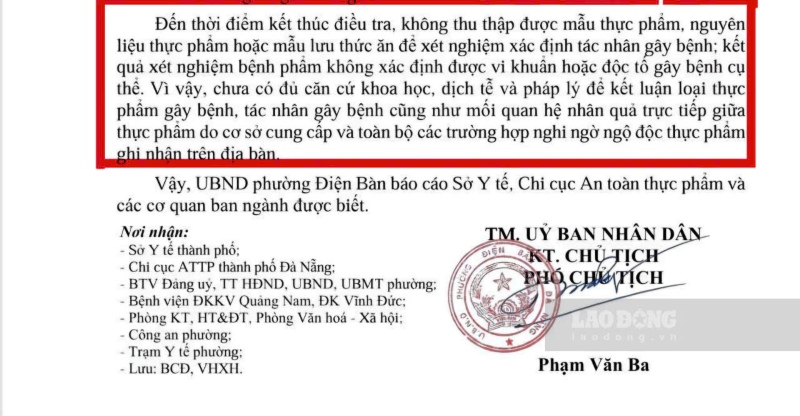
According to Dien Ban Ward People's Committee, by the time the investigation ended, functional agencies had not collected food samples, food ingredients or food samples for testing. The test results of the specimen also did not identify specific bacteria or toxins.
Therefore, functional agencies do not have sufficient scientific, epidemiological and legal grounds to conclude the type of food causing the disease, the causative agent as well as the direct causal relationship between food provided by the establishment and all suspected poisoning cases.
Up to now, the two related establishments have been administratively fined with a total amount of 50.5 million VND. In which, the owner of Thuong bread establishment was fined 29 million VND; the pork sausage supplier was fined 21.5 million VND.
However, the sanctioning decisions mainly stop at violations of business conditions, food safety certificates and food sample storage. The story of the rights of those who have to be hospitalized - treatment costs, lost working days, health damage - still has no clear answer.
Lawyer Nguyen Thanh Tan - Tan Nguyen Law Office, Da Nang, said that in suspected food poisoning cases, administrative penalties for violating establishments are only a part. A more important issue is the right to claim compensation of consumers who suffer health damage, treatment costs, and lost income during hospitalization.

According to the lawyer, the Food Safety Law stipulates that consumers have the right to complain, sue and be compensated for damages caused by using unsafe food; organizations and individuals doing food business are also obliged to compensate when unsafe food caused damage by their business.
However, to investigate compensation responsibility, it is necessary to clarify the actual damage, violations, and the causal relationship between the food used and the poisoning situation. This is the most difficult point in the Dien Ban case, when there are no more food samples, food storage samples, and the pathology results have not identified specific agents.