
Cụ thể, giá dầu Brent giảm 2,23 USD, tương đương 2,7%, xuống mức 79,66 USD/thùng - mức thấp nhất kể từ ngày 11.1.
Cùng thời điểm, giá dầu WTI của Mỹ giảm 2,49 USD, tương đương 3,3%, xuống mức 73,39 USD/thùng - mức thấp nhất kể từ ngày 5.1. Tính cả tuần, dầu Brent và WTI giảm lần lượt là 7,8%, 7,9%.
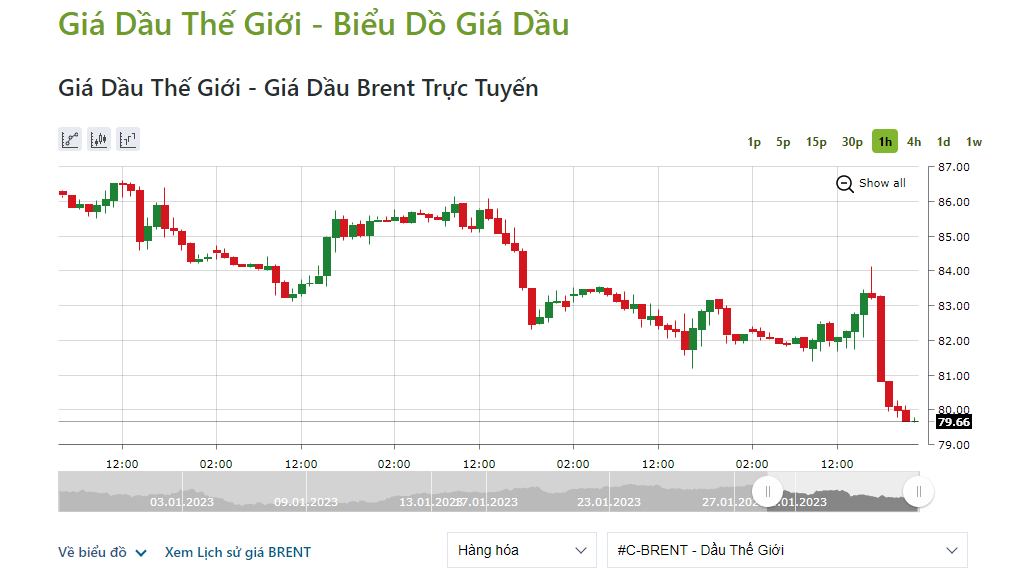
Giá dầu hôm nay bất ngờ quay đầu lao dốc sau dữ liệu việc làm của Mỹ tăng mạnh mẽ. Điều này làm dấy lên lo ngại Cục Dự trữ Liên bang Mỹ (Fed) sẽ tăng lãi suất cao hơn.
Giữa tuần, Ngân hàng Trung ương Mỹ đã giảm quy mô tăng lãi suất, với mức tăng chỉ 1/4 điểm phần trăm, thấp hơn nhiều so với mức tăng 75 điểm cơ bản trong 4 lần liên tiếp năm 2022 và 0,5 điểm phần trăm hồi tháng trước.
Priyanka Sachdeva - nhà phân tích thị trường tại Phillip Nova - cho biết, việc tăng lãi suất vào năm 2023 có thể sẽ ảnh hưởng đến nền kinh tế Mỹ và Châu Âu, làm gia tăng lo ngại về suy thoái kinh tế, có khả năng làm giảm nhu cầu dầu thô toàn cầu.
Trong một diễn biến khác, các nước thuộc EU đã đồng ý đặt giá trần đối với các sản phẩm dầu tinh chế của Nga.
Theo các nhà ngoại giao EU, mức giá trần là 100 USD/thùng đối với các sản phẩm được giao dịch ở mức cao hơn so với dầu thô, chủ yếu là dầu diesel.
45 USD/thùng đối với các sản phẩm được giao dịch ở mức chiết khấu, chẳng hạn như dầu nhiên liệu và naphtha. Đây cũng là các mức giá đã được Uỷ ban Châu Âu (EC) đề xuất trước đó.
Thuỵ Điển - nước Chủ tịch luân phiên của EU hiện nay - khẳng định, đây là một thỏa thuận quan trọng và là một phần trong các nỗ lực tiếp theo của EU và các đối tác nhằm gây sức ép lên của Nga trong bối cảnh xung đột tại Ukraine.
Trước đó, ngày 1.2, Nhóm các nước xuất khẩu dầu mỏ và đồng minh (OPEC+) cũng đã thống nhất giữ nguyên mức cắt giảm sản lượng hiện nay, trong bối cảnh triển vọng nhu cầu nhiên liệu đang dần cải thiện tại Trung Quốc.


