
Gold prices continued to extend their decline as the deadlock in reopening the Strait of Hormuz increased concerns about inflation, while creating great pressure on the global bond market.
In the first trading session of the week, gold prices at one point fell by 1.3% to around 4,480 USD/ounce after losing nearly 4% last week. As of 9:25 am Vietnam time, spot gold prices fell by about 1% to 4,534.41 USD/ounce.
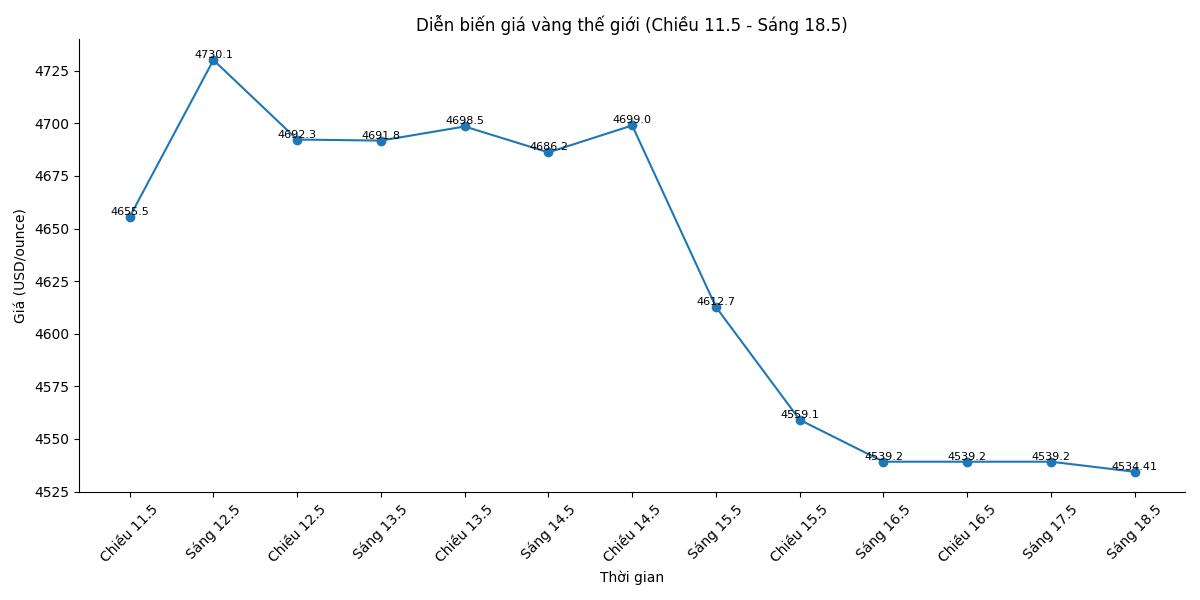
The US and Iran have not yet found common ground on an agreement to end the weeks-long conflict as well as the reopening of the Hormuz Strait – the world's strategic energy transportation route that is still almost paralyzed.
Oil prices continued to rise on Monday after US President Donald Trump issued tough warnings against Iran, increasing concerns about inflation and dragging down expectations that the US Federal Reserve (Fed) could continue to maintain high interest rates.
According to analysts, a high interest rate environment is often disadvantageous for gold because this precious metal does not generate profits.
The gold market is currently still fluctuating in a relatively narrow range since the sharp decline in the early stages of the Middle East conflict. Investors are considering the risk of prolonged inflation causing interest rates to remain high and the possibility of weakening economic growth that may force central banks to ease monetary policy in the future.
Since the conflict began, gold prices have now decreased by about 15%.
Last weekend, a drone attack that caused a fire at a nuclear power plant in the United Arab Emirates (UAE) continued to show the risk of a fragile ceasefire in the Middle East.
Meanwhile, global bond markets simultaneously fell sharply as concerns about inflation related to increased warfare increased, causing investors to readjust interest rate expectations.
Bond yields rose sharply as the market began to doubt the possibility of oil supplies from the Middle East returning to normal soon.
Mr. Daniel Hynes - Senior Commodity Strategist at ANZ Group Holdings - said that as bond yields rise, the short-term attractiveness of gold is decreasing, causing many investors to begin narrowing their positions.
However, ANZ still believes that central banks may eventually have to move to loosen monetary policy if economic growth weakens more significantly. The organization continues to forecast that gold prices could rise to $6,000/ounce by mid-2027.
In Asia, gold demand in India continues to be under pressure due to stricter new import policies. Gold imports into the world's second largest gold consumer country are currently significantly slowing down after the government increased taxes and tightened import regulations.
Last weekend, India continued to tighten silver import regulations to support the Rupee - a currency that has now fallen to a record low.
However, analysts believe that stable gold demand from China may partly compensate for the weakening in the Indian market.
This week, investors will also follow the minutes of the Fed meeting in April to find more signals about interest rate prospects in the near future.
On other precious metals markets, silver prices fell 2.5% to $74.06/ounce after falling more than 5% last week. The Bloomberg Dollar Spot Index – a measure of the strength of the USD – rose an additional 0.1% after rising 1.2% last week.


