
The development of e-commerce (EC) platforms such as Shopee or TikTok Shop makes shopping easier than ever. With just a few search operations, consumers can access a series of products with different price levels.
However, the current reality shows that for the same product, the selling price between stalls can be very different. Many goods of famous brands are advertised for sale at unusually low prices, sometimes only a few tens of percent compared to the listed price from genuine stalls.
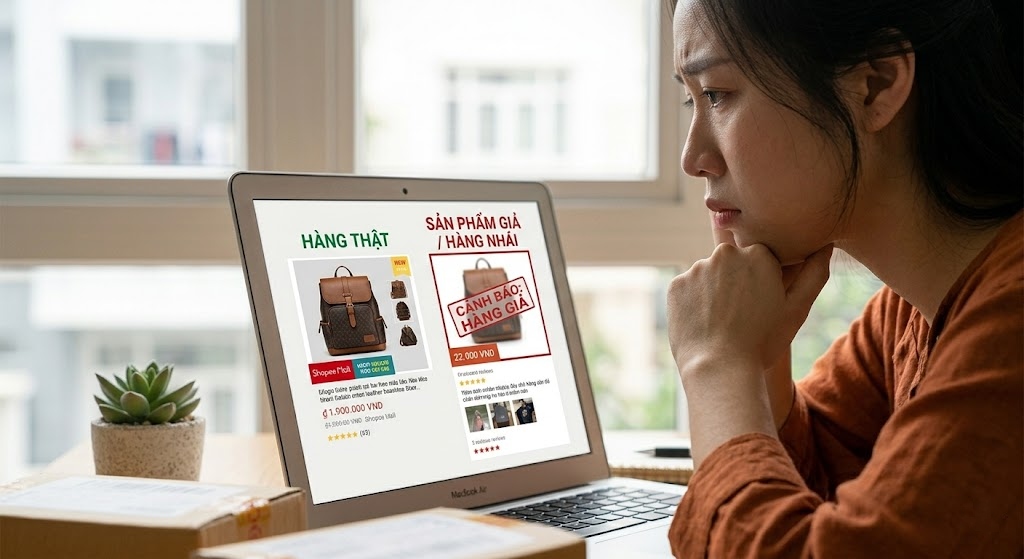
Sunscreen is a popular item every summer, leading to a sharp increase in shopping demand on e-commerce platforms. With just a few searches, users can see a series of products being advertised for sale.
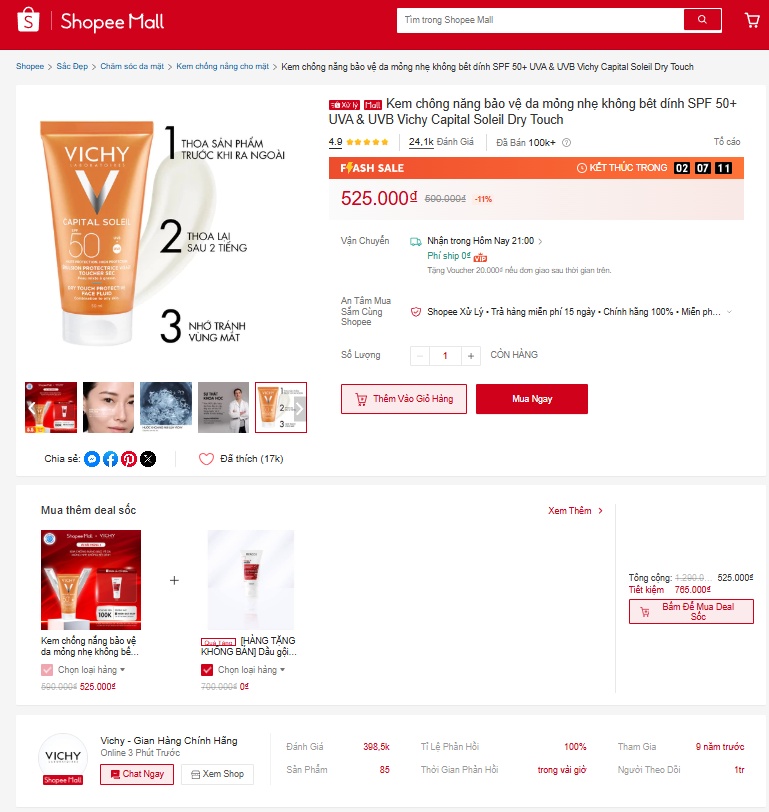
A survey by PV on Shopee shows that when trying to enter the keyword "Vichy SPF 50+ UVA & UVB Vichy Capital Soleil Dry Touch sunscreen", the system quickly displayed hundreds of booths selling this product.
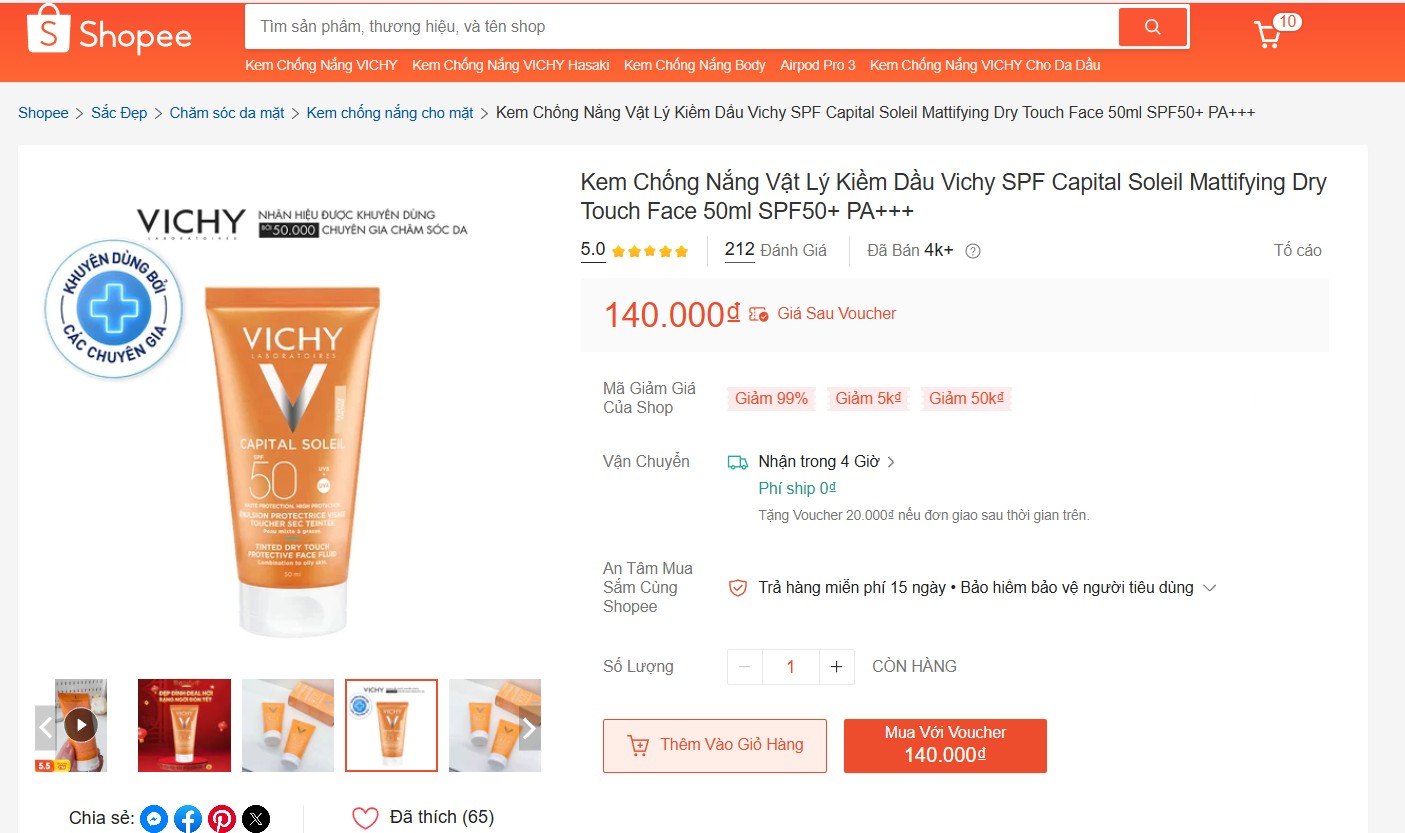
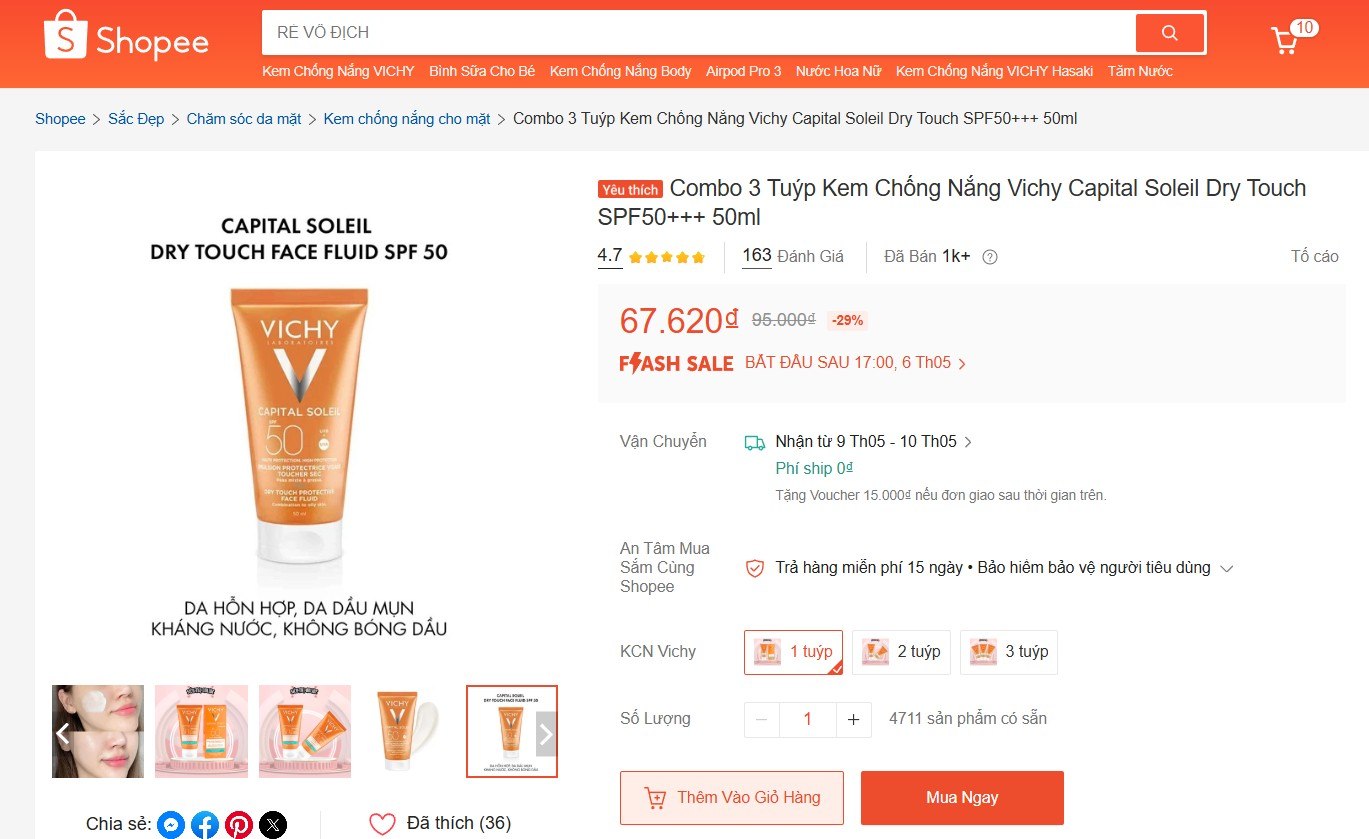
However, while Vichy's genuine booth listed a price of about 560,000 VND for a 50ml tube (not discounted), many other accounts advertised for sale at very low prices, even only 65,000 VND. Below the customer evaluation section, many people warned that goods are not guaranteed quality, fake goods.
Contacting Vichy Vietnam's customer care department, staff here recommend that consumers be especially careful with products sold at unusually low prices.
It is very difficult for a genuine product to have a price of just over 80,000 VND. To avoid buying fake and counterfeit goods, consumers should carefully check whether the product has Vietnamese sub-labels or not, and compare barcodes and QR codes on the packaging.
Customers can also request sellers to provide information proving the origin of the product to ensure their rights," said a Vichy Vietnam consultant.
Not only cosmetics, many items for mothers and babies also pose a risk of being counterfeited, causing many consumers to face risks even though they have experience in online shopping.
Despite owning a "Diamond" account on the e-commerce platform Shopee and having a lot of online shopping experience, Ms. Nguyen Phuong Thao (born 2000, residing in Hai Ba Trung ward, Hanoi) still bought fake goods twice just because she believed in the name of the booth.
Sharing with PV, Ms. Thao said that recently when she needed to buy more milk bottles for her child, she searched for products on Shopee. Seeing a booth named "Kids Palza", she mistakenly thought this was a store belonging to a famous mother and baby system and the price was also cheaper than the main store, so she ordered without suspicion.
However, after receiving the goods, she discovered that the milk bottle she had just bought had some details different from the same type of product she had previously bought at the genuine store.
The new milk bottle has a difference in the capacity dividing line, but if you don't pay close attention, it's very difficult to recognize. After that, I read warning articles online and found out that I bought fake goods. When I returned to the booth to report, this account had been deleted by Shopee, I was not refunded," Ms. Thao shared.
After the incident, Ms. Thao said that she no longer dares to buy products related to health and children on e-commerce platforms as before, although her account has many incentives.
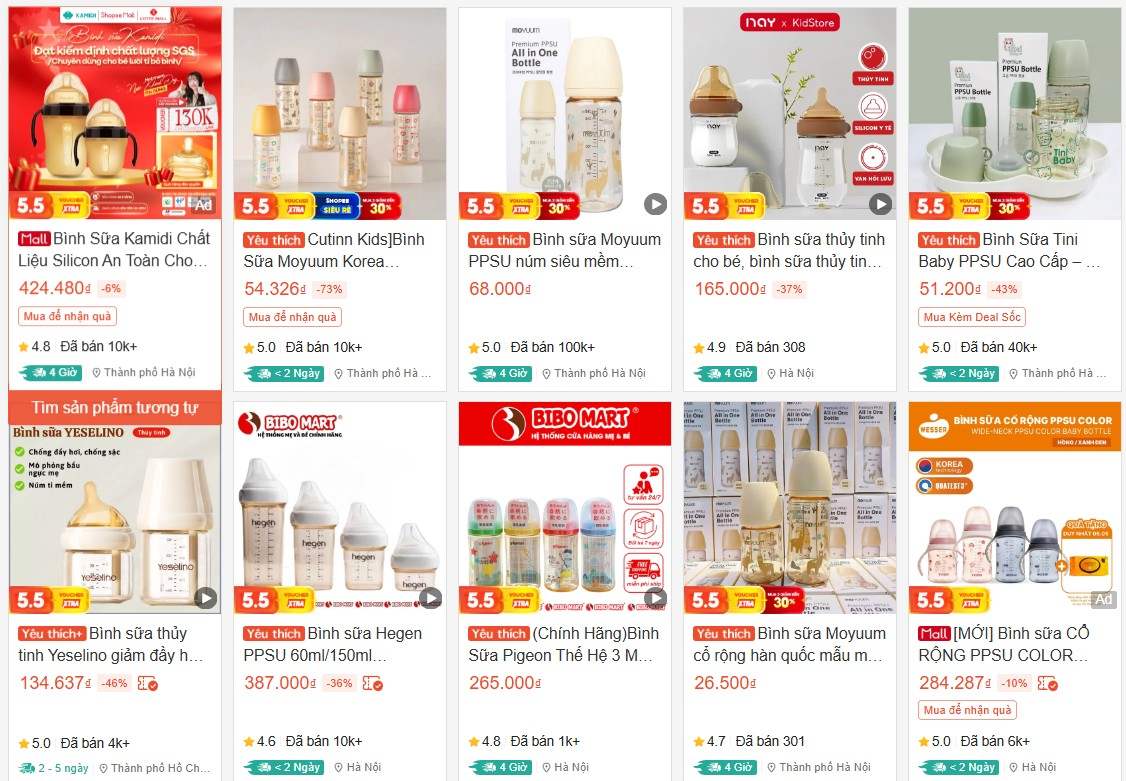
In the context of increasingly popular online shopping, products sold at "unusually cheap" prices are becoming a trap, causing many consumers to face the risk of buying fake and counterfeit goods, especially for goods directly related to health.
This reality also poses an urgent requirement for e-commerce platforms to tighten the process of censorship and verification of sellers, and at the same time promptly detect and remove stalls showing signs of violation. Because if it only depends on consumer vigilance, the risk of counterfeit and fake goods continuing to creep into the online shopping environment will still be present.


