
These are the assessments of Mr. Nguyen Trong Luat (photo), General Director of Cicor Vietnam Company, member of Cicor Group (Switzerland), Vice Chairman of Ho Chi Minh City Supporting Industry Association (HASI) in an interview with Lao Dong Newspaper.
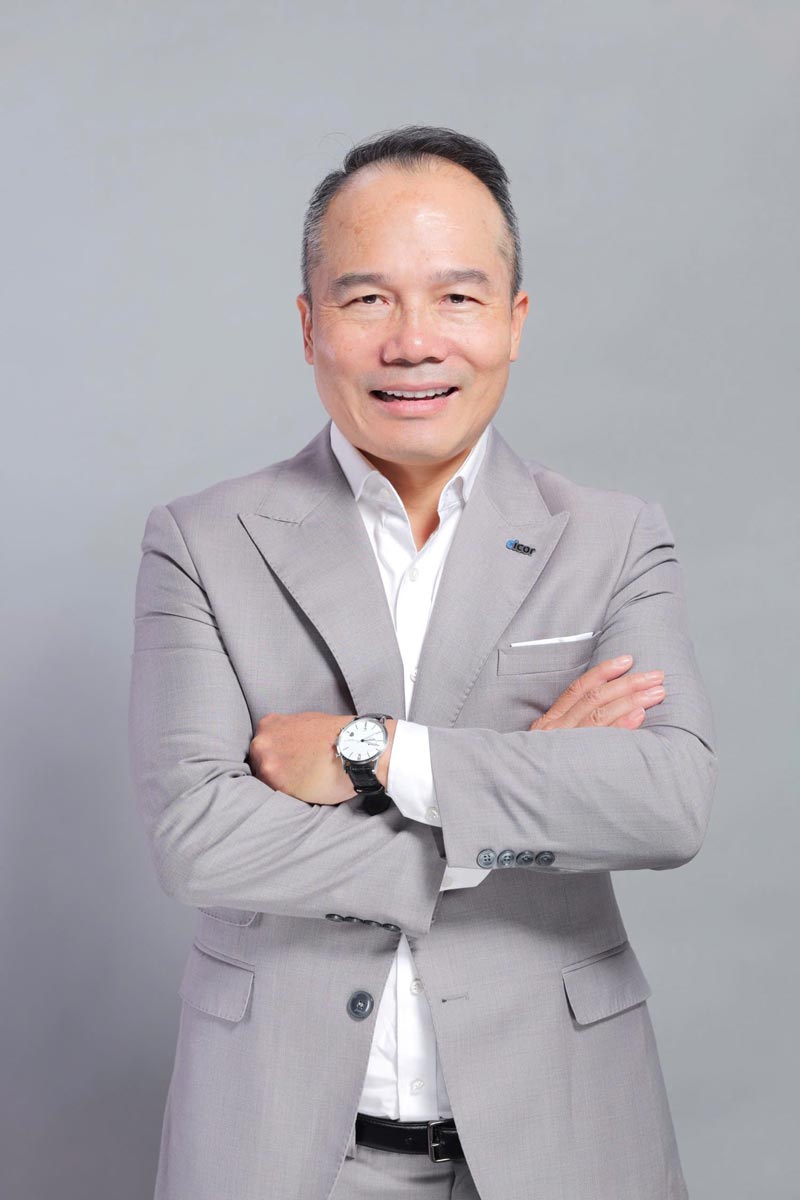
Sir, Vietnam's Resolution 10 emphasizes attracting FDI in a quality direction, prioritizing high technology instead of chasing quantity, and expanding mechanisms so that investors do not have to "go through many doors".How do you assess the above orientations?
- I highly appreciate Resolution 10 on changing policies and strategies to attract foreign investment.
In the electronics industry, the localization rate at Cicor Vietnam is currently only about 5-10%, showing that Vietnam cannot only focus on the number of projects or FDI capital scale, but needs to prioritize quality, technology transfer and added value.
Resolution 10 is a "wake-up call", promoting Vietnam to innovate in attracting FDI, increasing the localization rate, receiving high technology and gradually mastering new techniques in the field of semiconductor and microelectronics.
According to you, what does Vietnam need to do to promote the linkage between FDI enterprises and domestic enterprises, creating conditions for Vietnamese enterprises to participate more deeply in high value-added stages in the global supply chain?
- Cicor Vietnam always wants to increase the localization rate. However, in reality, finding domestic enterprises with sufficient capacity to participate in the supply chain is still very difficult. To elevate Vietnamese enterprises, first of all, they must meet international standards in the field they want to participate in.
In addition, it is necessary to focus on training high-quality human resources, from project management teams, quality management to engineers and technical workers.
An indispensable requirement is to promote digital transformation in production. Through the actual survey process, I found that many factories currently do not fully control operating data, from output, excess level to the time machines stop operating. When data is not transparent, businesses will not be able to accurately identify ineffective stages for improvement.
Along with digital transformation is green transformation. If green standards are not met soon, Vietnamese businesses will gradually lose the opportunity to participate in the supply chain of major markets such as the US and Europe, where sustainable development requirements are increasingly strict.
Businesses also need to improve working conditions, build policies to attract and retain talent. In fact, many FDI enterprises are currently attracting a large part of Vietnam's high-quality human resources, while domestic enterprises still face difficulties in " retaining people".
HASI is also making efforts to create a bridge between domestic enterprises and FDI corporations. At MTA Vietnam 2026, HASI has connected more than 110 supporting industry enterprises participating in a total of 650 booths from 21 countries. In the coming time, HASI will continue to expand connection programs with FDI enterprise supply chains, and organize seminars, talks and training courses to support Vietnamese enterprises to meet international standards.
Sir, how do you assess Vietnam's current investment environment, especially after Vietnam strongly shifted from management thinking to accompanying businesses?
- Vietnam's investment environment is undergoing very positive changes, especially the shift from "business management" thinking to "accompanying businesses" is a very correct step and should have been implemented sooner. However, for the attractiveness of the investment environment to be truly enhanced, Vietnam's procedures still need to be simplified and more transparent. By doing this, Vietnam will retain high-quality human resources and attract more high-quality foreign investors in the spirit of Resolution 10.


