
Increased income from straw stalks
Mr. Huynh Van Chin, residing in Dai Ngai commune (Can Tho City), said that for about 10 years now, in addition to income from rice cultivation, his family also has additional income from selling straw after harvest.
Previously, straw after harvest was often left in the fields and then burned because it was difficult to collect. Since the cooperative invested in straw rolling machines, all straw has been collected, each hectare helps farmers earn an additional 600,000 VND," Mr. Chin shared.
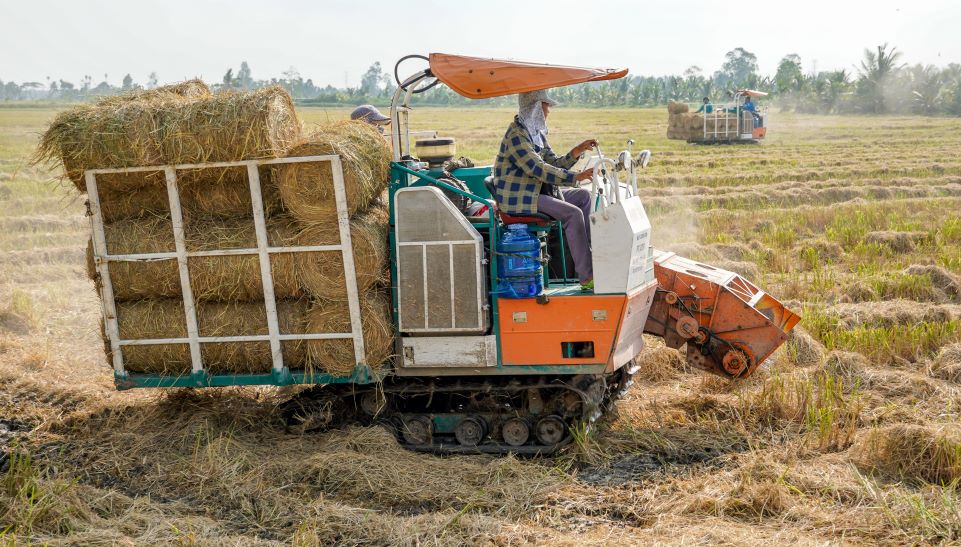
According to Mr. Truong Van Hung - Director of Hung Loi Agricultural Cooperative (Dai Ngai commune, Can Tho city), the cooperative has invested in straw rolling machines to serve members. Straw after drying is rolled up, brought to the storage warehouse and sold to traders. With the current yield, each hectare of rice can yield from 170-200 rolls of straw, each roll weighing about 18-20kg. Thanks to this, the income from straw is increasingly clear, contributing to improving farmers' lives.
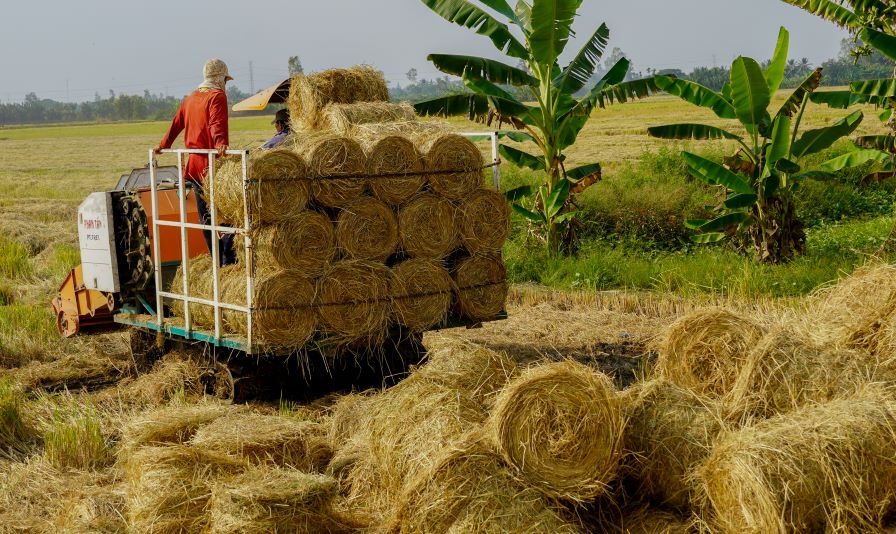
Not only rice farmers, many rural workers also have stable jobs from straw collection and transportation.
Mr. Nguyen Van Ngo (Luong Tam commune, Can Tho city) said that before, he had to work as a construction worker after the harvest season, with an income of only 200,000–300,000 VND/day. Now, thanks to the work related to straw, he can work year-round in many provinces, his income has increased to 500,000–600,000 VND/day, and his life is more stable.
According to Mr. Le Hai Bang, owner of a straw purchasing facility in Vinh Long, this profession not only brings income to families but also creates regular jobs for many local workers. Farmers are therefore gradually reducing their total dependence on rice when they have additional income from straw.
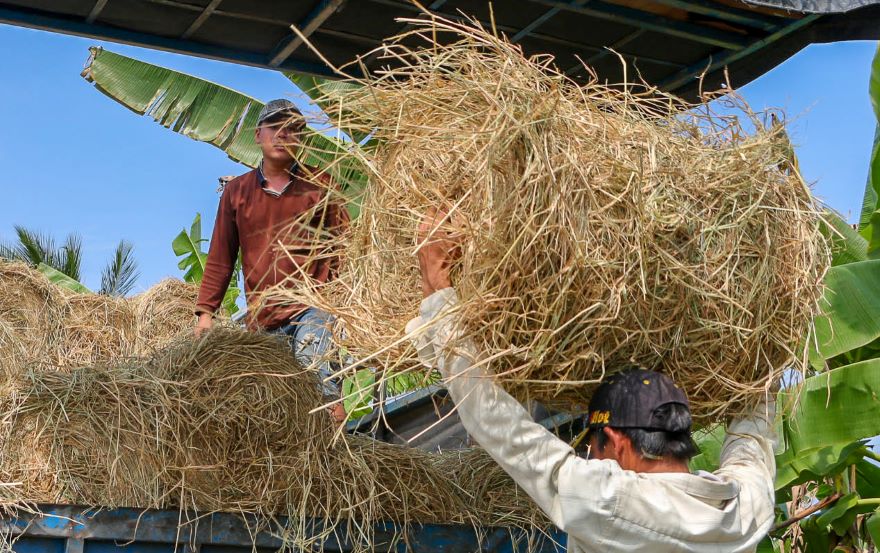
In Can Tho City, since participating in the Project "1 million hectares of high-quality, low-emission rice associated with green growth in the Mekong Delta region" from 2024, the locality has implemented 65 models on an area of 7,830ha.
The models help farmers reduce production costs, increase income and gradually form a value chain from straw. Instead of being burned, straw is used for sale, mushroom cultivation, and organic fertilizer production. Thanks to that, farmers can increase by about 33 million VND/ha/3 crops. Notably, the use of organic fertilizer from straw also helps reduce 30–40% of inorganic nitrogen fertilizer, contributing to green and sustainable agriculture.
Bustling Mekong Delta straw market
One of the major straw transfer points is Ba Tri straw market located near Ba Lai sluice gate in Tan Xuan commune (Vinh Long province), formerly Tan Xuan commune (Ba Tri district, Ben Tre province). Starting from the demand for cattle breeding in the locality, traders buy straw from many provinces in the area and then transport it here for consumption.
Each straw boat docking usually carries from 1,000–2,000 rolls, the selling price ranges from 20,000–30,000 VND/roll depending on quality and time. The yard owner collects a loading and unloading fee of about 200,000 VND/boat, and porters are paid 1,000 VND per roll.
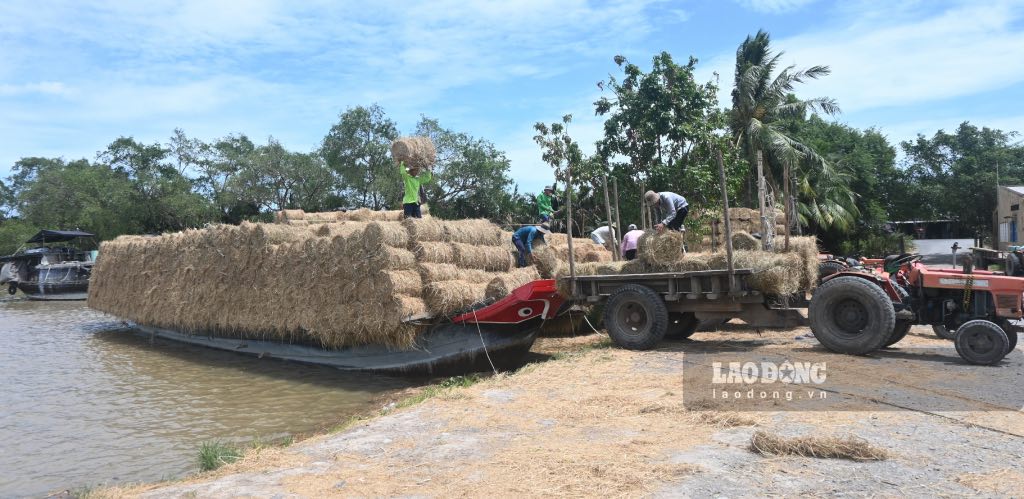
Mr. Lat (from Giong Trom, Ben Tre) - a straw trader - said that buying and selling here mainly relies on long-term relationships, so it is quite convenient. Buyers trust sellers, rarely have to choose carefully; on the contrary, sellers also maintain prestige, classify the correct quality to quote appropriate prices. Although bustling, straw markets rarely experience jostling or bargaining.
Every time the boat docks, hundreds of workers quickly load straw onto the truck. The work is calculated according to output, averaging 1,000 VND per roll. The main labor force is young people working in groups. If they are healthy, each person can earn over 300,000 VND/day, even nearly 1 million VND on peak days.
Mr. Nguyen Van Tam said that on days with a lot of straw, income reaches 400,000–500,000 VND/day, although hard, it is stable.
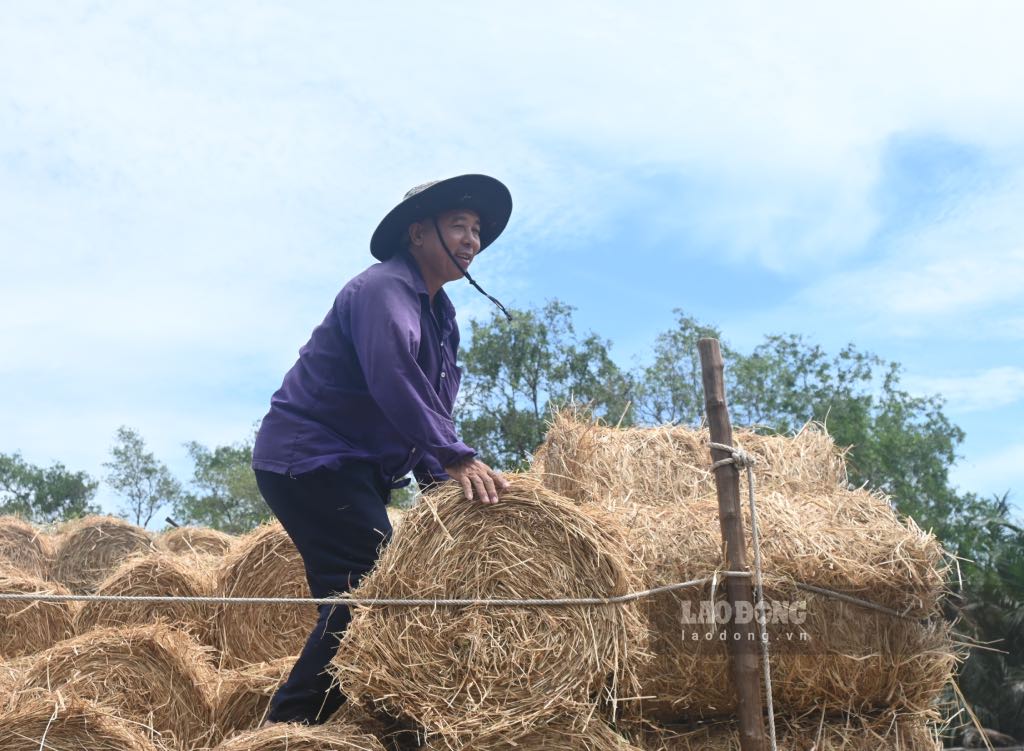
According to local people, straw markets not only provide food for livestock but are also an important trading hub, contributing to promoting the rural economy. If infrastructure is invested and systematically planned, this activity will continue to develop sustainably, creating more livelihoods and increasing value for the rice industry.


