
During Tet days, the atmosphere in specialized agricultural production areas for export of Can Tho City is still bustling in a very unique way. Tet is not only a time for reunion, but also a time for farmers to look back at a year of doing business from fields and gardens associated with the export market.
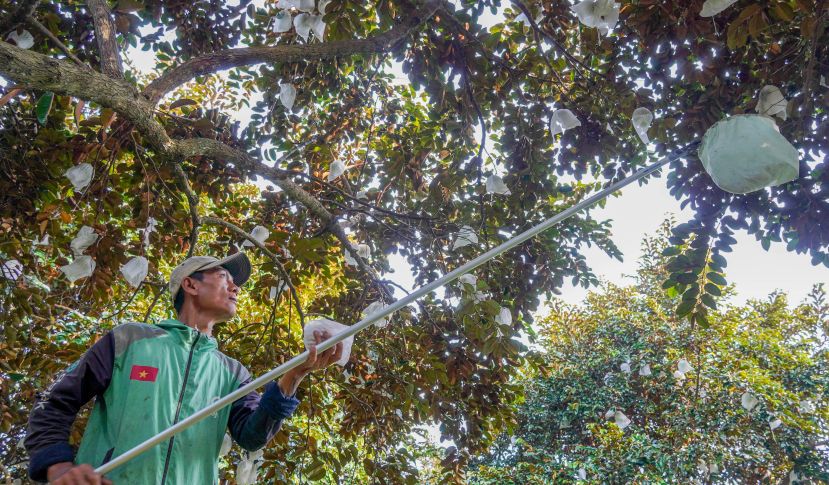
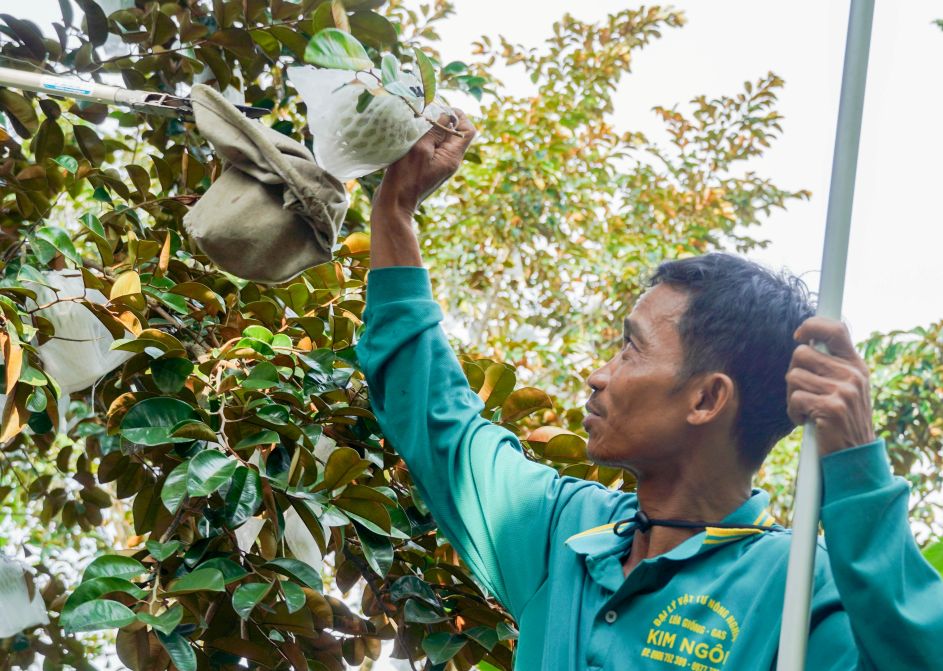
In the specialized pink butter star apple growing area in Thoi An Hoi commune (Can Tho city), Mr. Nguyen Van Muoi Hai said that for about 5 years now, star apple growers have welcomed Tet more easily thanks to stable output.
According to Mr. Muoi Hai, 5 years ago, when it was the peak harvest season, the price was only about 20,000 VND/kg, after deducting expenses, the profit was about 15 million VND/1,000m2. However, after participating in the Cooperative (HTX), being linked by businesses to consume for export to the US market, the value has increased 2-3 times.
Currently, we only focus on taking care of the garden to meet export standards, and the output has been taken care of by cooperatives, so star apple growers are much more assured," Mr. Muoi Hai said.
Mr. Tran Van Phuong - Director of Xom Dong 2 Agricultural Cooperative (Thoi An Hoi commune, Can Tho city), said - The cooperative has 38 members, with a cultivated area of about 40 hectares of pink butter star apples. The advantage is that this star apple variety has a late crop end time, so the supply is not interrupted. It is expected that this year, the cooperative will supply about 300 tons of star apples of all kinds.
When products are exported, people change their production thinking, focusing on environmentally friendly techniques. The linkage chain between farmers and businesses helps limit the risk of bumper crops and price drops, while also enhancing the position of Vietnamese fruits," Mr. Phuong shared.
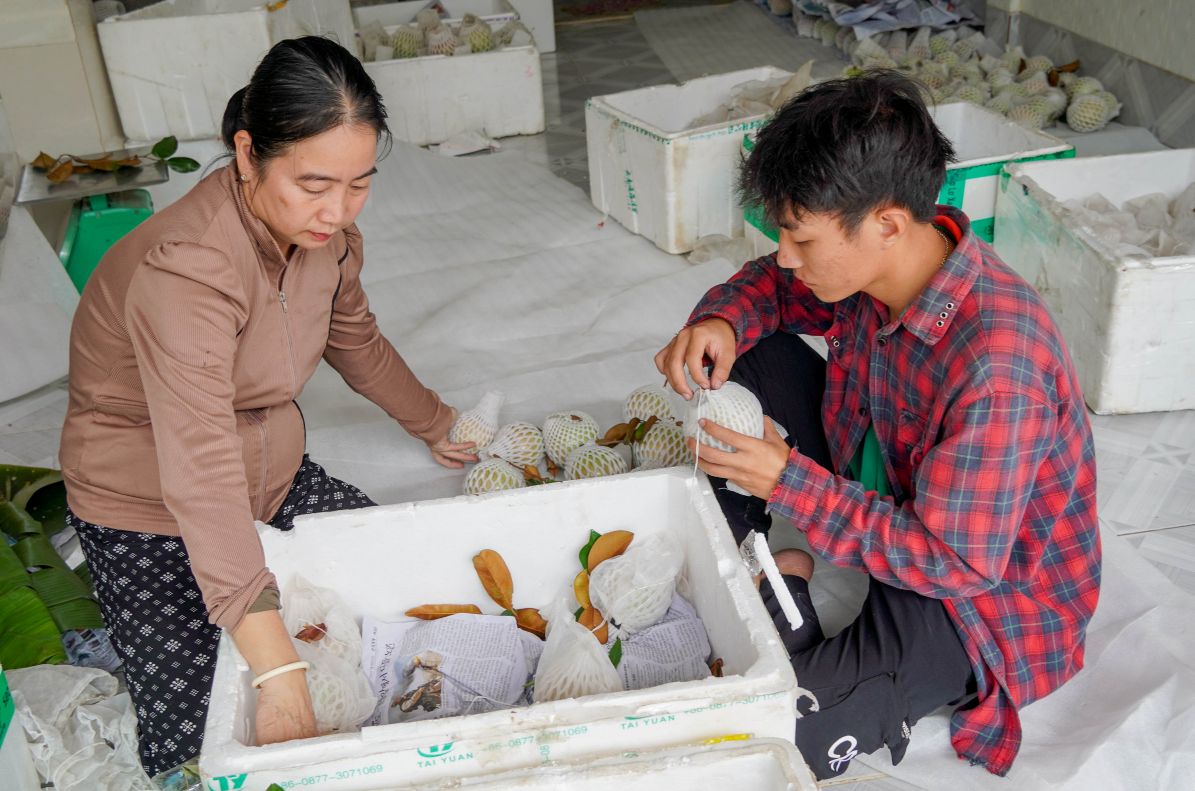
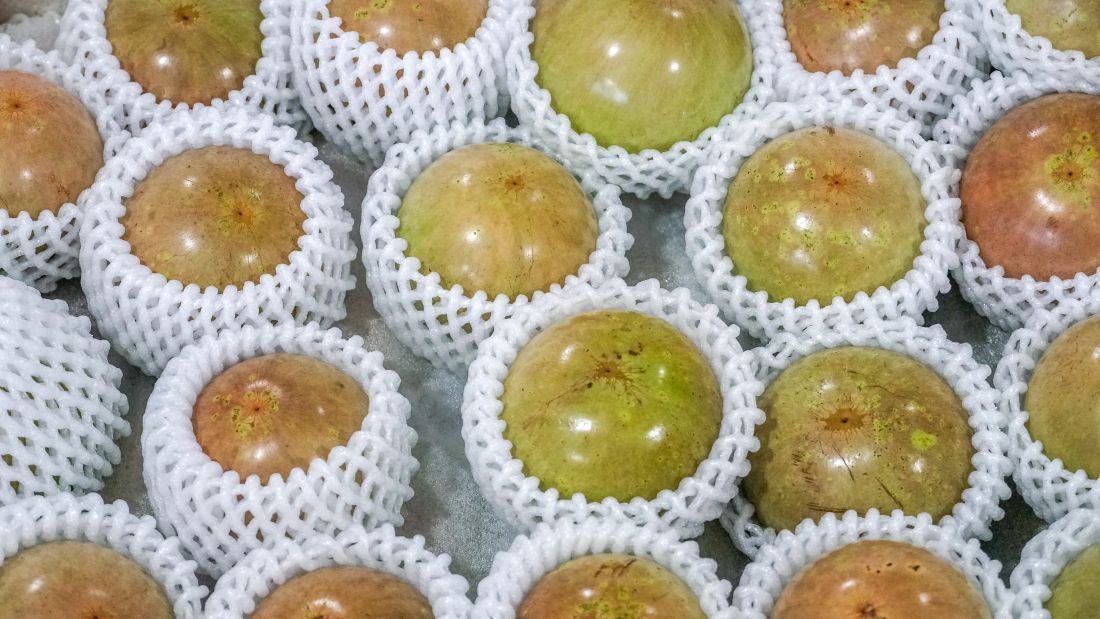
According to Mr. Su Quoc Loc - Director of Loc Mai Agricultural Cooperative (An Lac Thon commune, Can Tho city) - over the past 6 years, the formation of specialized farming areas associated with cooperatives and export enterprises has fundamentally changed the way of production. Fruits are no longer sold retail but are purchased under contracts, associated with strict requirements on quality, traceability, and planting area codes. In return, selling prices are more stable and output is less risky.
Mr. Loc said that since 2018, the star apple fruit of the Cooperative has had a "passport" for export to the US. Since then, every year from the beginning of the season, businesses have proactively come to the Cooperative to sign consumption contracts. The purchase price reaches 45,000 VND/kg at the beginning of the season and 30,000-32,000 VND/kg from the middle to the end of the season.
Not only stopping at VietGAP, many cooperatives are raising production standards to access more demanding markets. Typically, Trang Ti Garden Cooperative (Thoi Hung commune, Can Tho city). Mr. Tran Phuoc Son - Director of the Cooperative - said that the cooperative currently has about 60 hectares of longan, of which 30 hectares meet VietGAP standards, 5 hectares are cultivated in an organic direction and 20 hectares meet GlobalGAP standards.
The process is stricter than traditional production, but these standards help the cooperative create products that meet export requirements," Mr. Son emphasized.
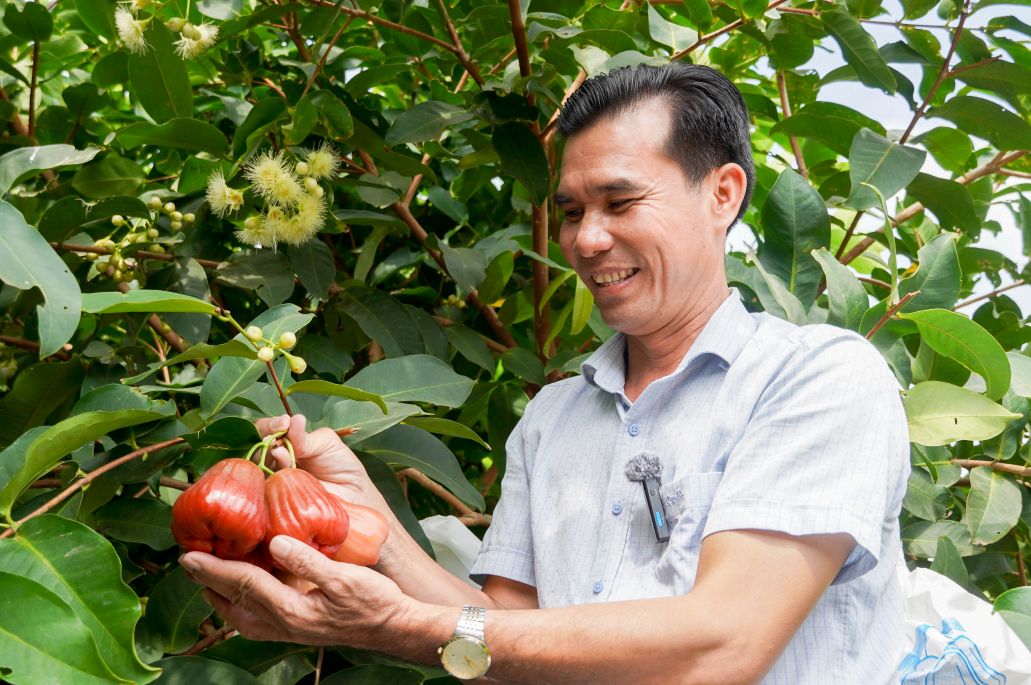
Stepping into early 2026, in the Hong San Tien plum growing area (Cu Lao Dung commune, Can Tho city), the plum crop coinciding with the Lunar New Year brings many positive signs.
Mr. Tran Van Phuc - San Tien Co., Ltd. - said that this year's plums are of good quality, uniform designs, are produced in an organic direction and are being offered to markets such as the UK and France.
According to Mr. Phuc, products are tested, traceable for clear origin and digital management applications throughout the process help businesses proactively forecast output, sign contracts before harvest, and reduce dependence on traders.
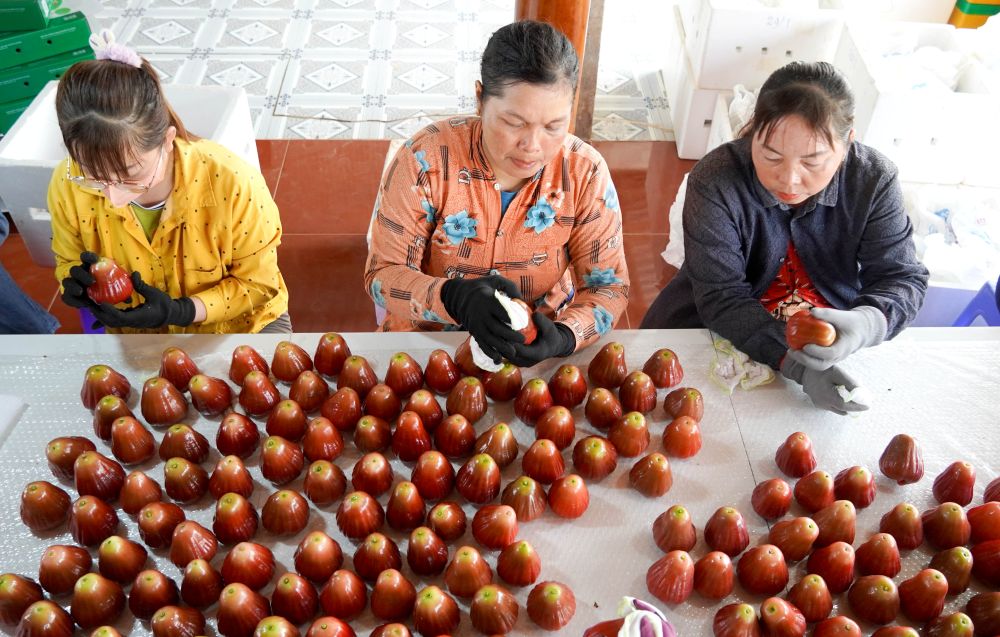
Not only bringing economic value, this linkage model also creates stable jobs for about 40-60 local workers every day, sometimes up to hundreds of people during peak seasons. Thereby, helping people have income right at home during the Tet holiday, contributing to maintaining attachment to the countryside.


