From deserted fields to "golden mines" during the flood season
In the first days of winter, the atmosphere in Ha Dong commune (Hai Phong) became more bustling than usual. When the water level rose to the right level, the ruoi followed the water rising from the mud, signaling the "heavenly" season to return. The whole commune currently has about 200 households participating in ruoi exploitation with a total area of over 60 hectares. Although the yield at the beginning of the crop was not high, it is expected that the whole season, Ha Dong will reach about 80 tons of ruoi. With an average selling price of 300,000 VND/kg, the revenue from ruoi brought to farmers here is about 25 billion VND per year.
According to Mr. Le Van Quat (Tu Y village), more than ten years ago, many rice fields in Ha Dong were abandoned due to low-lying land, flooded water all year round, and growing rice or crops was ineffective. However, from the experience left by our ancestors, people realized that this is an ideal environment for earthworms to grow. From there, households began to renovate their fields, proactively lease land, invest in water canals and regulating sewers to create a natural living environment for the ruoi to develop.
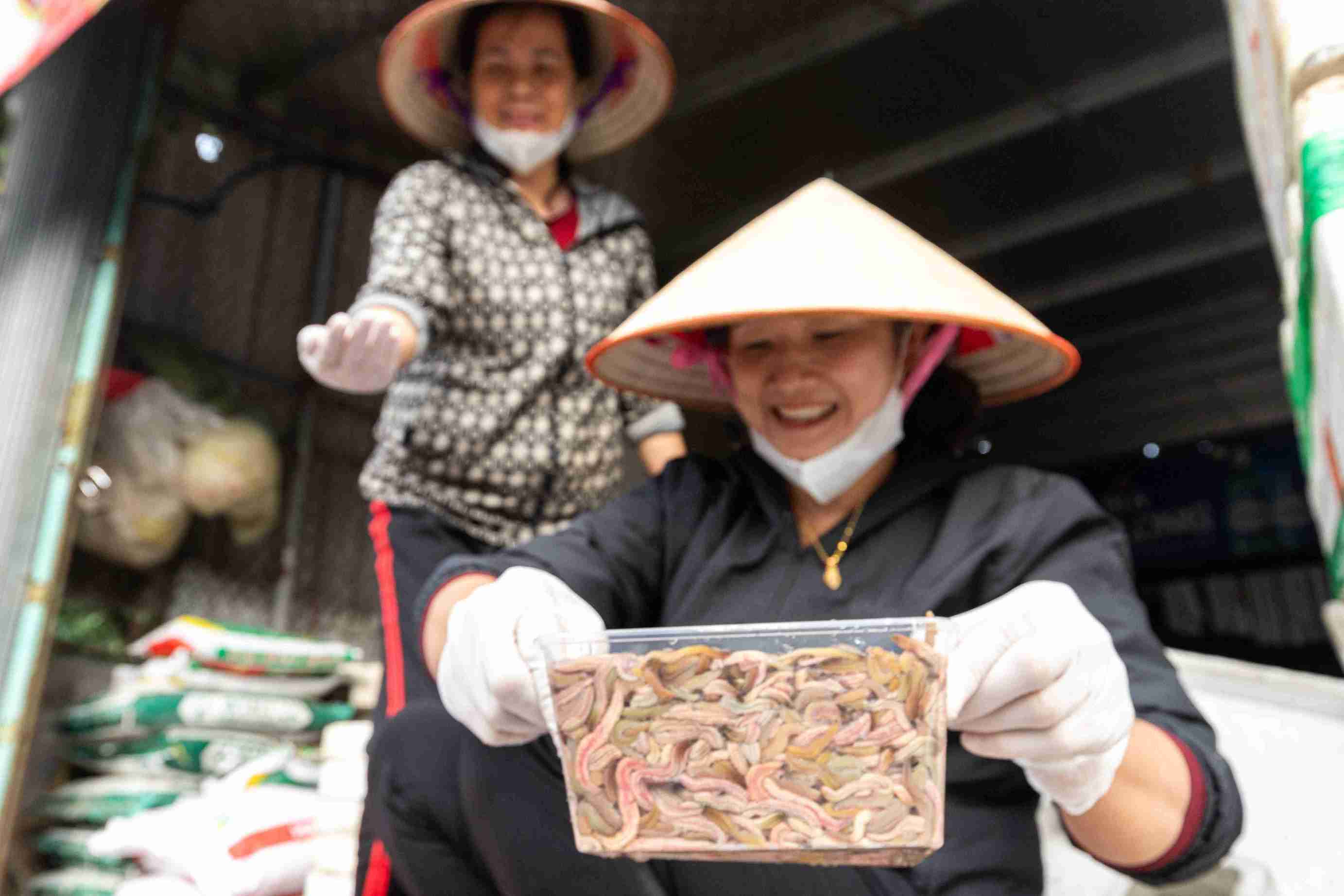
Not only Ha Dong, in Lac Phuong commune, Chi Minh commune, Vinh Lai commune... these days farmers are also busy harvesting. This year, the ruoi grow nearly a month later than usual, but the output is assessed as good and meets output standards. This is the largest harvest of the year, when output, productivity and selling prices all dominated.
The common point of many households is to apply the method of renovating the field of ruoi in a completely organic direction. Agricultural by-products are thoroughly utilized, both protecting the natural environment and creating a safe food source for ruoi.
The secret to caring for and culinary value of "difficult to prepare"
On an area of over 7 sao of ruoi fields in An Ho village (Lac Phuong commune), Mr. Pham Van Lang is one of the pioneers in applying a systematic renovation process. He said that right from the spring crop, his family added straw, banana stems, and tay sticks to the fields to create a foam level for the soil. When entering the preparation stage for the ruoi crop, the fields are plowed and flattened, creating a suitable ditch for the conductedges.
In particular, ingredients such as corn, soybeans, and rice bran are finely ground and sprayed evenly on the field, creating a natural source of nutrition for host species - the main food source for ruoi. Thanks to that, in the first year of exploitation, the yield reached 70-80 kg/sao; from the second year onwards, it can reach over 1 ton/sao. "The earthworms raised in this way are big, strong, have beautiful designs, and are very popular with traders" - Mr. Lang said.
Not only does it have economic value, ruoi is also deeply associated with the culinary culture of the people in the coastal areas of Hai Phong. Many elderly people said that there were times when there were so many crab cakes that they could not finish eating them. Surplus ruoi are made into fish sauce and sold in neighboring provinces, thereby creating a reputation for the ruoi in this area.
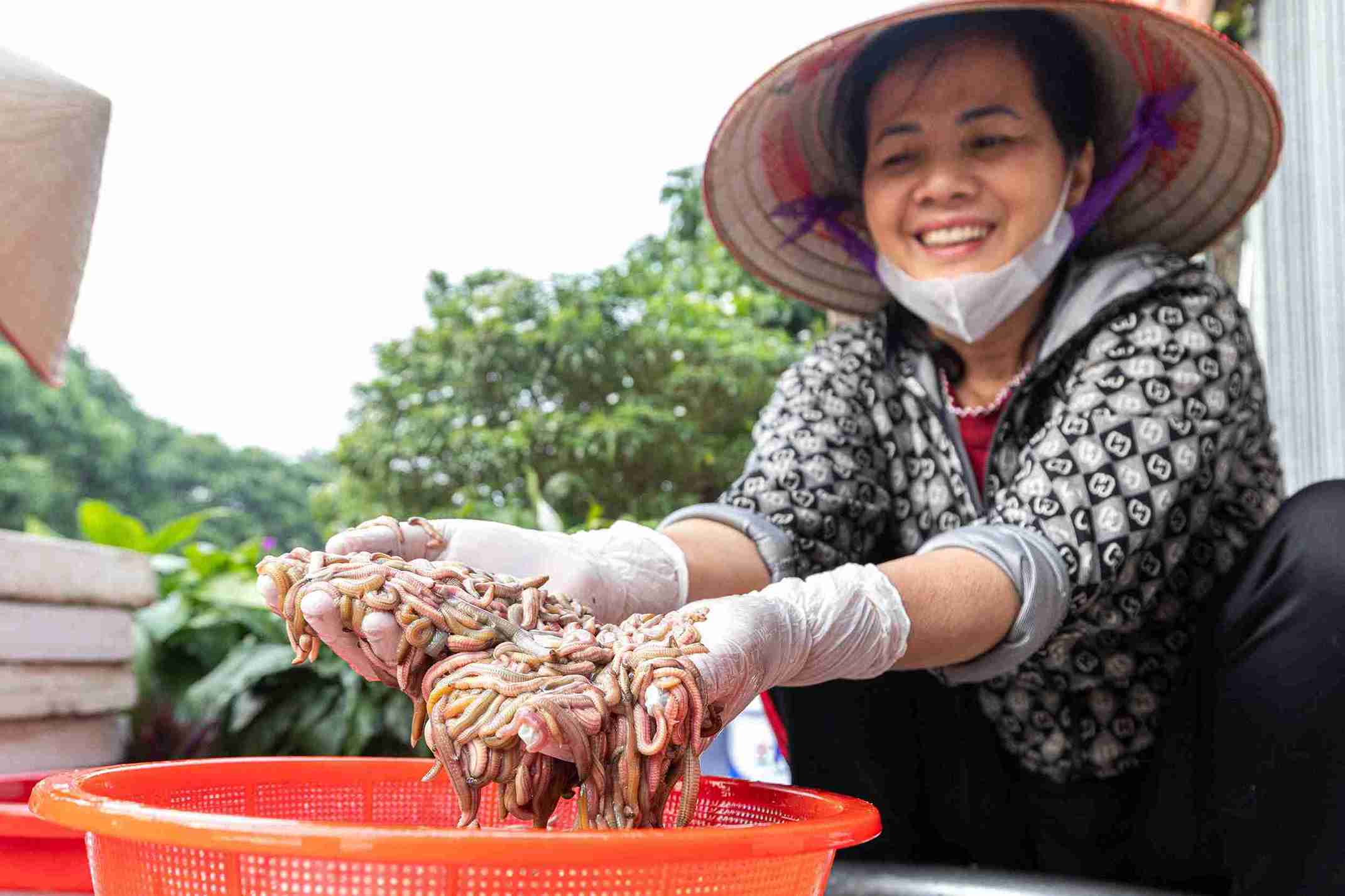
Ms. Pham Tuyet Hoa (Chi Minh commune), who has been involved in the crab fish making profession for many years, said: "Crabs only appear seasonally, usually around the 9th and 10th lunar months, each period lasts only a few days depending on the water level. This is a specialty that is difficult to exploit, requiring workers to have a firm grasp of the rules of tides, weather and characteristics of each ruoi pond".
In the meals of Hai Phong families every winter, the crab comes to life through many familiar dishes such as grilled crab, crab cakes, crab spring rolls, crab fish sauce... Ms. Nguyen Thi Mai (Hai Duong ward) shared that crab is not only delicious but also has a very unique flavor of the Northern winter. "Just by hearing the smell of fried crab cakes, you can clearly see the very unique flavor of the Northern winter" - Ms. Mai shared.
From the rice fields along the river, the ruoi have contributed to changing the face of the countryside, increasing income for people and preserving a unique culinary culture. Every year when the crab season comes, it is not only the harvest season, but also the season of memories, of the flavor of the homeland spreading with the alluvial water.
According to the Department of Agriculture and Environment of Hai Phong City, the whole city currently has about 2,300 hectares of exploitation area for ruoi and fish - a group of specialty aquatic products with high economic value. Vice Chairman of the City People's Committee Tran Van Quan has requested localities in the East and West to strengthen connections, share experiences, and replicate production models in an organic and creative direction.
When investing in new irrigation works, it is necessary to ensure synchronization, avoid interruption, promote long-term efficiency, create a foundation for the formation of high-quality ruoi and fish farming areas, associated with local brands and develop eco-tourism.