
Having been attached to the fruit trading profession on Cai Rang floating market for nearly 20 years, Ms. Nguyen Thi Quyen (from Soc Trang ward, Can Tho city) still maintains the habit of waking up at about 3 am. When the city is still immersed in the night, she and her husband are busy collecting goods, loading fruits onto boats and then going downstream to the market.
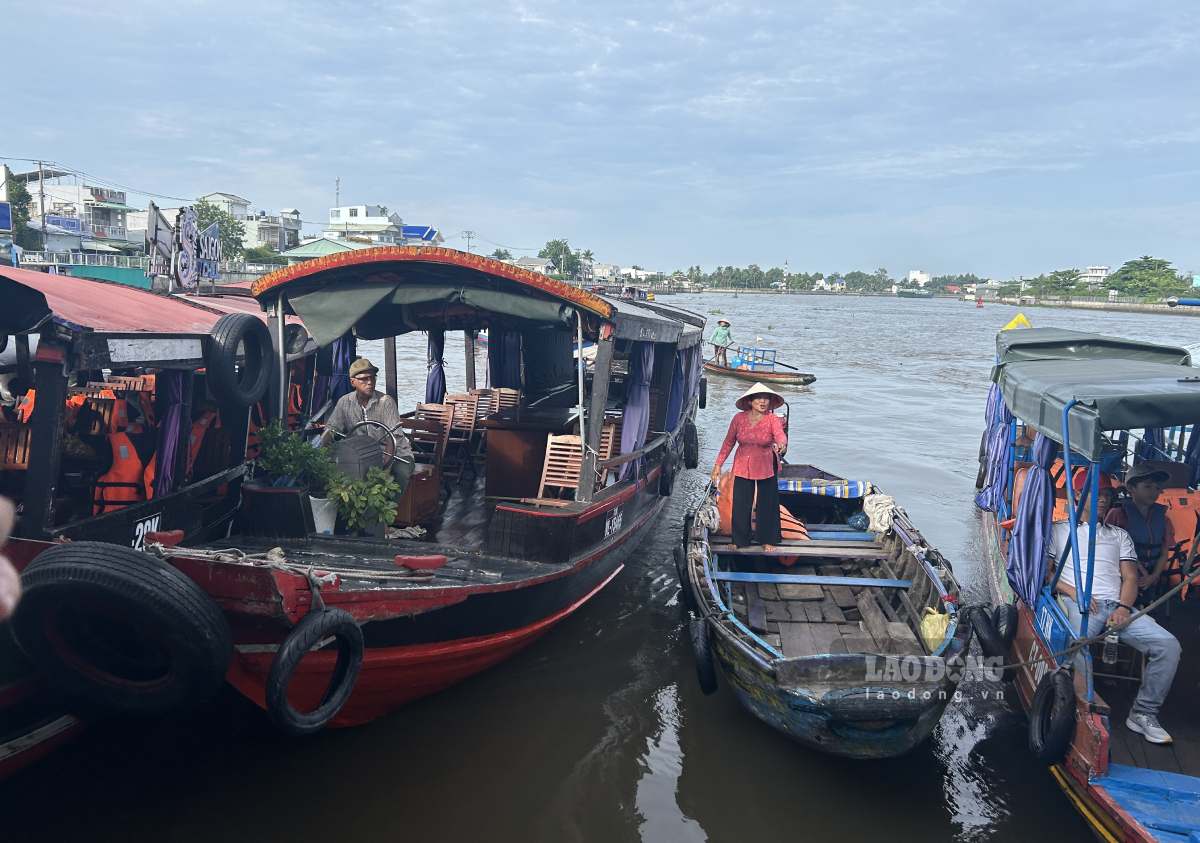
To sell to partners and welcome tourists in time, we have to go very early. Some days we wake up at 3 am, and boats run at more than 4 am. Every day is like that, we are used to it but it's also very hard," Ms. Quyen said.
According to Ms. Quyen, the trading profession depends entirely on purchasing power and weather. On heavy rainy days or when there are few customers, goods consumption is slow, and income decreases significantly. However, she and her husband still try to stick to the profession because this is the main source of livelihood for the whole family.
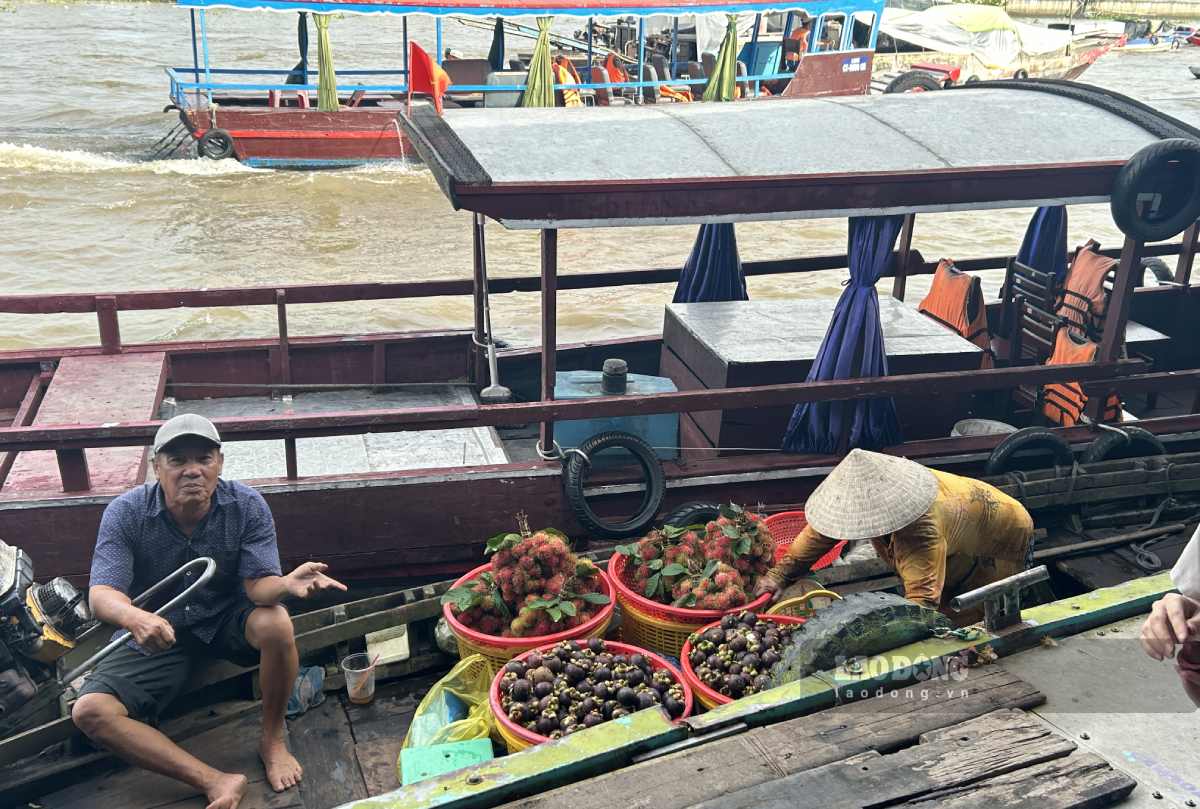
Sitting on a precarious boat on the river, Ms. Nguyen Thi Bon (67 years old, who has been attached to the profession of boat driver carrying passengers around the floating market for 32 years) recounted: "The floating market is very different from the old days. In those days, the market peak operated from early morning, boats carrying fruits and vegetables filled the entire river section, any boat that wanted to find a way to weave through was also difficult to move back and forth. Now road trade is convenient, so many merchants have come ashore to trade.
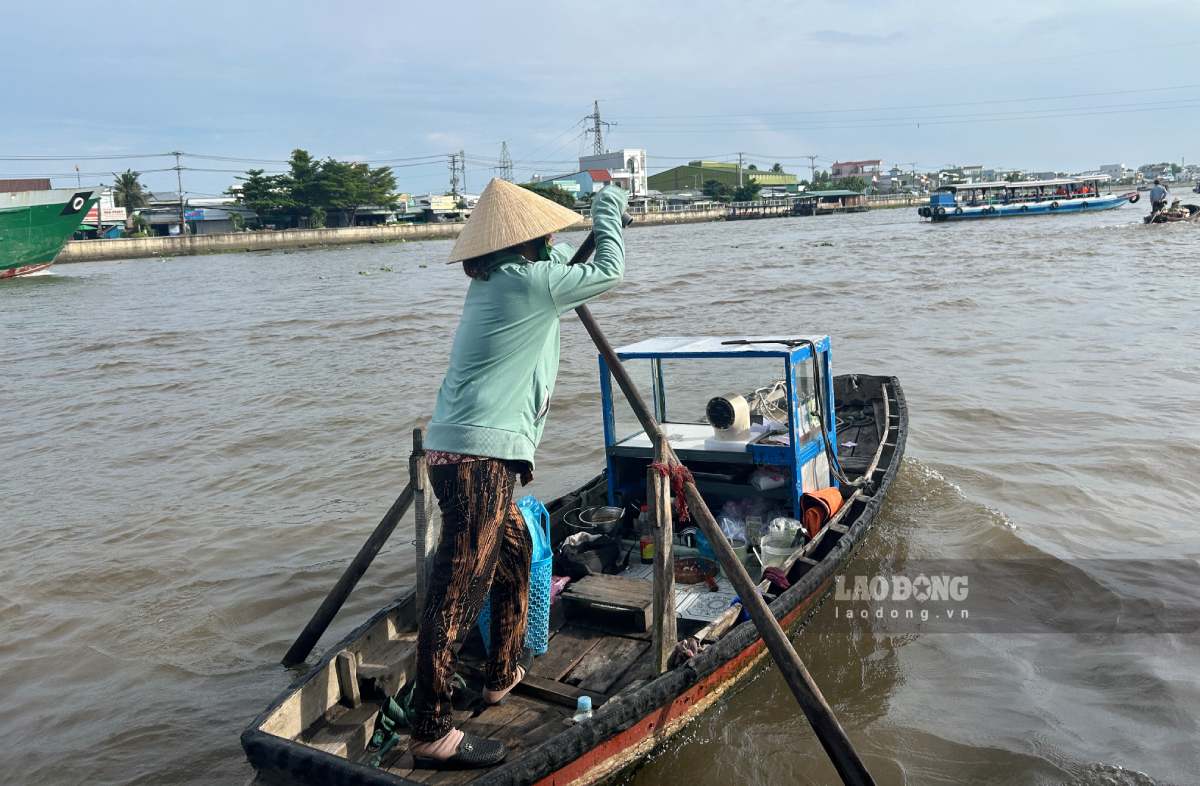
Not only is it a place for trading agricultural products, Cai Rang floating market is also a destination chosen by many domestic and foreign tourists when coming to Can Tho. Boats selling vermicelli, coffee, fruits... weaving through the river create a very unique experience that few places have.
However, according to Mr. Tran Minh Khoa, a tour guide specializing in guiding tourists to explore the Mekong Delta, the attractiveness of the floating market is facing many challenges. "Tourists from all over the world really like to experience the floating market because this is a unique cultural feature. But in recent years, many groups of tourists have asked why boats are less than before. There are mornings when they expect to see bustling trading scenes, but in reality it is no longer as crowded as they imagined," Mr. Khoa said.
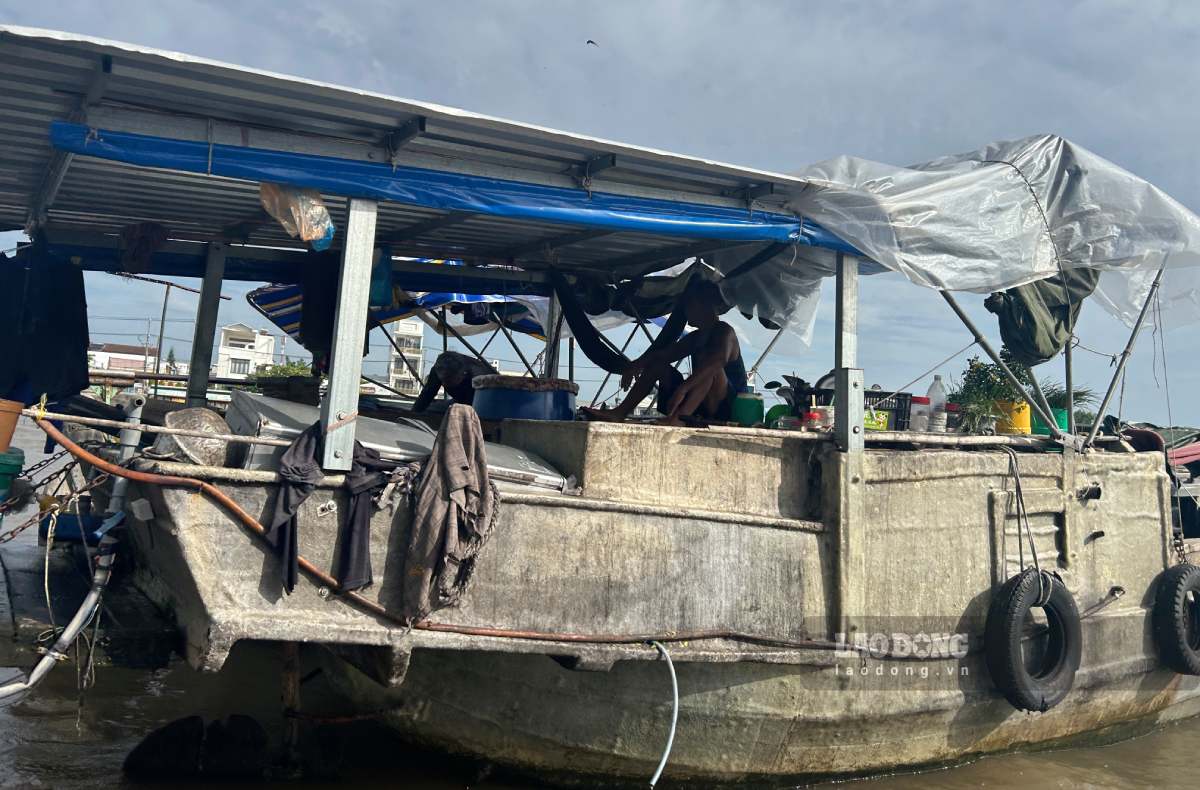
According to Mr. Khoa, if the number of traders continues to decrease and trading activities become increasingly sparse, the floating market will gradually lose its original value.
If people no longer make a living on the river, then in a few decades, Cai Rang floating market may only be a name in memory or in old photos," Mr. Khoa expressed.
According to Deputy Director of the Department of Culture, Sports and Tourism of Can Tho City Sam Long Giang, the locality is preparing a project worth nearly 30 billion VND to preserve the cultural identity of Thuong Ho, zone water surface activities and develop tourism at Cai Rang floating market, which is over 120 years old.
The project aims to preserve river trading habits, the life of merchants and the image of floating markets as a "living heritage" of the Mekong Delta. At the same time, the city wants to form a unique tourist destination, creating more livelihoods for small traders, people and related services.
The research area is the Can Tho River section from Ninh Kieu wharf to Cai Rang floating market, about 3 km long, 150 - 200m wide. The project scope includes the entire current status of the floating market, landscape on both sides of the river and 7 bridges in the area.


