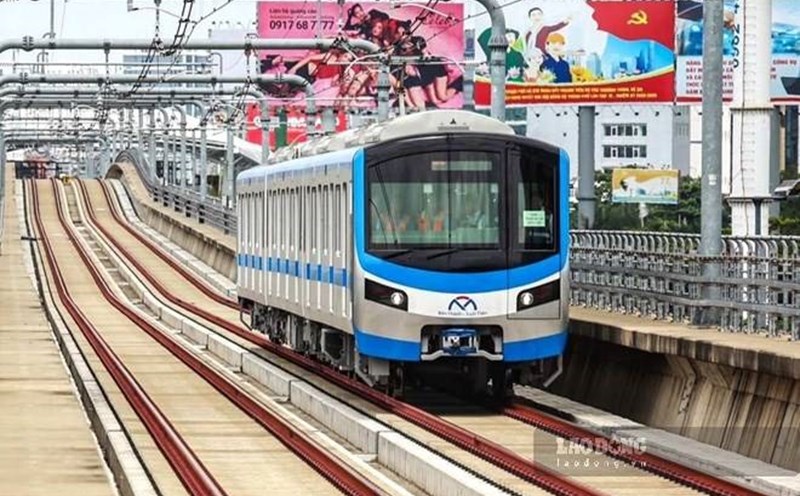
In the context of the city implementing a new multi-polar planning, Ms. Do Thi Thu Hang, Senior Director of Research and Consulting Department, Savills Hanoi, shared her assessments of the role of transport infrastructure, the potential of urban development models associated with public transport (TOD), as well as changes that may occur in people's housing choice trends in the coming time.
Madam, how do you assess the role of the 5-line Metro network that has just started construction in restructuring urban space in Hanoi?
The simultaneous development of 5 Metro lines is the core factor to shape the multi-polar urban structure. Hanoi will shift from a development model focused on the historical inner city area to a multi-center model. This promotes the formation of new development poles such as Dong Anh, Hoa Lac, Gia Lam, and expands the development space to the southern region in the long term.
In addition, this network creates optimal conditions for developing the TOD model around stations. Areas around metro stations become high-density development points, integrating housing, commerce, offices and services, optimizing urban land use.
More importantly, Metro helps mechanically reduce population density, expand urban space along strategic traffic corridors and redistribute economic activities that are already overloaded in central areas such as Hoan Kiem or Ba Dinh.... Metro helps reduce dependence on private cars, limit congestion and pollution, and contribute to building a modern and sustainable city.
When Metro lines go into synchronous operation, how will the trend of people choosing housing change?
When connectivity is improved, buyers may be willing to choose areas further from the center, especially large urban areas in suburban areas that are well-planned and have synchronous utility systems. Instead of prioritizing geographical distance, people are increasingly interested in access to workplaces, schools, services and daily utilities through public transport networks.
In the long term, projects located near metro stations or developed under the TOD model are expected to attract greater attention thanks to their convenient connectivity. This trend may promote the migration of residents to areas outside the city center, where people have the opportunity to access more spacious living space, better quality of life and a more complete utility ecosystem, while maintaining connectivity with the city center.

For the TOD model to develop effectively and achieve expectations, what are the prerequisites that need to be noted?
First of all, TOD needs to be built on the foundation of large-volume public transport systems such as metro, urban railways or BRT, with convenient connection between areas in the city.
In addition, the area around the stations needs to be planned in the direction of developing high density and multi-functionality, integrating housing, offices, commerce, services and public utilities in the same space.
An equally important factor is accessibility. Sidewalk systems, bicycle lanes, transfer points and public spaces need to be invested synchronously, helping people easily access the station by sustainable means of transportation. Finally, there needs to be a mechanism for planning, management and coordination between relevant agencies to ensure effective and consistent TOD implementation.
What is your assessment of Metro's impact on the real estate market, especially in terms of supply and cost in the coming time?
Regarding supply, the real estate market will become more diverse. Large-scale megacities in Dong Anh, Gia Lam, southern and western Hanoi areas adjacent to or along metro lines... will provide a large number of housing products in many segments, especially Grade B, Grade C apartments, affordable housing to social housing and rental housing.
It is predicted that in the coming years, when Metro goes into operation, the supply of housing priced below 50 million VND/m2 will be more abundant. This is a positive signal for people with real housing needs, helping them have more choices with more reasonable prices compared to the present.