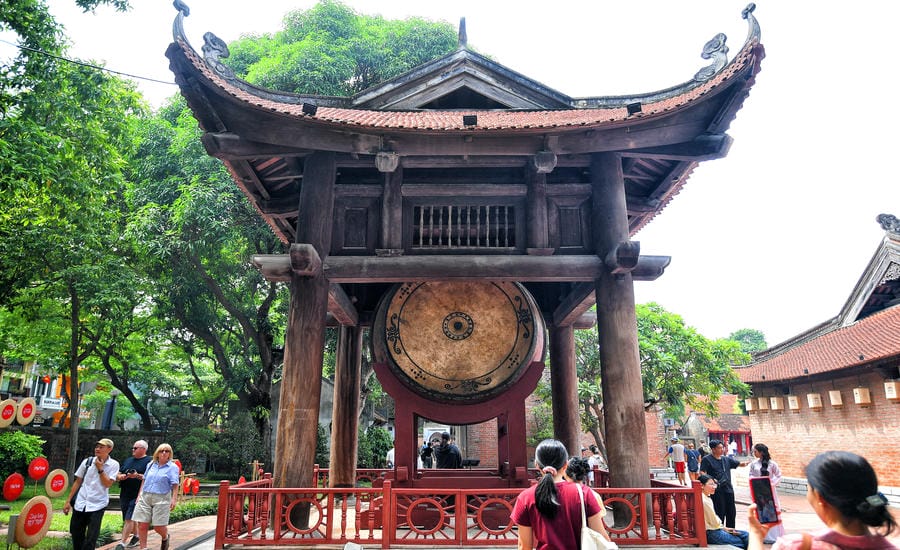
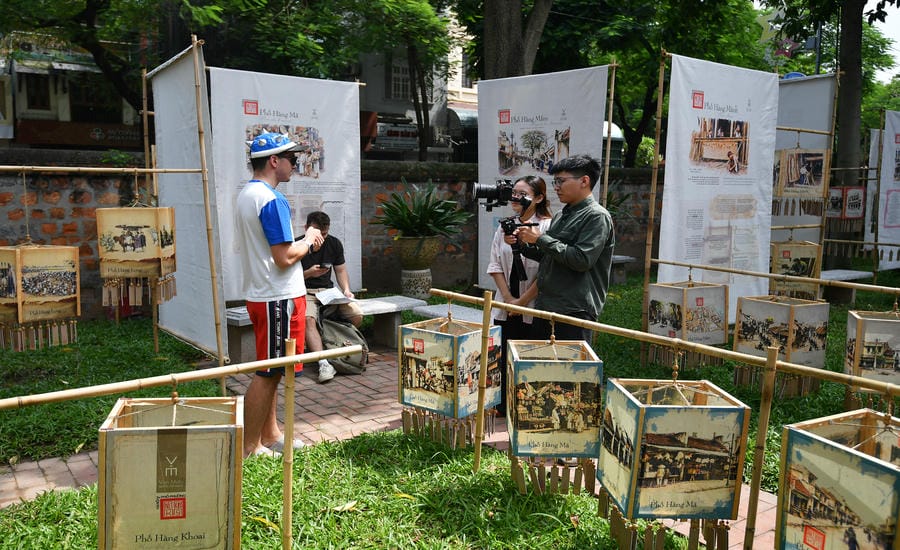
The second Thang Long - Hanoi Festival takes place from September 11th to 20th with the theme "Heritage Flow", connecting many cultural and heritage spaces of the Capital. At the Temple of Literature - Quoc Tu Giam, heritage is not only admired but also present in the very ordinary operations of craftsmen.
In a booth, Ms. Do Thi Sang, from Kim Son, Ninh Binh, quietly sits among bags, baskets, weaving boards and many products made from sedge. She has been attached to the craft for about 50 years, since she was a child. Her hands have been there for decades and are still graceful with thin raw materials, turning them into products that are both familiar and bear the shape of a long-standing handicraft.
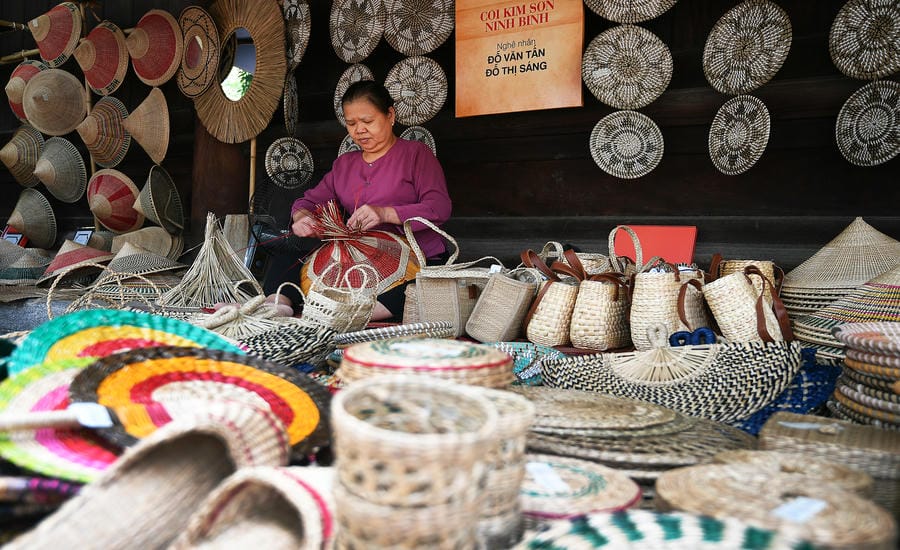
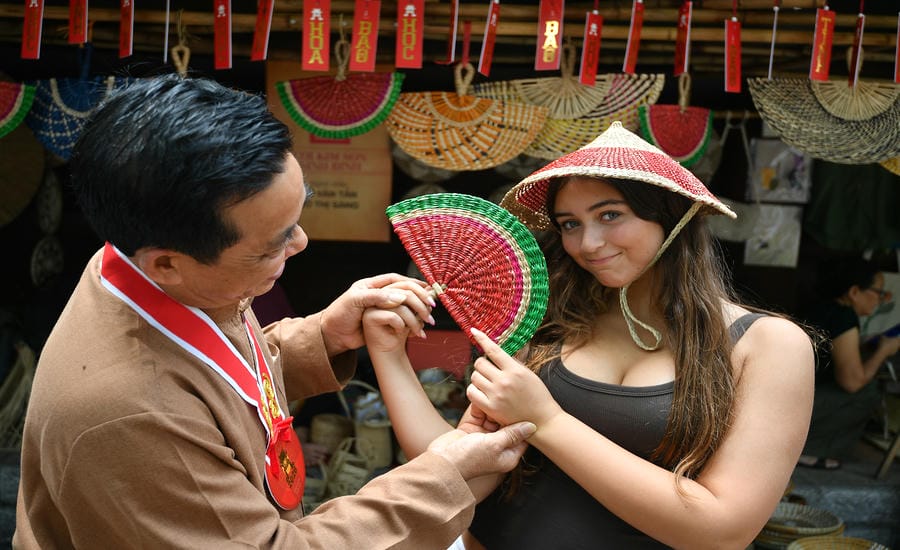
For Ms. Sang, occasions like this are an opportunity for craftsmen to bring products out of the rural space, meet the public directly and tell their stories. A handicraft product, when placed in front of tourists, is therefore no longer just an item to buy. Behind it is the story of a land.
In another corner, Ms. Nguyen My Thinh, 73 years old, is passionately drawing on Bat Trang pottery. About 50 years ago, when she was only 8-9 years old, she followed her father (a famous artisan in Bat Trang) to learn the craft. From the early days of getting acquainted with the profession until today, pottery painting has become an inseparable part of her life.
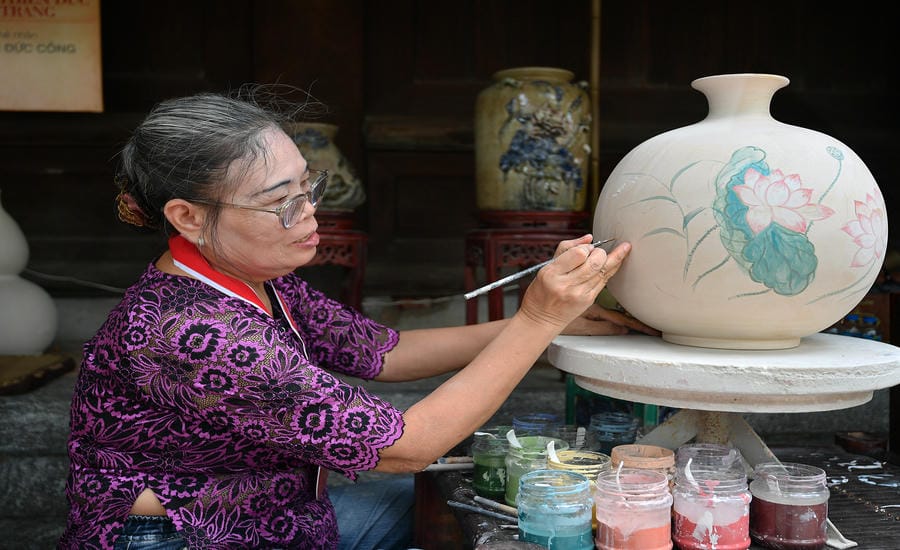
Ms. Thinh said, if we are folksy, we paint according to the soul of a craftsman. Lotus flowers, the ancient town and familiar images of Vietnamese life have become materials for her to put on ceramic products.
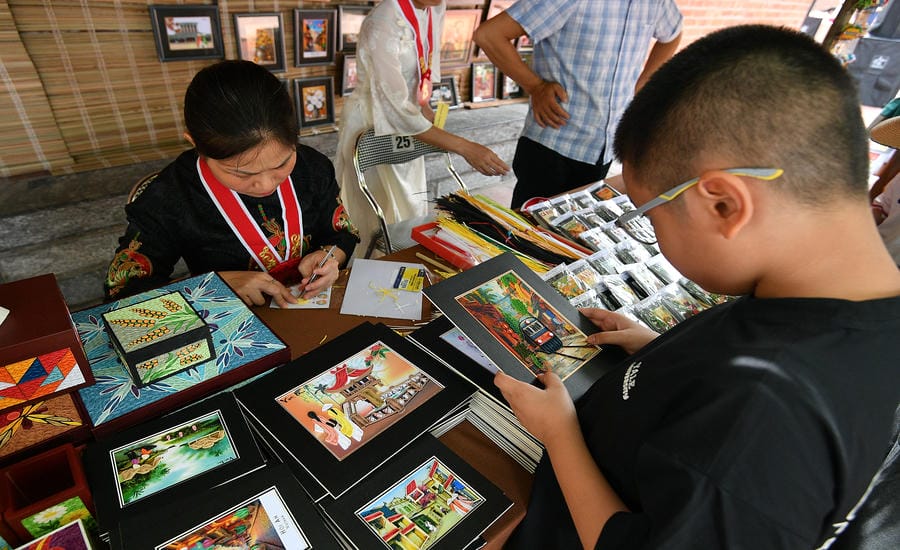
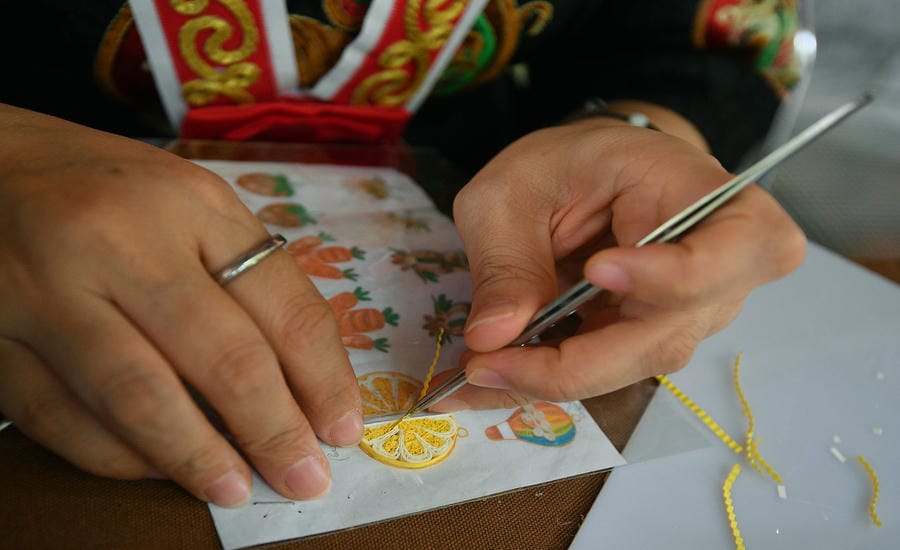
As for Ms. Dang Thi Tuyet, since 2006, she has cut colored paper into small strands, used a needle to roll, shape and then assembled each detail into paper rolls and decorative products. The job requires patience to the millimeter. The thin paper strands through the hands of the craftsman become flowers, decorative shapes, paintings, boxes, earrings or small items.
Looking at the hands of artisans amidst the stream of visitors, one can see that "legacy" is sometimes not a distant concept. It lies in a straw, a brushstroke, a hand-rolled paper ring. And more importantly, it lies in the people who are still doing that job today...
That is also how the "Heritage Flow" becomes meaningful when heritage is not standing still in glass cabinets or only belonging to the past. It continues to move when the craftsman is still working, when the story is still being told and when visitors stop long enough to look, touch and understand.