
Lien Lang Chuon in old Tet memories
In the memories of many elderly Hue people, Tet is not only about cakes and fruits, incense smoke, but also with red horizontal lacquered boards hanging on both sides of the house pillars, with a large letter in the middle: Phuc, Loc or Tho. It is not elaborate decoration, let alone luxury goods. But it is that rustic red color that has created a part of the Tet atmosphere of ordinary houses in the suburban areas of the capital.
Chuon village liễn was born from An Truyen village, still known as Chuon village. This place is a famous land of studiousness in Hue. Unlike many craft villages formed from natural resources, the liễn making profession here is born from "capital" of words and knowledge. Artisans are not only skillful, but also must know Han script, understand classics, know what is a harmonious composition between words and paintings. A liễn set usually has a large letter in the middle, parallel sentences on both sides, decorated with four sacred animals, apricot blossoms and peach blossoms... both solemn and close.
But then, along with the development of industrial printing and the changes in life, Chuon village liễn gradually disappeared. The last artisan disappeared, woodblocks were lost, the craft quietly fell into oblivion. Liễn only exists in a few old photos, a few disjointed notes and in patched memories of people who have gone through an old Tet period.
That disappearance is not noisy. It is like a fading red color on the old house wall, until people are startled to realize that there is nothing left to hold onto. And that is also when the question arises: If a heritage is no longer practiced, no longer used, will it still exist or will it just be a name in a book?
Journey of searching and restoring
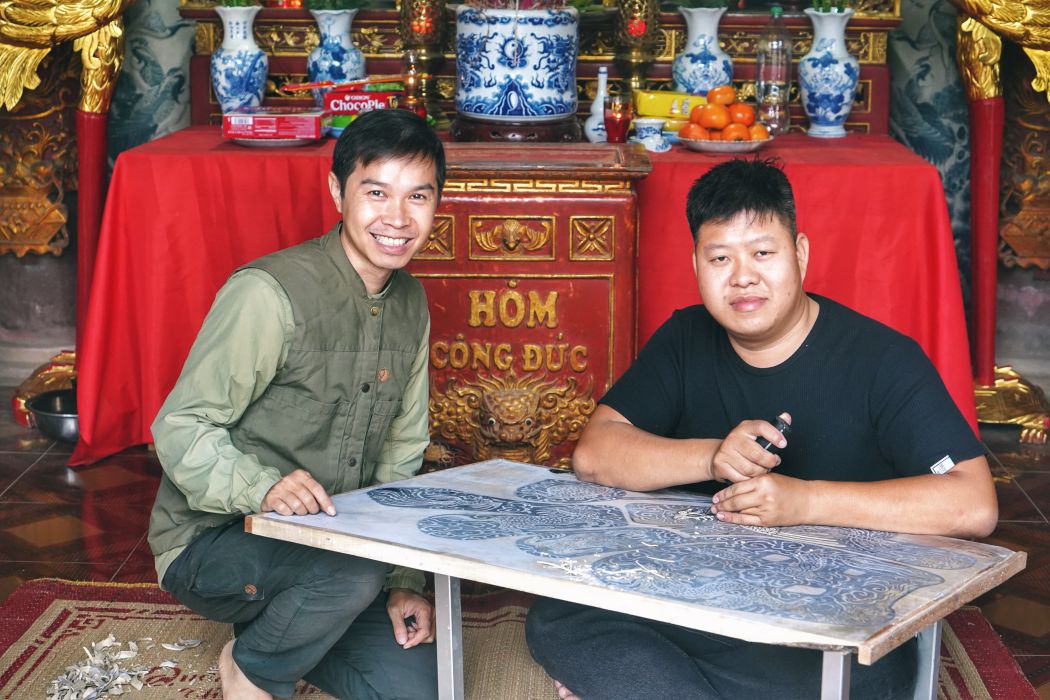
The revival of Chuon village begins from a very different journey: Searching in memory, in documents, in fragments of the past. When there are almost no more woodblocks, no more original artisans, the restoration project workers are forced to start from almost zero.
Not willing to let precious cultural values sink into oblivion, Mr. Ngo Quy Duc and the "Phuong Bach Nghe" and "Returning to the Village" project group initiated a journey to revive the Chuon village Lien craft. From those few clues, they had to compare and contrast with the techniques of other folk painting genres, visiting craft villages such as: Hang Trong, Kim Hoang, Dong Ho and especially Thanh Lieu village - the cradle of carving woodblocks.
Gradually, Chuon village lien carried in it the carving technique of Thanh Lieu, the place that once created woodblocks for many painting genres and also for the Nguyen Dynasty. This explains why, to revive lien, first of all, woodblocks must be restored. Without woodblocks, it is considered unable to be called revival. Because woodblocks are the original of the original.
Thi wood is chosen exactly as the old people used to do. Before the project group placed the first carving, an incense offering ceremony at the ancestor temple of the craft was performed. Not only is it a spiritual procedure, it is also a way for today's people to put themselves in a continuity that lasts for more than a hundred years. For them, each carving is not just a technique but a permission from the past.
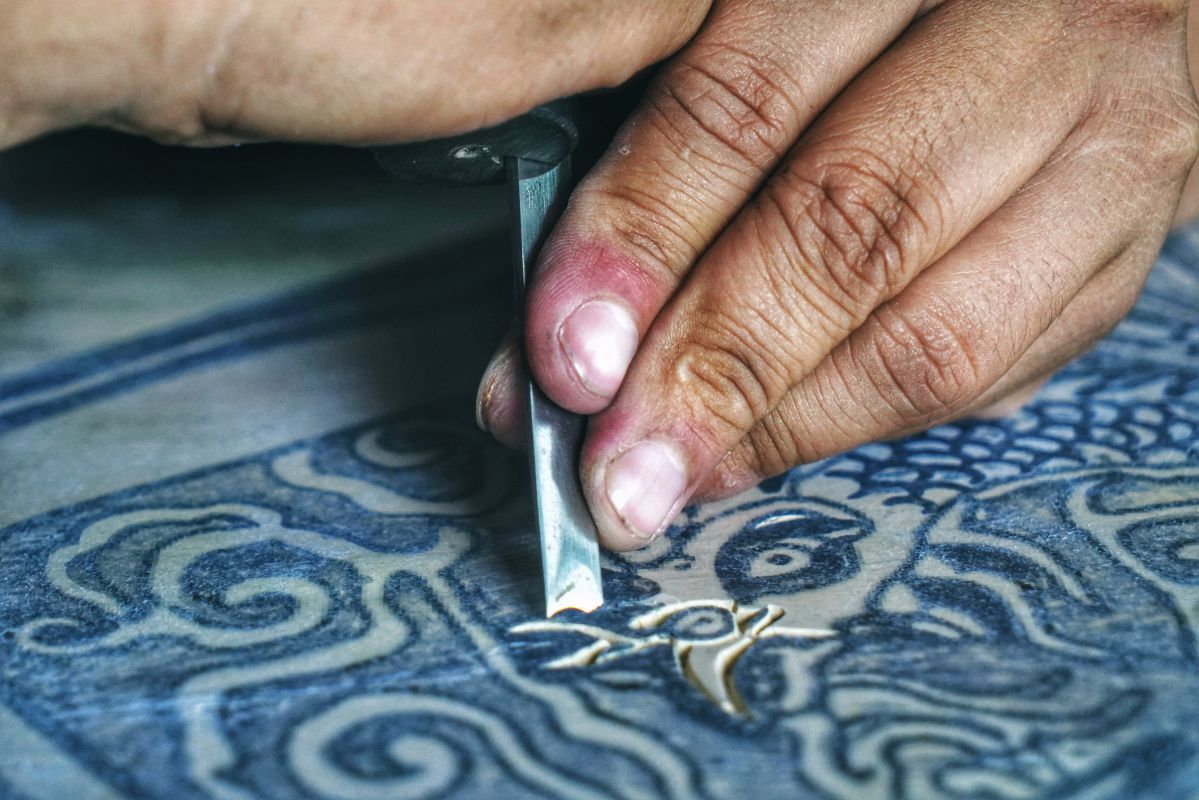
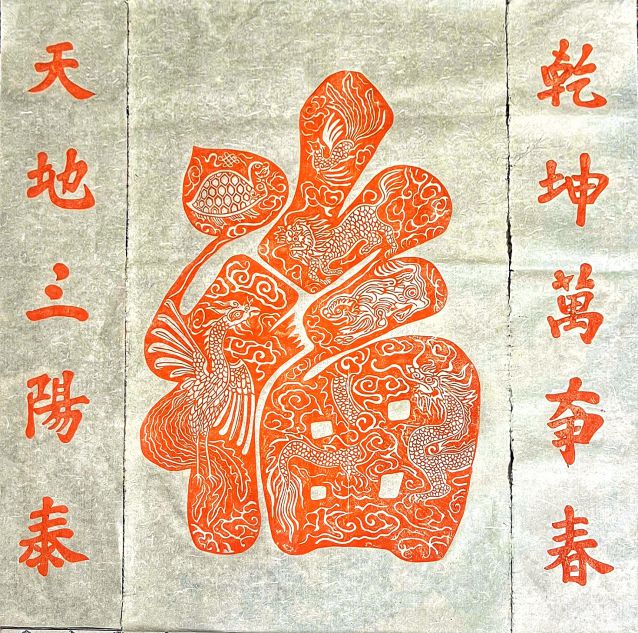
For more than 3 months, the manuscript of the word Phuc was gradually revealed. The drawings were revised again and again with the lines being trimmed little by little. When the carving was completed, the chu sa color was polished, the Do paper was placed on and the first print was born.
When peeling the paper off the wood surface, I felt like I had just touched a Tet color that had been asleep for a long time," said artisan Nguyen Cong Dat, a person directly involved in the restoration.
But revival does not stop at a printed version for display. Project makers want to reconnect it to its rightful place: In life.
Mr. Ngo Quy Duc shared: "The revival of Lien Lang Chuon is just the beginning. We do not want the heritage to only be in museums or stories told with regret. The destination of the project is to bring Lien back to contemporary life, creating livelihoods for people.
That revival is not just saving a painting genre. It is a way to remind that in the modern rhythm of life, there are still values that need to be slowed down, cherished and put back in their right place. So that every Spring, in a corner of a house in Hue, the old solid red color reappears not as a nostalgia but as a living part of today.


