
Unique architecture by the sea
The coastal road leading to Ine fishing village winds between mountains on one side and a peaceful bay on the other. From afar, the village appears as a strip of wooden houses stretching about 5km embracing the bay bank.
The most special feature of Ine is the complex of more than 230 traditional boathouses, called funayas, built close to the water's edge, forming a group of preserved historical works dating back to the Edo period. Initially, the funayas were designed with an empty first floor like a garage to pull fishermen's wooden boats ashore, protect them from seawater corrosion and store fishing gear. The upper floor is the living space of the family.
This structure makes Ine often likened by tourists to "Venice of Japan". However, instead of the splendor of the Italian canal city, Ine fishing village is attracted by its simplicity: bay water hanging close to the porch, boats swaying in front of the door and people going to sea from early morning.
Today, boats are made of more modern and durable materials, fishermen mainly anchor their boats right in front of their houses instead of pulling them ashore. The first floor of the funayas is thereby freed up for other needs. About 20 boathouses have been renovated into homestays to bring tourists a real-life experience of local life.
At the motel named Maruichi, the owner of Nagahama Hidetoshi surrounded and renovated the entire ground floor - which was originally a "gara" for boats - into a common living room space for guests to stay. He shared: "I was born and raised in this boathouse. From a young age, I was used to my grandfather rowing a boat out to sea to fish right in front of the door. Boats are of vital importance to the people of Ine, and because these houses protect boats, they have always been cherished from ancient times to the present.
Sharing more about his dedication, he said: "The idea of the guesthouse is to bring everyday life experiences in a different dimension, helping people from the city to forget the daily hustle and bustle and enjoy the relaxing atmosphere of Ine Bay.
Livelihoods from the sea and mountains
Ine is not a purely tourist village, it is a true coastal town. Thanks to its mountainous terrain surrounding it, shielding the bay from harsh weather, the water surface here is calm all year round, creating ideal conditions for marine life to develop.
Mr. Tanaka Hideki - Manager of Wadatsumi restaurant explained: "The mountains are very close, so the mineral-rich sediment layers flow out to sea, providing abundant nutrients. The waves here are very quiet, helping fish to develop well and be less stressed." This peaceful bay area is a convergence of many fish species from both the North and South of Japan, bringing a diverse source of fresh seafood.
Chef Makoto Morishita of Wadatsumi restaurant said: "Fish caught by fishermen in the morning is delivered directly to the restaurant and served to diners in the afternoon.
The most prominent specialty that helps Ine village make its mark on the Japanese culinary map is buri fish (orange fish). In winter, Ine is one of the three largest buri fishing grounds in the country and is a popular place for buri shabu shabu hotpot. "Buri fish in Ine is fatty and delicious in December. Many diners come here just to eat this dish in season," chef Morishita revealed.
Besides fishing, the village also has the Mukai Brewery family sake workshop with a history of 269 years. Ms. Kuniko Mukai took over the position of chief brewer in 1999 and was one of the first women to hold this role in Japan.
Although it is a family tradition, Mrs. Mukai honestly shared that when she was young, she had no ambition to follow in her footsteps: "When I was in elementary school, I admired the fishermen very much and always wondered why my family didn't go fishing. I was once resentful because my parents were not fishermen. Although I liked the atmosphere at the winery, I was not interested in sake." Only when my father fell ill did she stand up to take on the responsibility.
This winery with a production of 5 million bottles per year still retains the traditional production method from the Edo period. Their typical product line is Ine Mankai, a unique red sake made from the local wild red rice variety. This product was once selected to serve at the 2019 G20 Osaka Summit.
Ms. Mukai said that the slightly sour and bitter taste suitable for serving with food of this wine has the contribution of nature: "The sea is right next to it, so the amount of salt in the air becomes a nutrient for fermentation, helping the fermentation process to take place very strongly".
Ine's greatest attraction to modern tourists is its isolated location and the opportunity to temporarily leave the fast pace of urban life.
Chef Morishita concluded about his town: "There are no supermarkets here, no convenience stores, and no McDonald's - this is a town that lacks many things. However, we are surrounded by nature, sea, mountains, and we can live a simple life here.
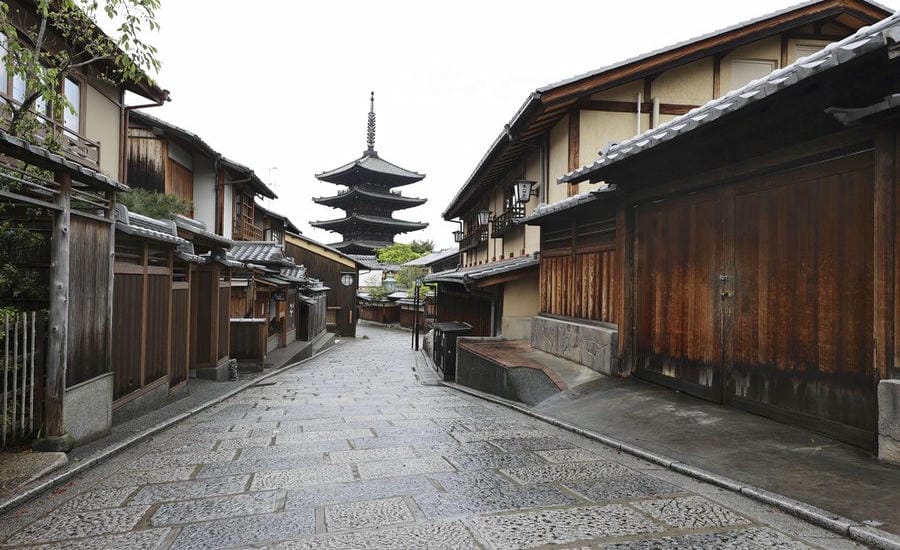
Ine fishing village is known as one of the most beautiful villages in Japan. The special feature of this place is more than 200 traditional funaya boathouses located along the bay, creating a unique and rare scene. With its peaceful beauty and fishermen's lifestyle preserved through generations, Ine brings a different perspective on Japan outside the modern and bustling cities.
Funaya are traditional boathouses located close to the water in Ine fishing village. The lower floor is used for mooring boats and storing fishing gear, while the upper floor is a living space for fishermen. The funaya complex in Ine is preserved by Japan as a unique traditional architectural heritage.


