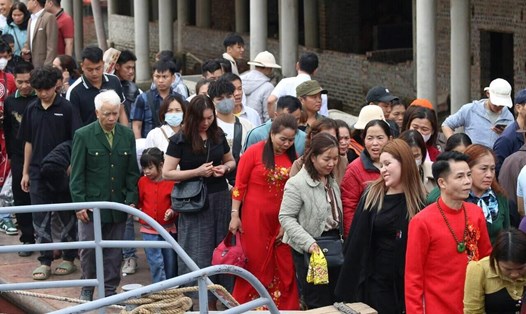
The flow of people is no longer as bustling as in the early days of Spring, but there are still groups of tourists and families quietly going up and down the lake to return to Chua Thac Bo Temple. This is a sacred temple by the Da River, which has long become a spiritual support for residents of the lake area.
Cruising through mountains, waters, and lakes
Not only is it a pilgrimage at the beginning of the year, for many people, coming to Chua Thac Bo Temple is also a special spring trip. Because few places have a pilgrimage road stretching across the vast water surface, between overlapping mountains like in Hoa Binh Lake.
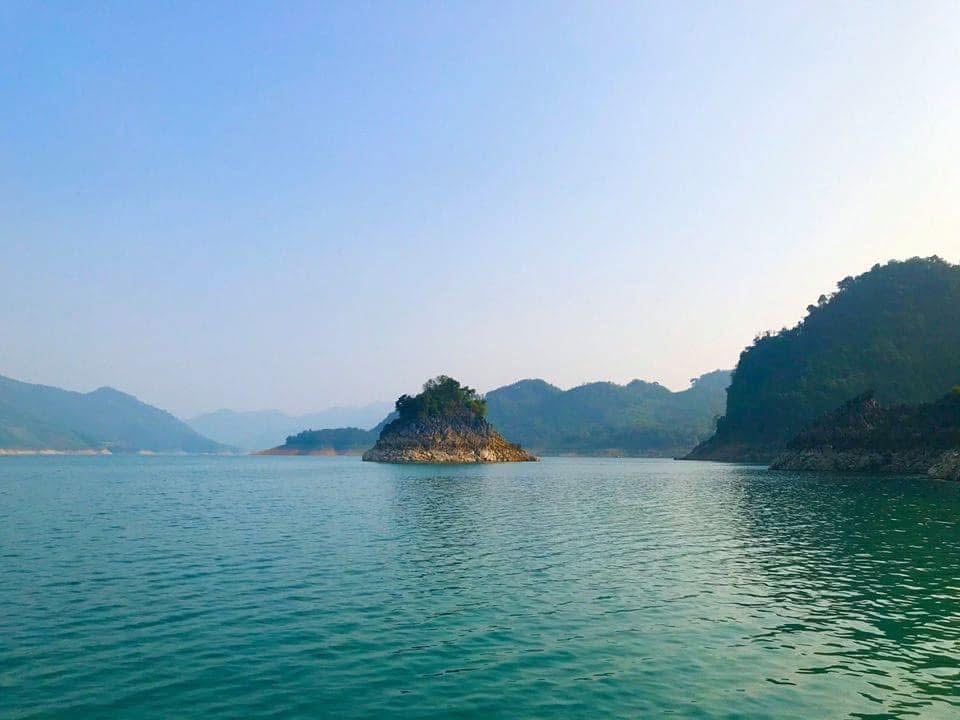
From Bich Ha port (Hoa Binh ward) or Thung Nai wharf, boats carrying tourists take turns turning the waves into the lake. When the boats leave the wharf, the streets behind are gradually awakening. And the front opens up a spacious space of mountains and water.
Hoa Binh Lake under the clear blue sun and tranquility. The limestone mountain ranges stretch together, reflecting on the calm, mirror-like water surface. Sitting on boats, many tourists take the opportunity to capture moments of the trip. Some people quietly look out at the water surface, taking a long breath as if to preserve the spacious feeling of the mountains and rivers.
A tourist from Hanoi shared: "Floating on a boat in the middle of a large lake, looking at the mountains reflecting on the water surface, my heart feels much lighter. Going to temples at the beginning of the year here is both respectful and like a very special trip in nature.
Indeed, for many people, the trip to Chua Thac Bo Temple is not only of spiritual significance, but also an opportunity to find peace after the hustle and bustle of everyday life.
The sacred temple by the Da River
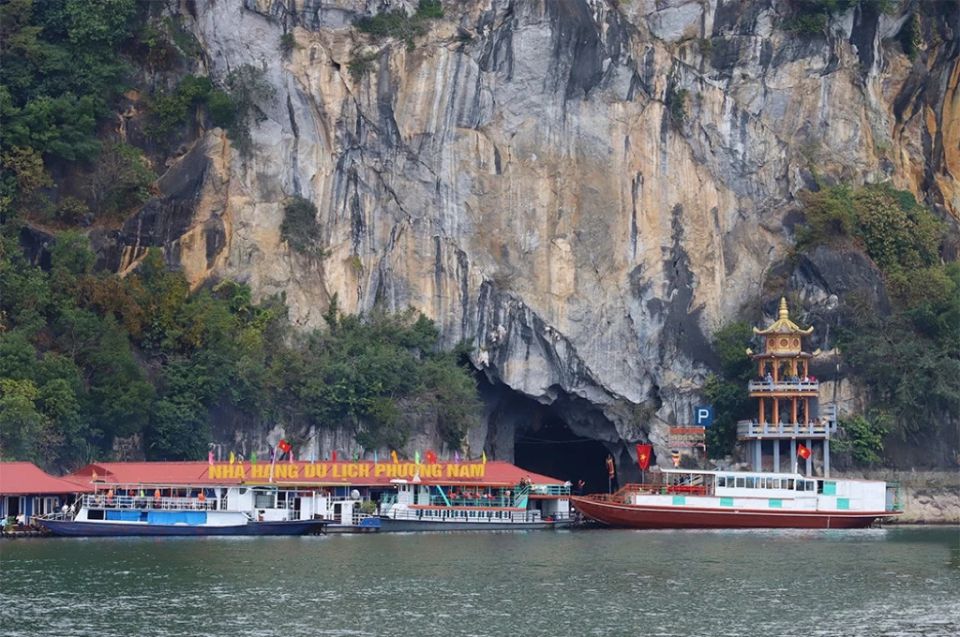
After nearly an hour downstream along the lake, the stone steps leading up to Chua Thac Bo Temple appear on the mountainside. The temple is leaning against a cliff, with the vast water surface of Hoa Binh Lake in front. Previously, this place was the most dangerous waterfall section on the Da River.
According to folk legend, the temple of Ba Chua Thac Bo is a place to worship two women respected by the people, Mrs. Dinh Thi Van, a Muong ethnic person, and a Dao ethnic woman in the Vay Nua region. During King Le Loi's uprising against invaders, the two women helped soldiers transport food and guide them across the Da River waterfalls and rapids to the Muong Le region (Son La) to suppress the Deo Cat Han rebellion.
After her death, people recounted that the two women often appeared to help boat riders safely overcome dangerous waterfalls. King Le Loi then posthumously awarded her merits and built a temple to commemorate her, from then on, Chua Thac Bo Temple became one of the important spiritual sites of the Northwest region.
Today, when Hoa Binh hydropower reservoir is formed, the ferocious Da River of yesteryear has turned into a vast lake. But the temple is still there, as a cultural and spiritual milestone of this land. The Thac Bo Temple Festival is also held annually. It usually takes place from January to the end of March of the lunar calendar, with the peak being the beginning of the new year.
Historical traces at the river junction
Not only associated with the belief in worshiping Ba Chua Thac Bo, this lakeside land also preserves many layers of long-standing historical sediments of the Da River region.
Also in the itinerary when traveling to Hoa Binh lake, Co Be Doi Temple Cua Chuong Hoa Binh, at the confluence of the Da River, has long been known to people in many places as a sacred place. Legend has it that after the country was peaceful, King Le Loi ordered people to build a temple to worship Hai Ba, just like Hai Ba was worshiped at Chua Thac Bo Temple) at Cua Chuong, belonging to Hien Luong commune, Da Bac district, Hoa Binh province before. After many administrative boundaries changes, this area now belongs to Da Bac commune, Phu Tho province.
From the old Hoa Binh center, if you go back along the Da River route about 7km to the West, to this riverside area, there are still traces of a land once associated with many historical stories. In folk memory, it is not only a trading wharf of a time but also a place that marks the heroic pages of history of heroes who contributed to protecting the country.
Stories passed down through generations have made Ben Chuong - Cua Chuong area a special spiritual cultural space for residents along the Da River. In that historical flow, the belief in worshiping female generals, river gods and later Ba Chua Thac Bo has blended into the spiritual life of the people here.
Thac Bo Cave - the magical beauty in the heart of the mountain
After offering incense at the temple, many tourists continue their journey to Thac Bo cave, located not far from the boat wharf. Stepping inside, another world opens up. The space is cool, quiet, only the sound of footsteps and lights shine on the sparkling stalactites.
The stalactite system here was created by nature over millions of years, with many strange shapes. Some blocks look like elephants standing, and some blocks look like a silent Buddha statue. Local people also call some stalactites "golden tree", "silver tree" - symbols of fortune and blessings.
In 2008, Thac Bo cave was recognized by the Ministry of Culture, Sports and Tourism as a National Heritage Site, becoming an important highlight in the tourism journey on Hoa Binh Lake.
Sustainable direction for spiritual tourism
Not only is it a pilgrimage place, Chua Thac Bo Temple has also become an attractive tourist destination, combining spiritual tourism and lake ecological experiences.
Secretary of the Party Committee of Thung Nai commune (Phu Tho province) - Mr. Tran Anh said: "Each festival season, Thac Bo Temple welcomes tens of thousands of visitors. The commune has coordinated with functional forces to strengthen management, ensure security and order, waterway traffic safety and maintain environmental landscape. The local goal is to develop spiritual tourism associated with preserving traditional cultural values and lake ecology.
According to Mr. Tran Anh, local people are also encouraged to participate in tourism activities in a civilized and friendly manner, considering tourists as precious guests coming to their homeland.
The sky has come to evening. On the vast lake, boats leave the temple wharf, quietly splitting the waves to bring the flow of people back after a day of sightseeing. The water surface sparkles with the sunshine at the end of the day, the mountains silently reflect, creating a scene that is both spacious and peaceful.
For many tourists, the trip to Chua Thac Bo Temple at the beginning of the year is not only a spiritual ritual, it is also a journey to return to nature, to history and to the simple, peaceful values that everyone wishes for a full new year.