Extending the traditional moonlit season in the heart of the ancient town
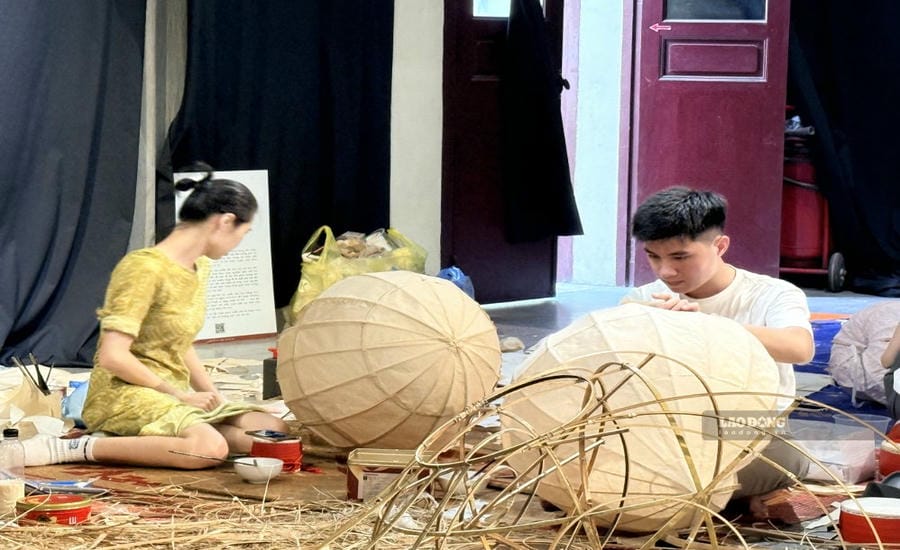
At 22 Hang Buom (Hanoi), in the days before the "Luu Trang" exhibition opened, the space here was always bustling with the sound of bamboo splitting, paper smearing, and color mixing. Artists, artisans, and young people diligently complete each detail of products restoring traditional Mid-Autumn toys.
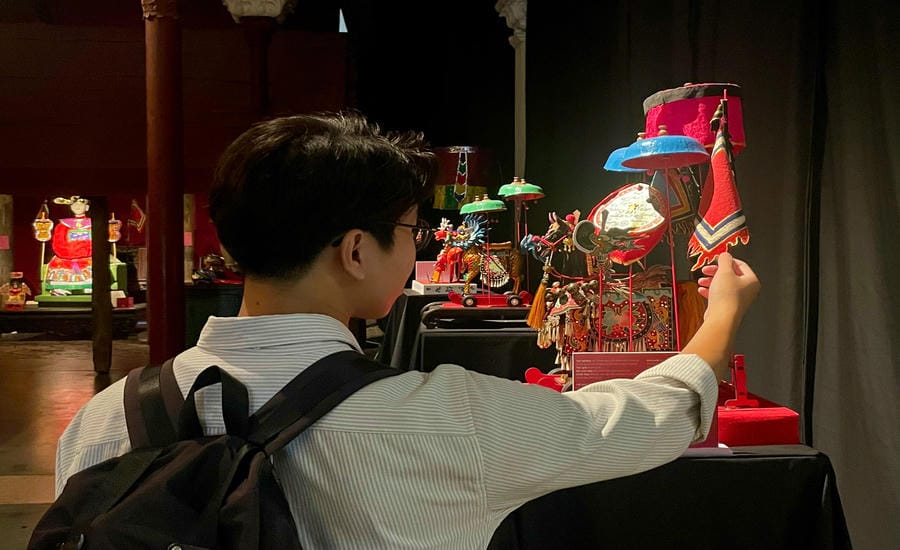
The exhibition space appears with the familiar red, yellow, and green colors of the old moon season. Toys that have been associated with many generations of Hanoians such as star lanterns, carp lanterns, crab lanterns, shrimp lanterns, paper doctors, paper horses, five-fruit trays or lion heads are recreated with traditional materials such as bamboo, paper, and glue.
Behind those seemingly simple products is the journey of learning, researching and elaborate restoration of the young generation. They not only remake an old toy, but also want to evoke the cultural story behind each image, each handicraft technique, so that traditional Mid-Autumn Festival continues to be present in today's life.
Mr. Duc Anh, representative of The Annam brand, shared that many young people today have almost never seen the image of the doctor appear on the Mid-Autumn Festival feast.Therefore, through the exhibition, he hopes to contribute to bringing heritage values back to life in a new form, closer to the public.
This is also a new approach in heritage preservation: Young people are not only cultural recipients, but also become subjects of research, practice and creation.When heritage is put into experiential activities, cultural products, community festivals, values that seemed ancient have more opportunities to live in contemporary life.
Young people are also contributing to broadening their views on the value of heritage. A folk toy not only carries aesthetic value, but also contains memories of family, community, handicrafts and the lifestyle of a time.
As bamboo sticks, paper, and folk paintings continue to be handed over to new generations, the traditional moonlit season is not only preserved in memory, but continues to be written with new stories. This is also the way for cultural heritage to become a resource for the cultural industry, tourism, and spiritual life of the community.
Preserving traditional features
In the ancient space of Son Tra communal house in Ho Chi Minh City, colorful paper lanterns evoke the familiar Mid-Autumn atmosphere. The Khoi Dang Tac Khi group has brought here handicrafts associated with folk stories and customs of the eighth lunar month.
The highlight is the large scene "Coc kien troi" about 3m high, which the group made in about 3 months. The story of Coc and other animals going to heaven to find the Jade Emperor after many years of drought is recreated with handicrafts, helping viewers access folk stories through visual perspective.
Nguyen Ngoc Nha, a craft lantern maker of the Khoi Dang Tac Khi group, said that this is the first time the group has implemented a model with such a large size and complex shape. In the first month, members encountered many difficulties in processing materials and shaping, and then gradually caught up to complete it.
For Nha, making lanterns is a way for young people to continue a craft that is gradually becoming unfamiliar to the next generation.
The first thing I want is to try to preserve the traditional craft. Every year, we will organize events so that people can come, look back at cultural images, remind people to remember and help those who do not know have the opportunity to access it," Mr. Nha shared.
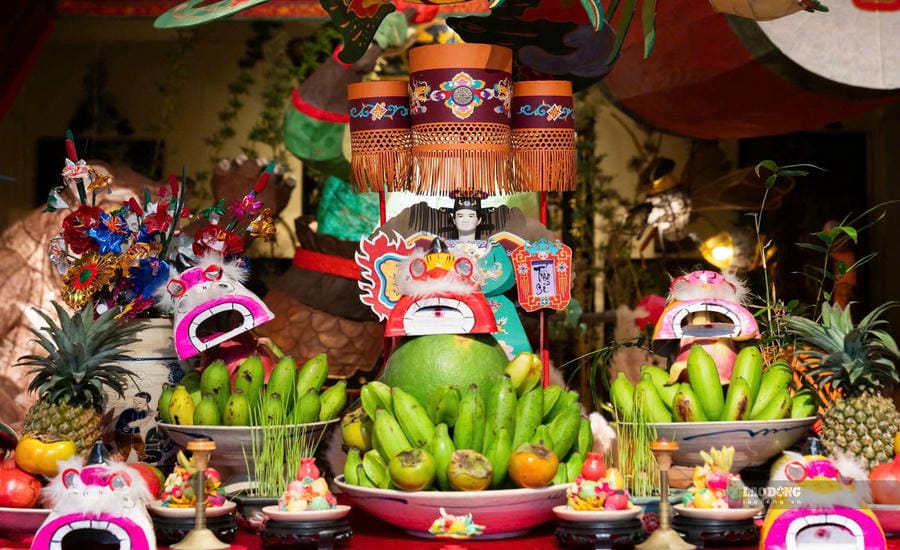
Besides "Coc kien troi", the space also has 3 moon worshiping tables representing the Kinh, Hoa and Khmer communities in the South. Items that help visitors visualize more about Mid-Autumn Festival customs instead of just seeing lanterns as a toy.
This space also attracts many families and young people. Nguyen Minh Van, a parent in Binh Thanh, believes that such programs need to be maintained so that young children have the opportunity to directly see and learn about handicrafts.
I find this program very meaningful and should maintain it more so that young people can understand Vietnamese culture. I also have a child who is in elementary school age, but there is not much space for my child to explore and experience," Ms. Van said.
For Thai Nhat, it takes about 55 minutes from Ba Diem commune to get here, but the distance is not an obstacle.He said that Mid-Autumn Festival is an occasion associated with memories and beauties that need to be maintained.
"Mentioning Mid-Autumn Festival is thinking of the Lantern Street.This is an identity, a culture, so we must preserve and continue to maintain it," Mr. Nhat shared.
Vo Thi Diem Kieu, from Tan Thuan ward, also believes that the increasing attention to traditional lanterns is a welcome sign. According to Kieu, people, especially young people, are paying more attention to products with traditional features instead of just looking for modern designs.
From young people making lanterns to those who come to visit and experience, paper lanterns are becoming a touching point for Mid-Autumn Festival to be recounted in a closer way. Amidst the modern pace of life, the lights from Son Tra communal house still evoke a moonlit season that many people want to keep for future generations.