
On the afternoon of May 14, Hanoi Open University organized a scientific conference with the theme "Advanced technologies in electronics, computers, communication networks and automation".
The conference is a forum to exchange and update new advances in core areas for the development of science and technology and the current digital transformation process.
Speaking in the introduction, Dr. Nguyen Hoai Giang - Head of the Faculty of Electrical and Electronics Engineering, Hanoi Open University said that the development of AI, Blockchain, microchip technology, data transmission networks or robotics is creating profound changes in many fields of life and production.
In that context, the conference is organized with the aim of updating knowledge and modern technology trends, and at the same time, promoting scientific research and innovation activities. This is also a forum for scientists, lecturers, and research students to share research results, promote innovation and digital transformation.
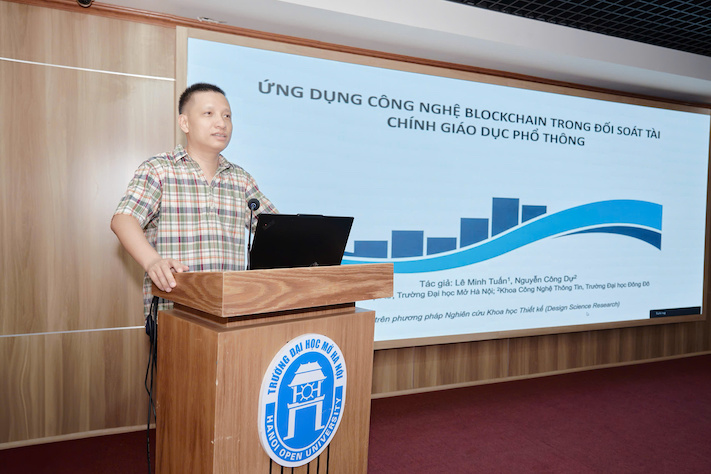
At the conference, one of the contents attracting attention was the topic "Application of Blockchain technology in general education financial control".
Presenting the research topic, Dr. Le Minh Tuan, Faculty of Electrical and Electronics Engineering, Hanoi Open University, said that currently the tuition fee collection system and school fees have been digitized, connected to banks and financial technology platforms. However, the operation process still has a situation of data not being synchronized between banks, payment units and the school's accounting system.
In many cases, parents have received successful payment notifications on the banking application, but the school cannot immediately record the transaction. The comparison is still heavily dependent on manual operations, especially with a large number of transactions each month, causing time waste and easily leading to errors.
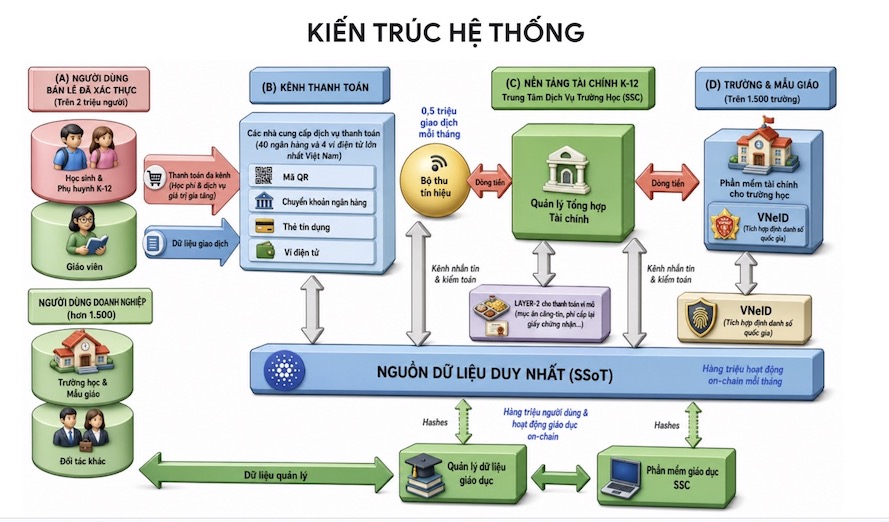
From that reality, the research group proposed applying Blockchain technology (blockchain technology) to build a more automatic and transparent counterpart mechanism.
According to this model, transaction data after arising will be verified by cryptographic evidence and stored on the Blockchain platform acting as a common "main book" between stakeholders. Thanks to this, banks, payment units and schools can synchronize transaction statuses almost in real time without manual comparison as before.
The research group said that the system still ensures compliance with Vietnamese legal regulations when all payments are made in Vietnamese Dong, without using cryptocurrencies.
Initial test results at a school with a scale of 500 students show that the control time is shortened from 1–3 days to less than 20 seconds" - Dr. Le Minh Tuan said.
In the future, the research group plans to pilot building clusters of 5-10 schools to measure latency. The goal is to direct the school ecosystem towards non-cash, where payment activities such as tuition fees, semi-boarding, canteens or internal services are digitized, automatically authenticated and updated instantly.


