
One day in May, the sound of chainsaws echoes mixed with the sound of chiseling, the sound of sawing echoes from small wood workshops located at the foot of Thien Van mountain. The fragrant smell of new wood creeps through every alley in Kha Lam village, Kien An, Hai Phong. For decades, the rhythm of life here has been associated with the traditional carpentry profession - a profession that has nurtured many generations of people. Behind the sophisticated wood products is the growing concern of artisans: Younger and younger generations are increasingly less willing to follow in their fathers' profession.
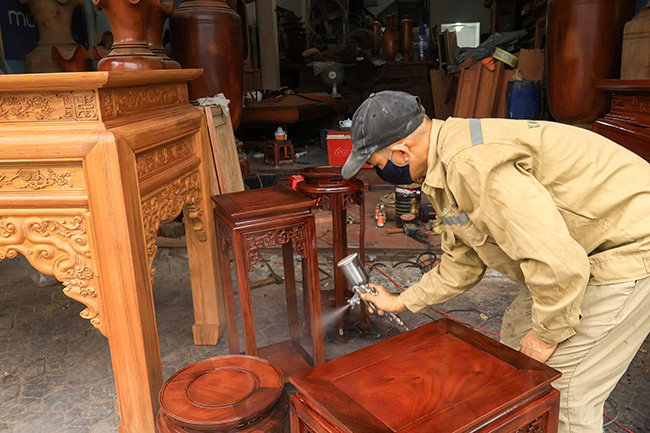
Kha Lam carpentry village has existed for hundreds of years, famous for exquisitely carved furniture and handicrafts. From the 1980s, many skilled craftsmen returned to their hometowns to start a business, building hundreds of large and small carpentry workshops, creating a prosperous period for the craft village.
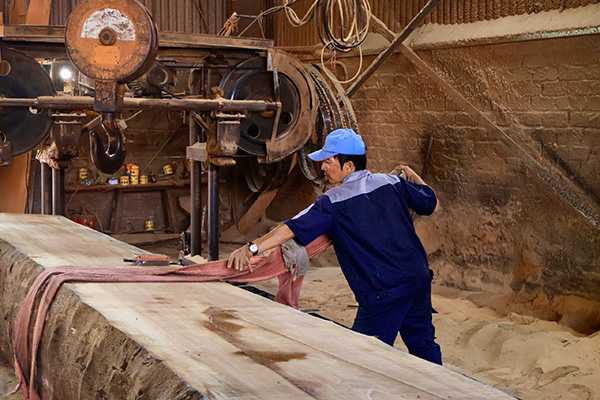
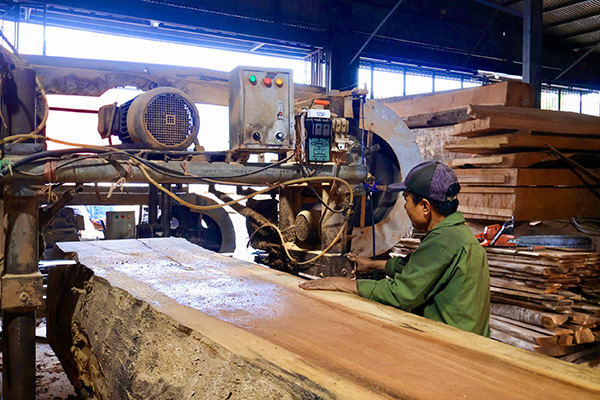
In a wood workshop deep in the village, the sound of saws echoes incessantly as large tree trunks are sawn into long pieces of wood. The smell of new wood blends with the layer of sawdust covering the workshop floor, creating a characteristic scene of Kha Lam craft village. After the cutting and splitting stage, the wooden bars are neatly stacked into high stacks to be dried, preparing for the processing process.
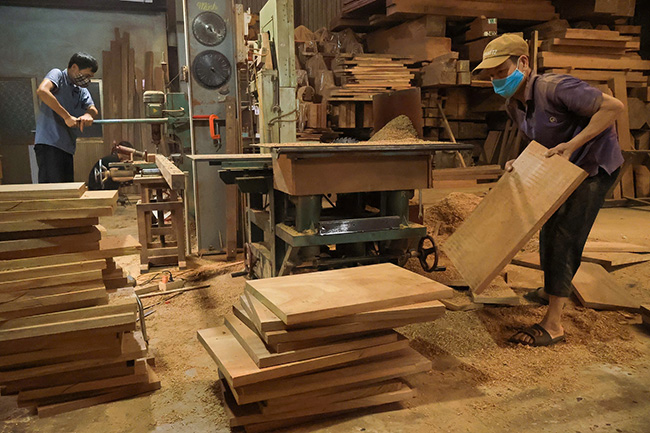
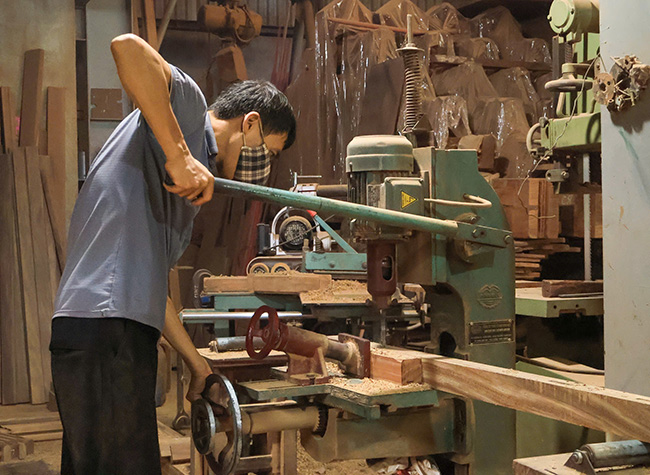
Amidst the continuous sound of machinery, the workers are still diligently working in each stage. Some people carefully saw each piece of wood by hand, some people stand for hours by the grinder to smooth the surface of the product. These seemingly simple operations require accuracy, endurance and experience accumulated over many years of work.
A long-time carpenter in the village, Mr. Bui Duc Sinh is still diligently working next to a wooden chair that is still unfinished. His rough hands quickly reach over the ironwood surface. He said that carpentry not only requires health but also patience and the heart of a carpenter.
In the past, young people in the village finished secondary school and followed the profession. The whole village was on fire day and night. Now many children go to university, work in companies, and few people want to sit for hours by the sawdust pile anymore," he pondered.
Not only lacking successors, many carpentry workshops in Kha Lam also have to change to survive. If previously the main products were mahogany beds, tea cabinets, horizontal lacquered boards and parallel sentences, now many establishments have switched to modern furniture production, using industrial wood to suit market demand.
According to local people, in the most prosperous period, the village had more than 100 carpentry workshops, creating jobs for thousands of workers. Carpentry used to be the main source of income for most households here. But now, many workshops only have a few older workers left. Young people attached to the craft can be counted on the fingers of one hand.
Amidst the continuous sound of cutting machines, Mr. Pham Van Tuan, one of the few young people still in the profession in Kha Lam, shared that this job is much more strenuous than many people think. "A beautiful product must be made in many days, sometimes even a month. The profession requires meticulousness and perseverance, so not everyone can follow it for a long time," he said.
However, the craftsmen here still do not want to give up their ancestral craft. Many artisans open vocational training classes for young people in the area, hoping to retain a bit of traditional breath amidst modern life. Local authorities and production facilities are also looking for ways to promote the "Kha Lam wood" brand, supporting the development of the craft village in a sustainable direction.
In the late afternoon, the last rays of sunshine shine on the layer of wood dust hanging in the air. In the old carpentry workshops, the sound of chiseling still echoes steadily like the breath of a hundred-year-old craft village. Kha Lam artisans understand that preserving today's craft is not only preserving livelihoods, but also preserving a part of the cultural soul of their homeland.


