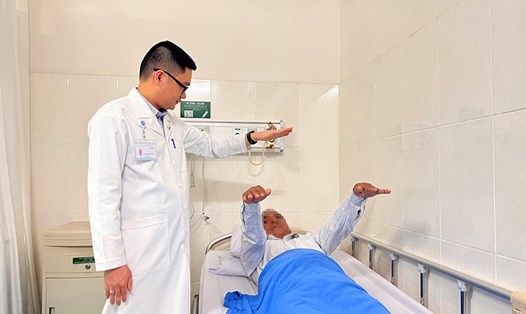
The Center for Required Medical Examination and Treatment and International - Central Hospital for Tropical Diseases has just successfully received and treated a case of brain damage caused by parasites, with initial symptoms that easily confused with brain tumors.
Patient N.H.T (39 years old, Hanoi), previously completely healthy, has no notable background medical history. About 8 days before being admitted to the hospital, the patient suddenly developed a stiffness and numbness in his left hand while at home. After initial examination at a medical facility, the diagnostic images showed suspected brain tumor damage, and infection factors had not been ruled out, so the patient was transferred to the Central Hospital for Tropical Diseases for in-depth assessment.
According to Mr. Nguyen Van Phuong, Deputy Director of the Center for Required Medical Examination and Treatment and International, at the time of hospitalization, the patient was alert, had no fever, stable blood circulation, and did not record any clear signs of accommodative neuropathy or cerebral syndrome. However, the patient had a headache and still felt slight numbness in his left hand.
The patient was indicated for a brain resonance imaging (MRI). The results showed a small cyst-shaped lesion in the left frontal lobis, measuring about 11 x 7 mm, surrounded by mild cerebral edema. This image more suggests damage caused by parasites than primary brain tumors. Seromic tests continue to be performed, in which testing for antibodies to dog breath disease results are positive, thereby helping to confirm the diagnosis of brain damage caused by parasites (brain disease).
After determining the cause, the patient was treated internally according to the regimen, combined with symptom control and close monitoring of nerve developments. After about 10 days of inpatient treatment, the condition improved significantly: No hand numbness, no more seizures, headaches and dizziness completely subsided, and the condition was stable. The patient was discharged from the hospital and continued outpatient treatment according to a 4-week treatment.
When re-examined nearly a month later, the MRI scan results showed significantly miniaturized brain damage, reduced cell size, reduced brain edema, and no signs of progression. The patient responded well to treatment and was prescribed an additional round of consolidation drugs, while continuing long-term monitoring.
Dr. Nguyen Van Phuong said that cerebral palsy is not rare but can easily be overlooked due to un typical initial symptoms such as convulsions, temporary weakness or mild headaches, easily mistaken for brain tumors or cerebral vascular complications. The disease is mainly transmitted through unsanitary eating, especially raw vegetables, recycled foods or contaminated water sources.
Therefore, doctors recommend that people should not be subjective with unusual neurological signs, and need to go to a specialized medical facility for timely diagnosis. Treating it properly helps brain damage recover well, avoiding complications and unnecessary intervention; while maintaining the habit of eating cooked and drinking boiled water, ensuring food hygiene to prevent disease.