
On December 17, Foreign Trade University (FTU) and Dak Lak 2-9 Import-Export Company Limited (Simexco Dak Lak, under the Dak Lak Provincial Party Committee) signed a cooperation agreement in the direction of substantial companionship. Accordingly, the school directly participates in solving the problems that businesses are facing in the process of transitioning to a sustainable coffee development model, in order to meet the increasingly strict requirements of the export market.
According to the signing, Foreign Trade University - through the FTU Innovation and Initiatives Center (FIIS) - will act as a consulting, consulting and technical support unit. From there, the unit and Simexco built and deployed an ESG management system associated with the coffee value chain.
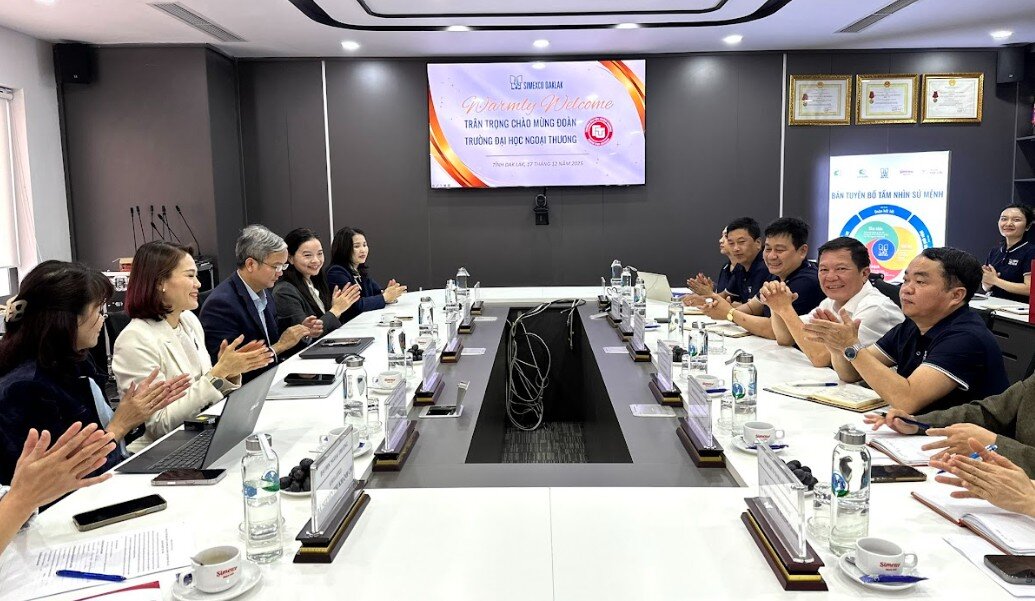
This is considered an important foundation for Simexco Dak Lak to not implement ESG in a movement, but in a roadmap with scientific basis and in accordance with practical conditions.
Based on that assessment, FTU continues to support Simexco in building a specialized ESG reference framework for the coffee industry, combining international standards and production context in Vietnam.
In parallel with consulting activities, FTU and Simexco will implement training programs to improve ESG practice capacity for management team and professional staff. Training content is "ordered" according to the needs of businesses. The courses not only provide knowledge, but also aim to help teachers understand how ESG needs to be integrated into each specific production - business decision.
Simexco Dak Lak leaders said that the two sides also agreed to cooperate in researching and developing sustainable business models, inclusive business models and circular economy associated with the coffee value chain; at the same time, organize seminars, seminars and publish practical case studies, contributing to spreading experiences and lessons from Simexco to the business community.
The cooperation agreement between Foreign Trade University and Simexco is expected to become a typical cooperation model between the school and the business, thereby affirming that academic knowledge is not out of practice and the business is not alone in the journey to sustainable development.


