
On March 22, leaders of the Department of Agriculture and Environment of Lam Dong province said that the whole province has over 328,000 hectares of coffee. Of which, more than 311,100 hectares are in business. Most of the area is flowering, bearing fruit, preparing to nurture young fruit.
Currently, the Central Highlands, including Lam Dong, is entering the peak dry season; the weather in some places is erratic, creating conditions for pests and diseases to occur. On coffee trees, high-risk objects include mealybugs, scaleflies, stem borers, dry branches, anthracnose, rust, and mosquito kissing bugs.
Faced with this situation, specialized units and localities focus on guiding farmers in post-harvest care, watering sparingly; and at the same time strengthening investigation, early detection and timely prevention of harmful organisms.
Thanks to proactive prevention, pests and diseases are currently only appearing sporadically, under control, and have not greatly affected the growth of trees.
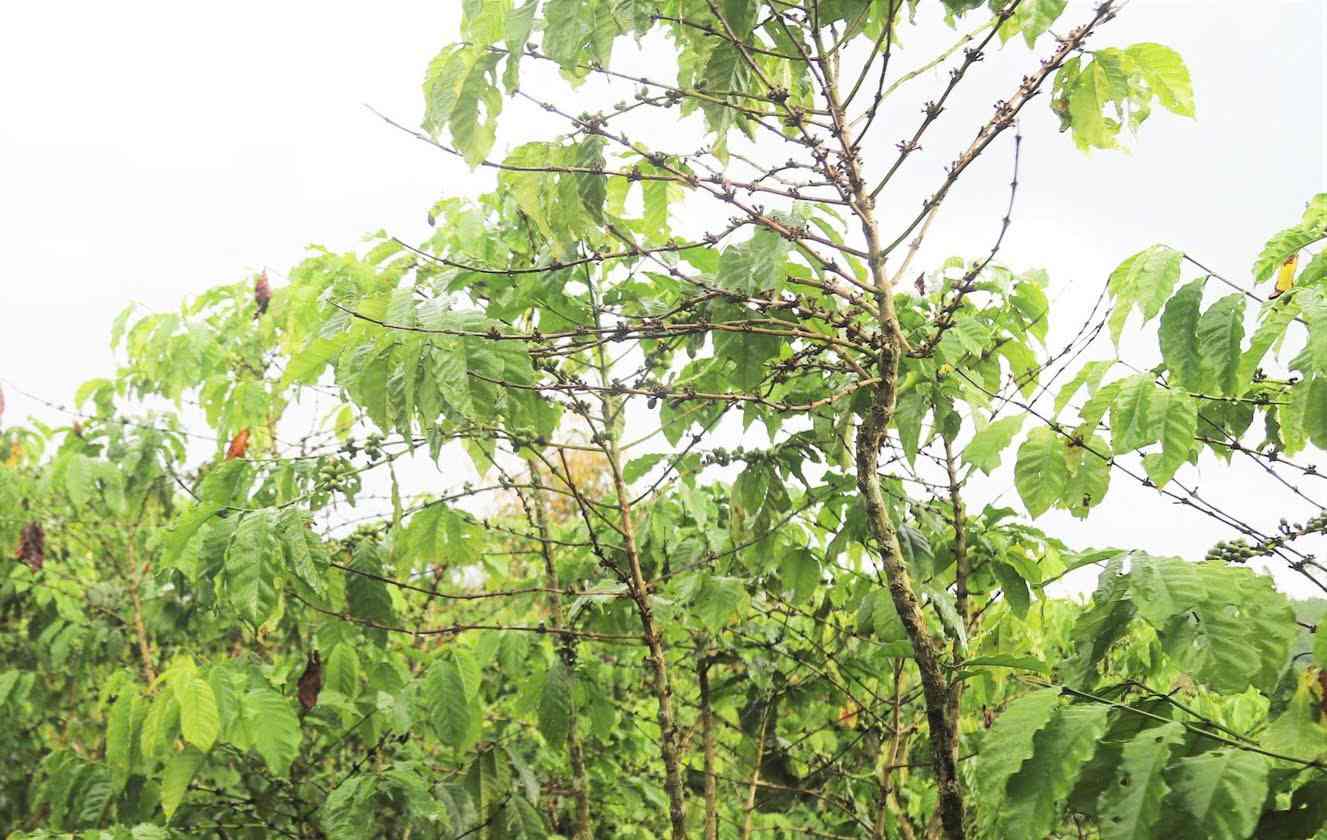
In Bao Lam 1 commune, the coffee area is over 9,000ha, with an average yield of 4–4.2 tons/ha. Pests and diseases mainly appear in old gardens, water shortage, and unbalanced nutrition.
Mr. Nguyen Tuan Tu, a resident of Nao Quang hamlet, said that his family has more than 2 hectares of coffee. After Tet, due to lack of water, stem borers and dry branches appeared, but they were promptly cared for and prevented, so the trees recovered well.
In Bao Lam 5 commune, coffee is the main crop with about 7,000ha, with a yield in 2025 estimated at over 3.5 tons/ha. Currently, pests and diseases are scattered, basically controlled thanks to people actively taking care of and fertilizing.
According to the Lam Dong Sub-Department of Crop Production and Plant Protection, this dry season the weather is fluctuating, people need to stick to their gardens, follow technical instructions correctly; apply synchronous farming measures such as using healthy varieties, field sanitation, irrigation, reasonable fertilization, combining mechanical and biological measures.
In particular, only use pesticides when necessary and adhere to the "4 right" principle. Implementing the correct process helps effectively control pests and diseases, limit adverse impacts on crops and human health, contributing to improving coffee yield and quality to serve the domestic market and export.


