
Do not place the TV right opposite the door.
TVs are devices that can attract attention as soon as you enter the room. Therefore, instead of placing the screen in the first position that hits your eye, homeowners can arrange the TV in a tilted wall or a less attention-grabbing position.
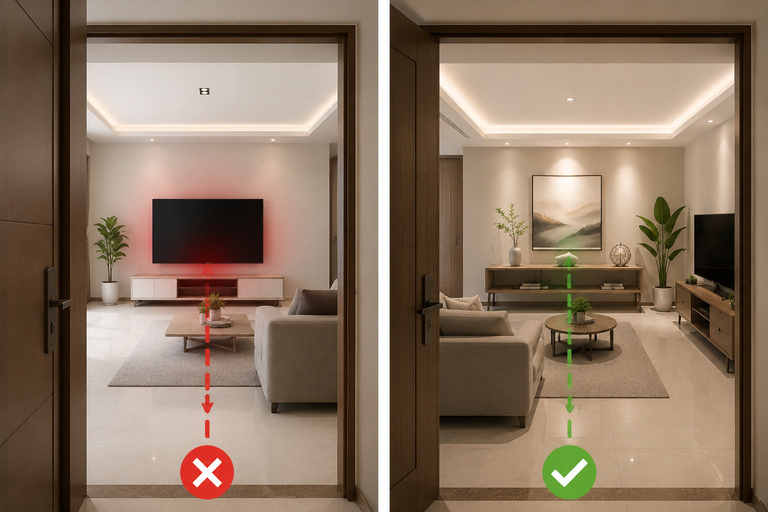
Seeing the TV right when entering the room can make users easily develop the habit of turning on the device, thereby reducing conversation and interaction time between family members.
A painting, decorative shelf, or airy space can be prioritized opposite the door to create accents for the room.
Do not place a TV that makes the person sitting facing the door.
When arranging the living room, many families often only pay attention to placing the sofa opposite the TV and forget to calculate the direction to sit.
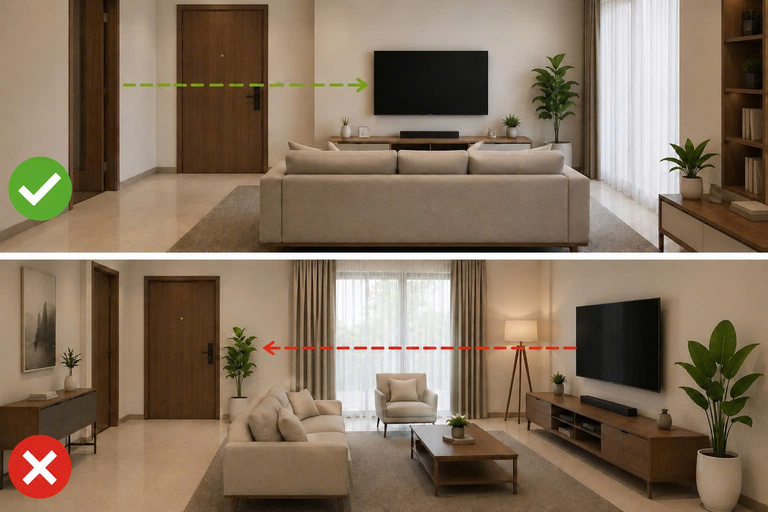
Accordingly, the sofa should be arranged in a position where the person sitting can still observe the door, instead of completely facing the door.
This arrangement helps the space to be airy, creating a more comfortable feeling when living. Therefore, homeowners should identify the location of the TV and sofa at the same time to ensure convenience and harmony for the room.
Limit placing TVs in the kitchen
TVs in the kitchen area can help housewives entertain themselves while cooking. However, this is also a location that easily distracts.
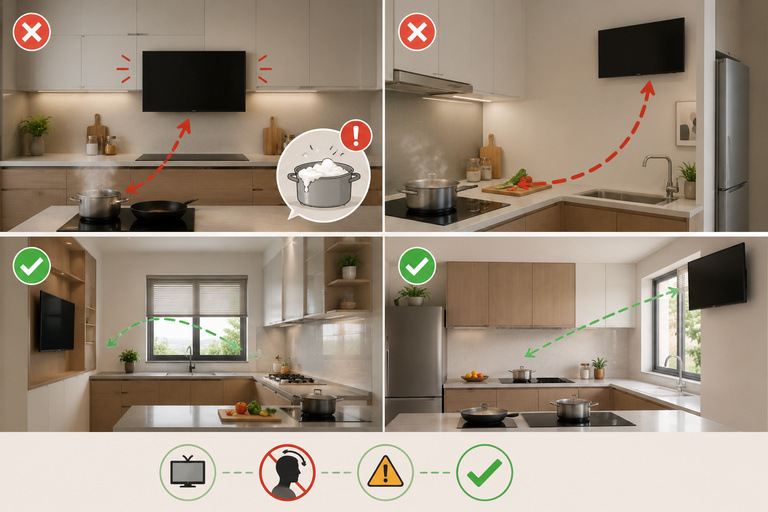
Placing a TV in the kitchen can distract users, thereby increasing the risk of incidents during cooking.
For apartments with limited area, if you still want to arrange the screen in the kitchen area, homeowners should place it in a position that does not obstruct cooking operations and does not cause users to turn around or move continuously to monitor the screen.
Consider when placing a TV in an open space
With apartments designed with interconnected living rooms, dining rooms and kitchens, the sound from the TV can easily spread to other areas.
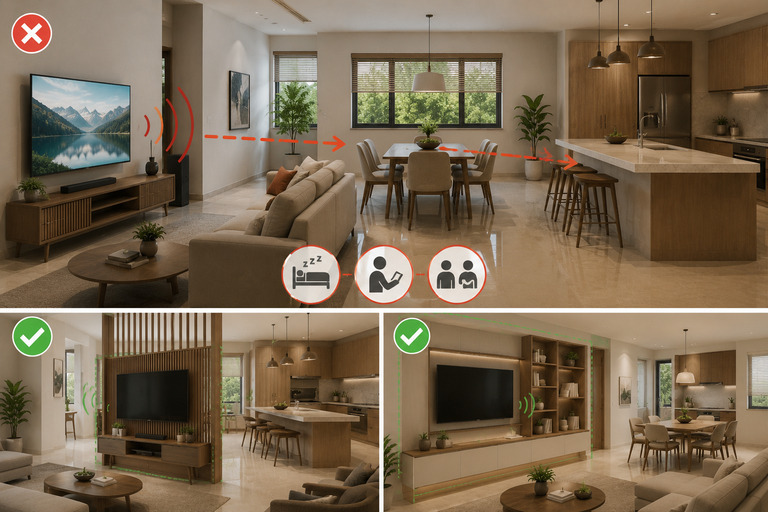
This is especially inconvenient when one member wants to watch TV while others need to rest, read books or chat.
Therefore, for houses with open space design, TVs should be arranged in relatively separate areas or have sound control solutions. Homeowners can also design cabinets or wall systems so that the screen does not capture all attention in the space.
Avoid placing the TV too close to the seating position
The distance between the TV and the viewer is also a factor to pay attention to when designing a living room.
If the screen is placed too close to the sofa, viewers may have to continuously adjust their posture or viewing direction. Conversely, a TV that is too far away also makes viewing content inconvenient.
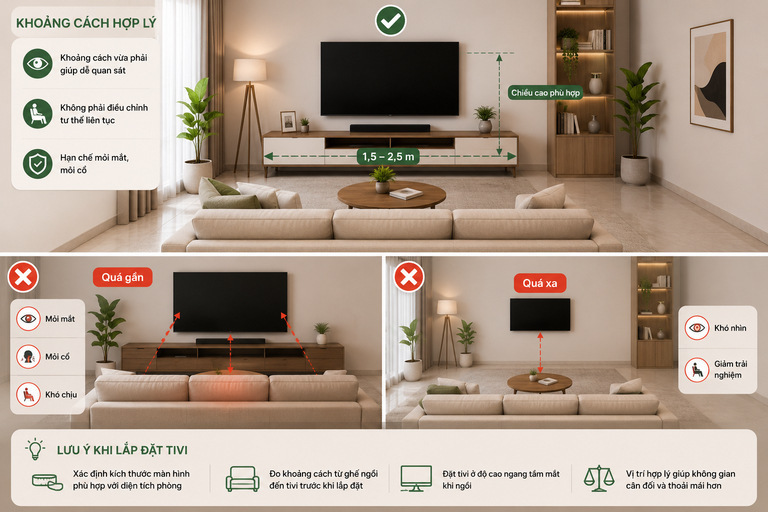
Therefore, before choosing an installation location, homeowners should determine the screen size, distance from the seat to the TV and appropriate height.
Placing the TV in the right position not only helps the room become neater and more balanced, but also contributes to creating comfort during use.


