
Tradition is not "out of sync" in modern space
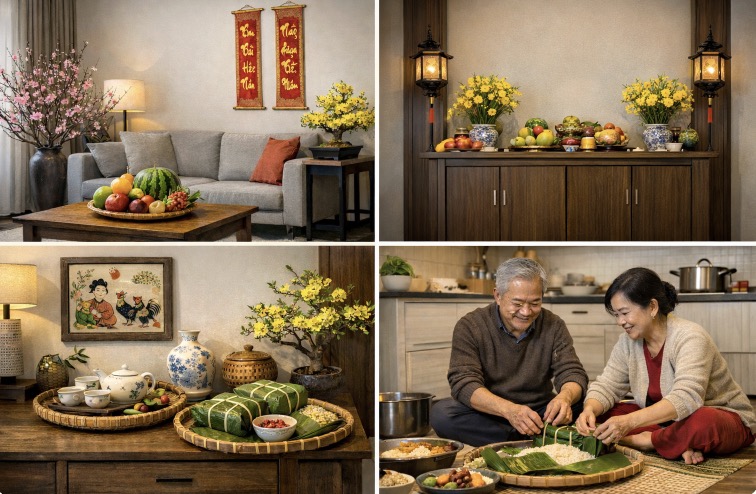
Urban houses today are often neat and minimalist with modern furniture, but that does not mean that old Tet elements are forgotten. In the living room, next to the sofa and modern tea table, there is still space for peach branches, apricot pots, five-fruit trays or red couplets. These familiar details help the living space, although new, still retain the "breath" of traditional Tet.
Many families choose traditional decorations with minimalist designs and harmonious colors to suit the overall home. Moderation in decoration helps the old style not become out of place, but on the contrary, become a meaningful highlight.
Modern items "support" cultural values
The trend of combining tradition and modernity is clearly shown in the way Tet items are used. The ancestral altar is neatly and solemnly cared for but not too fussy. Items such as lamps, shelves, cabinets are designed simply, helping to enhance the worship space while still ensuring convenience and safety.
In the common living area, many families use folk paintings, ceramics, bamboo and rattan items or natural materials to decorate, creating a cozy and intimate feeling. These elements, when placed in a modern space, are even more prominent, reminding of the origin and family lifestyle during the Tet reunion days.
Keeping Tet through living habits at home
Not only in decoration, traditional features are also expressed through Tet daily life in each family. Gathering to wrap cakes, arrange year-end meals, clean up and rearrange worship space are still maintained, although the scale may be simplified compared to before.
In modern apartments or townhouses, families flexibly adjust to suit living conditions, but still maintain the spirit of reunion, respecting superiors and letting go of subordinates - the core values of traditional Tet.
Identity lies in selection and moderation
Maintaining traditional features in modern living space does not mean "copiing" the old arrangement intact. Many families choose a moderate approach, keeping elements with profound spiritual meaning, suitable for current lifestyles and housing areas.
That selection helps the Tet space become light, sophisticated, avoiding a heavy or formal feeling. More importantly, it shows that tradition is not lost, but is being adapted and continued in a more flexible way.
Modern Tet but not leaving its roots
Between urbanization and modern rhythm of life, preserving traditional features in the living space during Tet is the way many families find balance again. The house is not only a place to live, but also a place to preserve memories, home customs and cultural values passed down through many generations.
Tet is therefore still full of meaning when in the modern living space, the old features are cherished and preserved - just enough to remind of their roots, and suitable for today's rhythm of life.


