
More than 68% of freelancers working outdoors have at least one symptom of muscle - bone - joint after each working day, 33% have symptoms of anxiety from mild to very severe. This is the survey result conducted by the Vietnam Medical Association, in coordination with the Institute for Community Health Development Anh Sang, the Vietnam Institute of Applied Medicine and the Medical Associations of cities from April 2024 to August 2026, announced on August 14.
The survey of 1,208 people working in street vendors, lottery tickets, motorbike taxis, delivery, porters, transportation and construction aims to analyze challenges, identify policy gaps and propose solutions to protect the health of this labor group.
The results showed that they had very high levels of climate and environmental exposure. Average working hours were 8.7 hours/day, equivalent to 55.3 hours/week, causing prolonged exposure to heat, rain, flooding and adverse factors.
The consequences are clearly shown in health: 68.5% have at least one musculoskeletal symptom after a working day; 23.7% have respiratory symptoms, 13.1% have skin problems and 12.2% have digestive symptoms.
Mental health is also alarming. 32.8% of participants have symptoms of anxiety from mild to very severe. This rate increases sharply with the level of exposure.
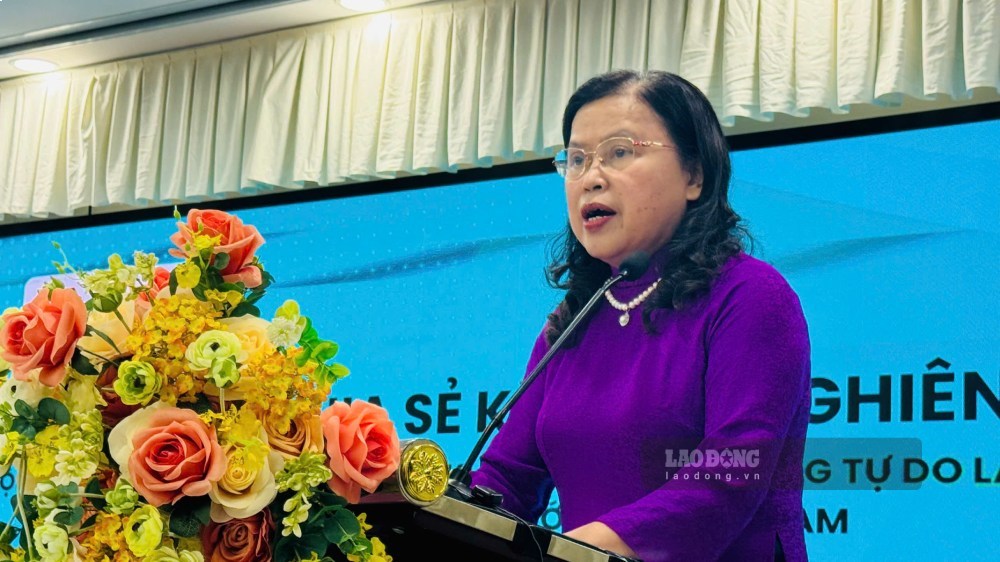
Assoc. Prof. Dr. Nguyen Thi Xuyen, Chairwoman of the Vietnam Medical Association, former Deputy Minister of Health, said: workers are aware of the risks of weather and proactively protect themselves by wearing hats, covering their heads, necks, and nape, drinking plenty of water, wearing cool clothes or resting in the shade.
However, self-protection ability is still limited. For people who live by daily income, taking leave of work means reducing or losing income, so even knowing the danger, they still have to continue making a living.
Many freelancers also do not have full access to health and social services. About 25% do not have health insurance cards, while the rate of voluntary social insurance participation is only about 2.2%. When experiencing musculoskeletal symptoms, 52% do not go for examination because they do not have time, 26% because of financial barriers.
This situation creates a vicious cycle: harsh weather reduces health, reduced health causes labor capacity and income to decrease, thereby making it even more difficult for workers to spend time and money on health care or career change.
Assoc. Prof. Dr. Nguyen Thi Xuyen believes that health is just one link in the chain of risks that outdoor work faces. Prolonged climate exposure not only erodes health but also reduces working capacity, income and adaptability.
Protecting outdoor labor requires coordination between health, labor safety, social security and climate change adaptation. In extreme weather, taking leave means losing income, so it is necessary to build a social security network to help them avoid the spiral of health decline - income decrease - adaptability decrease.


