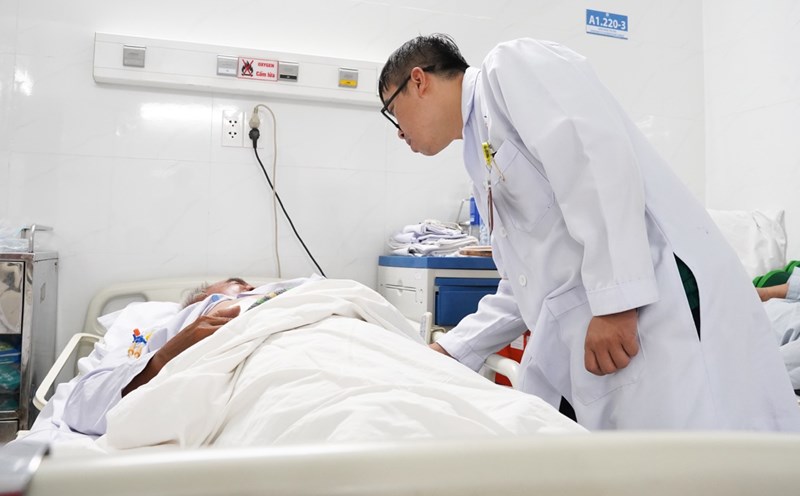
According to BS.CKI Le Ngoc I - Ear, Nose and Throat Specialist, Interdisciplinary Department of Xuyen A Duc Hoa General Hospital (Tay Ninh), atrial fistula is a benign congenital defect, manifested by a small hole the size of a toothpick located in the skin area in front of the earlobe (atrial root), with a fistula deep inside clinging to the cartilage. This defect can appear in one or both ears.
This leak itself is not dangerous, but if not properly cleaned, bacteria can invade and cause infection, form abscesses, causing pain and pus. For cases of inflamed atrial fistula, multiple recurrent abscesses, surgically removing the entire leak is a treatment method to remove pathological tissue and limit the risk of recurrence.
The hospital has just treated a case of N (female, 17 years old) with atrial fistula on both sides. Initially, believing that the small hole appearing from a young age in front of the ear was just a minor abnormality, N (female, 17 years old) did not pay too much attention.
However, over time, this location continuously became swollen, red, painful, oozing fluid and oozing pus. Even, many times the inflammation progressed into an abscess, causing her to have to go to a medical facility for drainage incisions.
After many treatments but the infection still recurred, the family took him to the hospital for treatment. After nearly 1 hour of surgery, the leak was completely removed. The surgical wound was dry, the recovery was good and the patient was discharged after 3 days of treatment.
Doctor Le Ngoc I recommends that atrial fistula can exist from a young age without causing any symptoms. However, when signs of red swelling, pain in the front of the ear, discharge, pus discharge or recurrent abscess appear, patients should see a doctor for appropriate assessment and treatment.
Patients should absolutely not squeeze, poke, or try to remove fluid or pus from the leak because it can damage surrounding tissues and make the inflammation worse. Early examination helps doctors accurately assess the leak condition and degree of inflammation to choose the most appropriate treatment method.